
Reviewed · DAY TRIPS FROM CASABLANCA
12D 11N Private Morocco Tour From Casablanca By Imperial Cities
A private Morocco route from sea to dunes. This 12-day trip strings together big sights and real daily life, from the Hassan II Mosque in Casablanca to Erg Chebbi sand country and back to Marrakech.
I especially like how the plan mixes guided moments and free time so you do not feel rushed, with Fes el-Bali handled by a local guide and timed stops that make medina wandering practical. I also like the variety of “Morocco types,” Roman ruins at Volubilis, Rif mountain towns like Chefchaouen, and then desert camps. The one possible drawback is the driving, including long road days toward the Sahara, so you should expect a busy pace.
In This Review
- Key things I’d pay attention to
- Price and what you actually get for $1,382.65 per person
- Casablanca arrival, Hassan II Mosque, and the Rabat to Asilah side trip
- Tangier medina time and Chefchaouen’s blue streets without forcing it
- Volubilis Roman ruins to Moulay Idriss, Meknes, and onward to Fes
- Fes el-Bali walking with a guide: tannery rooftops and Al-Qarawiyyin
- From the Middle Atlas to Erg Chebbi: cedars, macaques, ksars, and sand
- Merzouga desert day: sunrise options, nomads, Paris Dakar roads, and Khamlia music
- Rissani souk, fossil crafts in Erfoud, Todra Gorge cliffs, then Dades Valley mud kasbahs
- Rose Town, Ouarzazate Hollywood, and Ait Ben Haddou UNESCO kasbah power
- Marrakech Medina guide time, Bahia and Saadian sights, Majorelle Gardens, then Jemaa el-Fna at night
- Ending in Casablanca or Marrakesh, with the ride handled
- Should you book this private Casablanca-to-Sahara Morocco tour?
- FAQ
- What is the duration of this private Morocco tour?
- Where does the tour start, and how do you get there on day one?
- What’s included in the price?
- Are flights included?
- Are lunches and drinks included?
- Are entrance fees included for major sites?
- Is the tour truly private?
- Can the itinerary be adjusted?
- Do you get local guiding in the big medinas?
Key things I’d pay attention to
- Private driver, no group chaos: You move on your schedule, with pickup and drop-off arranged.
- Fes with a real local guide: You get the tannery sights, university area, and madrasas without guessing.
- Blue-town time in Chefchaouen: You get time to walk it yourself after check-in.
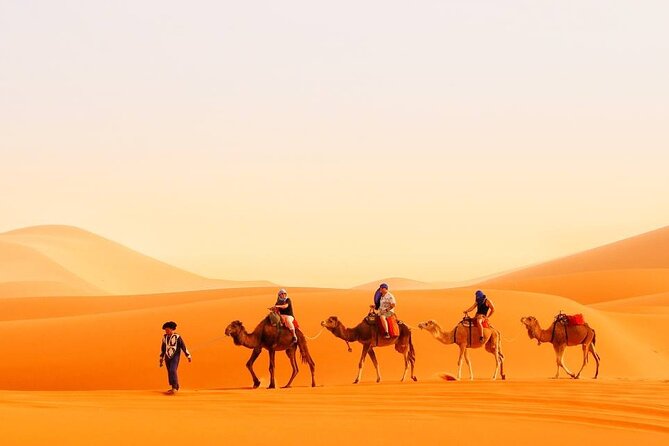
- Desert moments are built in: You get both sunset and options for sunrise before leaving the dunes.
- UNESCO stops are not just checkboxes: Volubilis and Ait Ben Haddou come with context, not just photos.
Price and what you actually get for $1,382.65 per person
At $1,382.65 per person for about 12 days, the value here comes from what you do not have to plan. You get private transportation, airport or port pickup, and hotel or riad nights lined up for 11 nights, plus bottled water during touring.
The included meal structure matters too: you have breakfast every day (11 total), and three dinners are included across the trip. Lunches and most dinners are on you, and entrance fees are not included, so budget for that reality.
One more value point: the tour lists fully licensed local guiding in Rabat, Tangier, Fes, and the Marrakech Medina. That is a smart way to spend guided time where you need it most, then let you roam on your own where you can.
More day trips out of Casablanca:
- Marrakech Day Trip with Camel Ride from Casablanca
★ 5.0 · 740 reviews - Fez Guided Tour with lunch from Casablanca
★ 5.0 · 496 reviews - Private Rabat Day Trip from Casablanca
★ 5.0 · 382 reviews
Casablanca arrival, Hassan II Mosque, and the Rabat to Asilah side trip
If you land at Casablanca Airport (CMN), your first “welcome to Morocco” moment is practical. You pick up luggage, go outside Terminal 2, and your team meets you with your name sign. If you arrive early, you add a small Casablanca orientation; if you arrive late, you go straight to the hotel.
Casablanca’s signature stop is Hassan II Mosque, inaugurated in 1993 and built on a coastal outcrop with Atlantic views. The minaret is enormous, and it is also one of the few mosques in Morocco where non-Muslims can enter. If you care about architectural detail and high craftsmanship, this is a strong early win.
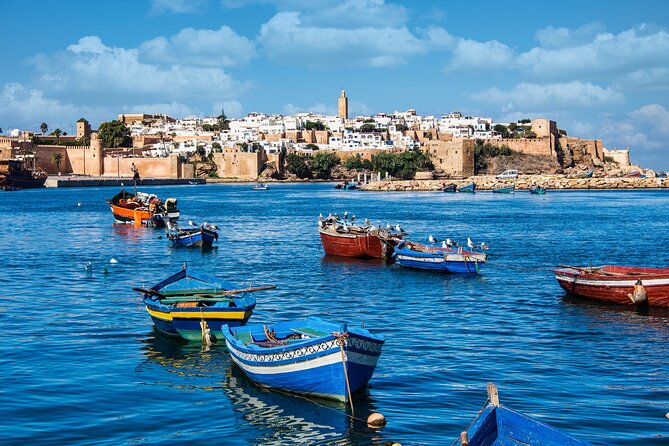
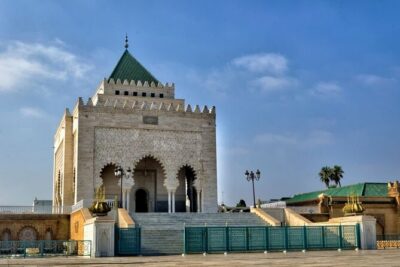
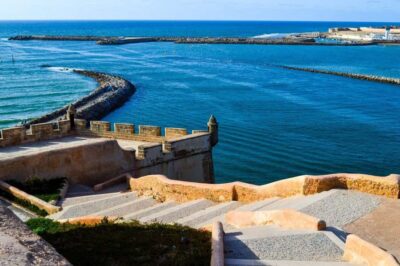
Next comes the imperial city flavor around Rabat. You see Chellah Necropolis ruins, Roman and Islamic remnants, and then cross into the original Kasbah des Oudaias area. The day also includes the Andalusian Gardens for a quieter pause, before the Hassan Tower viewpoint with the incomplete mosque minaret and the Mausoleum of Mohamed V.
From Rabat you drive to Asilah, a fortified Atlantic medina with Portuguese-era traces. You get time in the medina itself, plus the vibe of a smaller town where the streets feel more lived-in than choreographed for tourists. Overnight is in a hotel or traditional riad.
Tangier medina time and Chefchaouen’s blue streets without forcing it
Tangier is where the trip feels like a crossroads. You explore the Medina, and you also get easy ways to orient yourself around the Tangier Kasbah. It is small enough that you can follow signage without feeling lost, which is useful if you want flexibility.
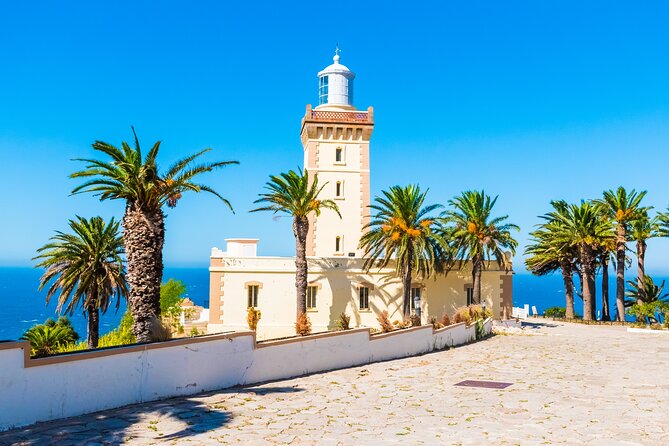
The plan also leaves room for a side visit toward Cap Spartel and the Cave of Hercules. It takes about an hour to enjoy, and you are doing it before you settle into more intense walking days. If you like Atlantic viewpoints and quick “wow” stops, this works.
Then you roll into Chefchaouen, the town with blue walls, doors, windows, stairways, and alleyways. After check-in at your riad or hotel, you are free to explore at your pace. Outa el Hammam is the main square for people-watching, and the real payoff is choosing the smaller alleys where everyday life feels close.
A helpful way to use this day is to start near the main square, then gradually walk away toward the less tourist-focused lanes. Ask your driver for one or two street-level directions, then keep wandering.
Volubilis Roman ruins to Moulay Idriss, Meknes, and onward to Fes
Chefchaouen to Fes is not a straight shot. The stop at Volubilis is a major reason to build this route. This UNESCO site is known for Morocco’s best-preserved Roman ruins, including merchant homes and mosaics. Even if you do not hire a guide on-site, the scale makes it worth the pause.
After Volubilis, you go to Moulay Idriss, founded in 789 CE and connected to the Idrisid dynasty. The city is also noted for the only round minaret in Morocco. The stop is short, but it gives you a different kind of sacred atmosphere than the larger imperial cities.
Then comes Meknes, where you get imperial-city highlights without Fes-level crowd pressure. You visit the Ville Impériale area, including Bab al-Mansour and the mausoleum of Moulay Ismail, plus the Royal Stables. It also helps to notice the Roman materials reused in local constructions, since the plan flags that Volubilis columns show up in unexpected places.
The day ends in Fes, with transfer into a riad in the Fes medina. The late afternoon and evening are yours. This matters because Fes medina nights can be intense, and having time to reset before a full medina day is a smart move.
Other Casablanca days to consider
- Casablanca: Hassan II Mosque Premium Tour with Entry Ticket
★ 4.5 · 2,971 reviews - Casablanca City Tour with Hassan II mosque ticket
★ 5.0 · 2,480 reviews - Casablanca: City Tour with Hassan II Mosque Entry Ticket
★ 4.6 · 1,137 reviews - Private Tour of Casablanca with Hassan II Mosque Entry Ticket
★ 5.0 · 1,102 reviews
Fes el-Bali walking with a guide: tannery rooftops and Al-Qarawiyyin
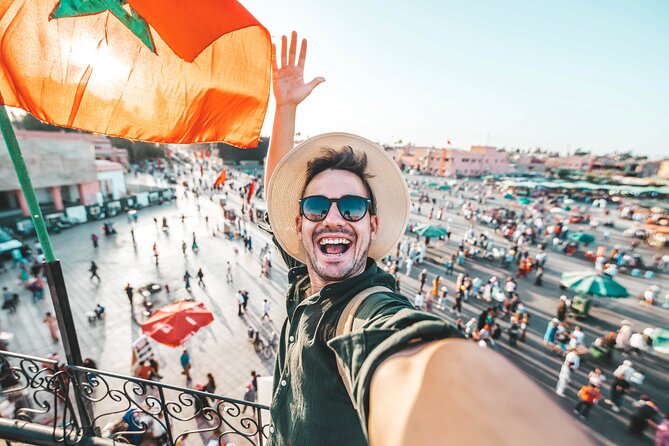
Fes el-Bali is often described as the “complete” medina, and this tour uses that strength well. You explore two quarters, the older Fes el-Bali and the newer Fes el Jdid, with your guide meeting you at your riad. The walking route starts along Talâa Kebira, a key thoroughfare that helps you get your bearings.
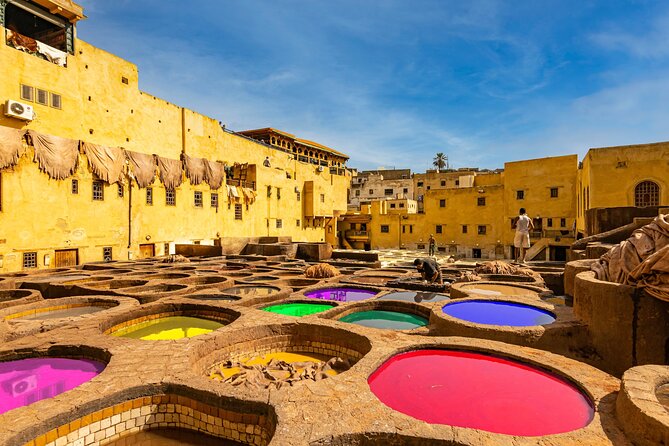
You will go past the Chouara Tannery and climb to a nearby leather shop rooftop for an encompassing view of men at work. That rooftop viewpoint is the practical trick here. You still see the process, but you do not have to stand in the thickest crowd or figure out the street maze on your own.
From there you see the Al-Qarawiyyin University area, one of the oldest universities in the world. Then you head to Al Attarine Madrasa to observe Moroccan artisanship. This is where a guide earns their fee, because the meaning behind the objects and spaces matters more than the photo angles.
Plan for a long morning and afternoon. If you are someone who gets tired in narrow streets, slow down on purpose. Drink water, take short breaks, and let the guide steer you around the densest parts.
From the Middle Atlas to Erg Chebbi: cedars, macaques, ksars, and sand
This is one of the biggest “get-ready” days because it’s about reaching the desert. You start early and cross the Middle Atlas Mountains through Azrou, famous for cedar forests. The plan even includes a detour to Cèdre Gouraud Forest where Barbary macaque monkeys lounge in the cedar trees near the road. It is a rare wildlife moment on a Morocco driving day.
Lunch is in Midelt, on a high desert plateau. Midelt is known as the Apple City because orchards survive thanks to the Moulouya River. If you want a break from rocky passes and dramatic views, this stop gives you a breather.
Next you follow the route through the Ziz Valley and begin seeing ksars, fortified houses built by merchants to protect goods along ancient trade routes. Then you reach the Erg Chebbi area and the first strong signs of Saharan sand dunes.
Before you head to camp, the plan also notes an ancient method of water mining used to move water from the mountains to farmland before modern pumps. That kind of detail turns the desert from scenery into a real system of survival.
Merzouga desert day: sunrise options, nomads, Paris Dakar roads, and Khamlia music
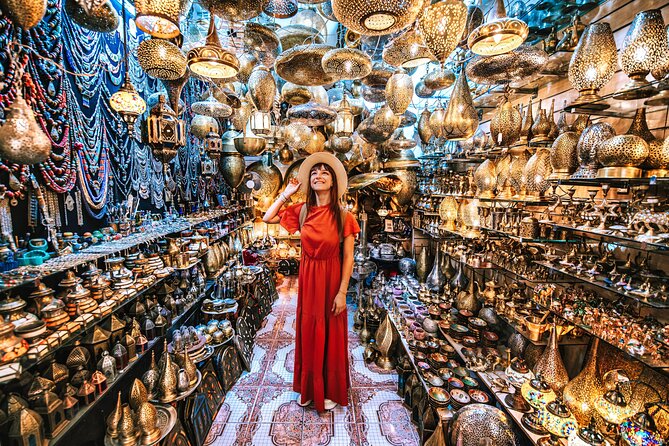
On Merzouga mornings, you have the option for sunrise over the dunes if you wake up early. After breakfast, the desert excursion focuses on several small but meaningful stops rather than one long ride.
You start by visiting the lake of Merzouga, home to exotic birds, then head into the central desert where nomads keep traditional life with animals. The plan includes tea with the nomads, which is one of those moments that is simple, but it often becomes the memory you explain later.
Then you take the route where the Paris Dakar rally used to race. It is a funny, modern connection to an ancient place, and it helps the driving portion feel like a story, not just transport.
You also stop at Mifis mines, once exploited by France, before reaching Khamlia, a village inhabited by black Berber people originally from Mali and Niger. The day includes music and dance, which is more than entertainment because it gives you a cultural anchor for where you are.
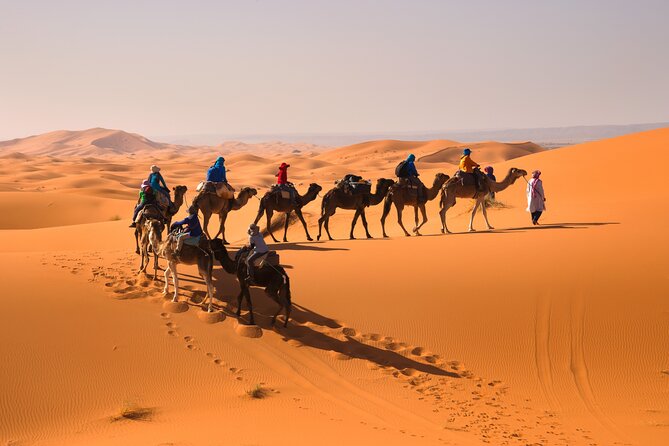
If you ride a camel, you arrive at camp just before sunset. That timing is built for the light, and it makes a difference in how sand dunes look and feel. Dinner at the camp is included on this night.
Rissani souk, fossil crafts in Erfoud, Todra Gorge cliffs, then Dades Valley mud kasbahs
After breakfast, you leave the desert and drive to Rissani, historically a stopping place for Saharan caravans. If your timing matches market days, you can visit the souk on Tuesdays, Thursdays, or Sundays. Even without a market, Rissani sets the tone for the return to life beyond the dunes.
Next is Erfoud, known for fossil mining and artisan fossil factories, and also associated with a date festival. The plan includes a stop at a local artisan collective where you can learn how fossil-rich rock gets transformed into finished objects. This is a good use of time because it connects “the desert” to the materials people make a living from.
Then you push toward Todra Gorge, passing villages like Millab, Tinjdad, and Toroug. The Todra gorges are a narrow vertical passage with cliffs around 300 meters high. It is popular for climbing, and even if you are not climbing, the height makes the place feel dramatic fast.
From Todra, you arrive in Dades Valley. The plan flags rock formations called monkies fingers and the mud kasbahs in the area. This day ends with dinner and rest, giving you a chance to recharge before the next big UNESCO leg.
Rose Town, Ouarzazate Hollywood, and Ait Ben Haddou UNESCO kasbah power
Today’s drive is about trading desert grit for rose-scented spring and cinema-country scenery. You head to El Kalaa Mgou’na, often called Rose Town, where over 400 tonnes of rose petals are picked in spring to process into rosewater and perfume exports. The rose festival is held every May, but even outside the festival, the framing is helpful because it shows how seasonal Morocco can be.
Then you drive through the Kasbah countryside toward Skoura, surrounded by thousands of palm groves and known for beautiful kasbahs. The plan continues to Ouarzazate, nicknamed the Hollywood of Africa because of Morocco’s big cinema studios.
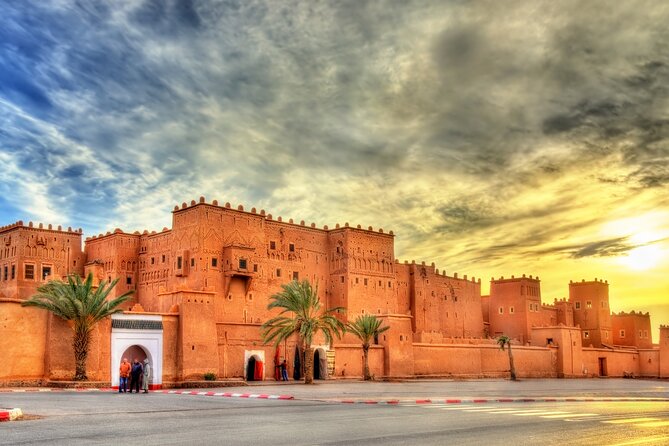
The final and strongest anchor is Ait Benhaddou, a UNESCO World Heritage site and one of the most filmed and photographed kasbahs in Morocco. You get free time to visit it and lunch in the village. This is the day where you slow down, look for details in the structure, and let the place sink in.
Marrakech Medina guide time, Bahia and Saadian sights, Majorelle Gardens, then Jemaa el-Fna at night
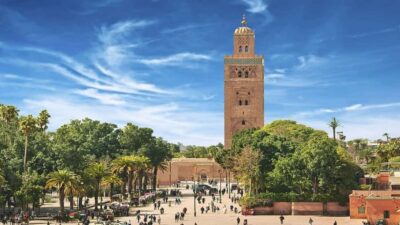
Marrakech is where the tour flips from road time to street time. You start with a private guided walk in the Medina at the UNESCO Bahia Palace. This part is built around souks, maze-like alleys, and the stories behind the spaces, including the Mellah neighborhood context. The value is not just seeing doors and courtyards, it is learning what you are looking at.
In the afternoon you continue with more guided highlights, including the Bahia and El Badi Palaces and the Saadian Tombs. Then the plan includes Majorelle Gardens, a famous garden retreat tied to Jacques Majorelle and later Yves Saint Laurent. Even if you think gardens are not your thing, the contrast with the Medina makes it a smart afternoon pause.
As evening comes, Jemaa el-Fna becomes the show. You can watch musicians, storytellers, acrobats, dancers, and even snake charmers. If the crowd feels like too much, the plan points you to cafés above the square, where you can eat with a calmer viewpoint.
This is also where you use your guide’s tips. Ask for one or two easy ways to enjoy the area without getting dragged into tourist traps.
Ending in Casablanca or Marrakesh, with the ride handled
The tour ends with a driver transfer from your accommodations to your departure airport. Your options listed are Marrakesh airport or Casablanca airport.
This matters more than it sounds. After desert roads and medina days, you want the last transfer handled without stress. You also avoid the common problem of trying to coordinate your own timing while your energy is running low.
Should you book this private Casablanca-to-Sahara Morocco tour?
I think this tour is a strong fit if you want a structured Morocco sweep without spending weeks planning. It hits the headline cities you hear about, but it also gives you actual guided time where it counts, like Fes el-Bali and Marrakech’s UNESCO sites.
Book it if you enjoy variety, big architecture in Casablanca, blue-town wandering in Chefchaouen, Roman ruins at Volubilis, then desert culture in Merzouga. The pacing works best if you are comfortable with long drives and want a single base strategy rather than moving around independently.
If you prefer a slower trip with fewer road hours, you might find the Sahara approach a bit intense. But if your priority is seeing Casablanca, Tangier, Chefchaouen, Fes, the dunes, and Marrakech on one seamless private plan, this one checks the boxes.
FAQ
What is the duration of this private Morocco tour?
It runs for about 12 days.
Where does the tour start, and how do you get there on day one?
It starts in Casablanca. If you arrive at Casablanca Airport (CMN), you meet the team outside Terminal 2 with a sign with your name.
What’s included in the price?
Included items are private transportation, airport or port pickup and drop-off, licensed local guides in Rabat, Tangier, Fes, and the Marrakech Medina, bottled water during touring, 11 nights of accommodation, fuel, 11 breakfasts, and 3 dinners.
Are flights included?
No. Flight tickets are not included.
Are lunches and drinks included?
No. Lunches, dinners (except the included ones), and all drinks are not included.
Are entrance fees included for major sites?
Entrance fees are not included in the package.
Is the tour truly private?
Yes. It is private, so only your group participates.
Can the itinerary be adjusted?
Yes. The tour notes that it can be customized for preferences such as adding days, choosing hotel or riad types, and adjusting excursions or arrival and departure locations.
Do you get local guiding in the big medinas?
Local guiding is included in Rabat, Tangier, Fes, and the Marrakech Medina. The rest of the time is a mix of guided stops and time on your own.
Latest additions near Casablanca
- 11 Days Adventurous Must-Do Morocco Cultural Tour from Casablanca★ 5.0 · 15 reviews
- Chefchaouen the Blue City Full-Day Trip from Casablanca★ 4.5 · 79 reviews
- Marrakeck City tour from Casablanca all the day around trip★ 5.0 · 35 reviews
- Casablanca City Tour: Hassan II Mosque, Medina & Hidden Gems★ 4.5 · 38 reviews
- 14 Days From Casablanca- Morocco Grand Tour★ 5.0 · 24 reviews
- Casablanca Night Tour with Andalusian Dinner Show★ 4.5 · 25 reviews
- Private full day trip to chefchaouen from Casablanca with lunch★ 5.0 · 20 reviews
- Private Transfer from Casablanca Airport to Rabat★ 5.0 · 56 reviews
Day Trips from Casablanca, compared.
Marrakech Day Trip with Camel Ride from Casablanca
Read our review →
10 Day Desert Tour From Casablanca via the Imperial Cities
Read our review →
Browse the lists this tour appears in