
Reviewed · DAY TRIPS FROM CASABLANCA
15 Days Morocco Private Grand Tour From North To South Starting From Casablanca
Morocco goes from ocean breeze to Sahara stars in 15 days. This private grand tour links imperial cities, the blue medina of Chefchaouen, and a real night in the desert camp with minimal hassle. You get guided time in the biggest sites, plus you still have breathing room to wander on your own.
I particularly like how the plan balances big-name stops with smaller, scene-setting places. You’ll see Roman ruins at Volubilis, minarets and medinas in Fes, and coastal Morocco in Essaouira and Safi, not just one highlight loop. It also helps that you get breakfast every day and a few dinners so your meals are handled on the days that matter.
One drawback to plan for is drive time. North-to-south Morocco covers a lot of ground, so you’ll spend more hours in the car than on typical city breaks, especially in the middle stretch toward the Sahara.
In This Review
- Key highlights to look for
- Casablanca start: Hassan II Mosque and an easy first night
- What to watch for
- Rabat and Asilah: Chellah ruins, Kasbah doors, and Portuguese traces
- Why this day is valuable
- Tangier to Tetouan to Chefchaouen: the blue city chapter starts
- Chefchaouen tip that pays off
- Rif Mountains day hike: Akchour waterfalls and God’s Bridge
- A practical note
- Volubilis, Moulay Idriss, and Meknes to Fes: Roman to imperial in one arc
- Why this routing is smart
- Fes el-Bali with a local guide: tannery views and old-world learning
- Your “how to enjoy Fes” checklist
- Toward the Sahara: Middle Atlas cedars, monkey spotting, and Ziz Valley ksars
- How the day sets up the desert night
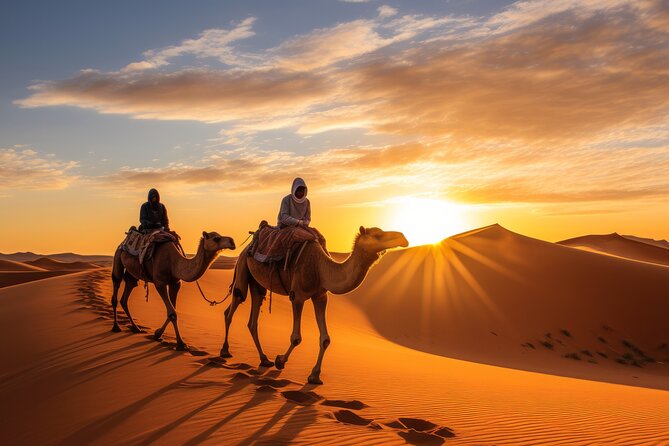
- Merzouga desert adventure: sunrise, nomad tea, camel ride, and Khamlia music
- What to pack for desert time
- Rissani, Erfoud fossils, and Todra Gorge to Dades Valley
- A small reality check
- Ait Benhaddou and Ouarzazate: kasbahs and Hollywood of Africa
- Why I like this portion of the route
- Marrakech medina with private guiding: Bahia Palace, Saadian Tombs, and Jemaa el-Fnaa
- One good way to enjoy Jemaa el-Fnaa
- Essaouira coast: argan forests, harbor fishing, and Scala ramparts
- The best use of time here
- Safi, El Jadida, and Casablanca farewell: Portuguese cisterns and sea-views
- Don’t overschedule after this
- Price and value: what you’re paying for in a 15-day private tour
- What to consider for your budget
- Who should book this Casablanca-to-South Morocco route
- Should you book this 15-day private Morocco grand tour?
- FAQ
- How long is the Morocco private grand tour from Casablanca?
- What is included in the tour price?
- Are meals besides breakfast included?
- Is airport or hotel pickup included?
- Are entrance tickets included for the main sights?
- What does the Sahara desert night include?
- Which cities and areas are covered on this route?
- Is this tour private?
- What is the cancellation window?
Key highlights to look for
- Hassan II Mosque with special access for non-Muslims, including a guided visit and Atlantic views
- Chefchaouen early morning option, including sunrise viewing over the mountains
- Volubilis Roman ruins, including merchant houses and mosaic details
- Merzouga desert night camp, with camel ride plus a private tent that has a toilet and shower
- Private guiding in Marrakech medina, covering Bahia Palace, Saadian Tombs, and more
- Atlantic coast finale, with Essaouira and Portuguese-era El Jadida cistern
Casablanca start: Hassan II Mosque and an easy first night
Your trip begins in Casablanca at Mohammed V airport, then straight to one of Morocco’s headline sights: Hassan II Mosque. Opened in 1993, it sits on an outcrop above the Atlantic, and the minaret is a standout with its 210 m height. One smart detail for planning your visit, this is one of the few mosques in Morocco where non-Muslims can enter, and the tour is set up as a guided experience focused on Moroccan and Islamic craftsmanship.
Day 1 is also your “arrive and reset” day. After airport pickup and a city drive, you’ll get your first taste of modern Casablanca without needing to fight taxis or navigation. Overnight is in a hotel, which is helpful after travel because the next days ramp up into real medina exploring.
More day trips out of Casablanca:
- Marrakech Day Trip with Camel Ride from Casablanca
★ 5.0 · 740 reviews - Fez Guided Tour with lunch from Casablanca
★ 5.0 · 496 reviews - Private Rabat Day Trip from Casablanca
★ 5.0 · 382 reviews
What to watch for
Admission at the mosque isn’t included, so budget for it. Also, the drive from the airport to the city can feel long right after landing, so keep your first evening low-key.
Rabat and Asilah: Chellah ruins, Kasbah doors, and Portuguese traces
On the way from Casablanca’s coast toward Morocco’s administrative center, you’ll visit Rabat with a focus on sites that explain the country’s layering of eras. You’ll walk through the Chellah Necropolis area, where Roman and later Islamic ruins share the space. Then you go through the grand gate of the Kasbah des Oudaias into the original heart of Rabat.
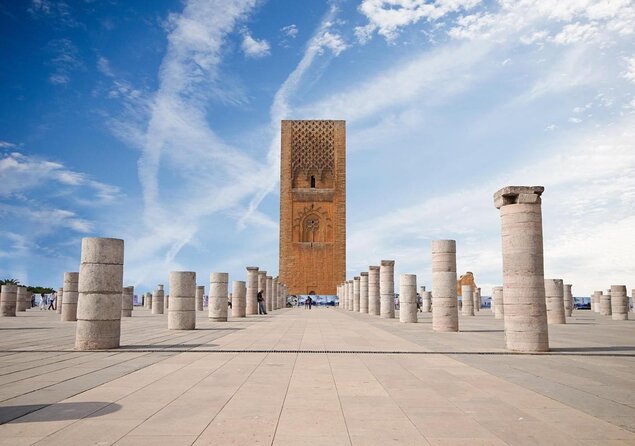
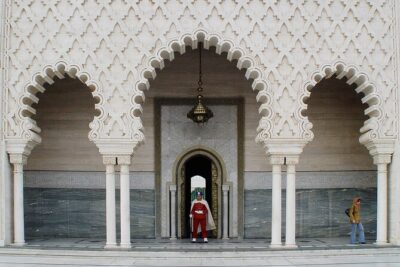
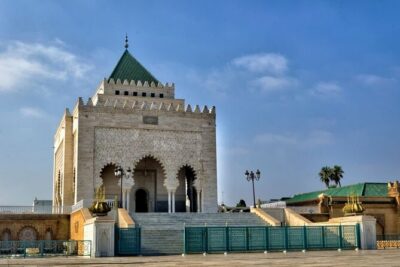
After that, the itinerary turns quieter and calmer with the Andalusian Gardens. It’s a good contrast to the city squares later in the trip, and it’s a place where you can actually slow down. The day also includes Hassan Tower, the unfinished mosque minaret project and the Mausoleum of Mohamed V.
From Rabat you continue to Asilah, a fortified Atlantic town with visible Portuguese-era influence. The old ramparts and the Raisuni Palace are the key pointers here, and you’ll sleep in either a hotel or a traditional riad.
Why this day is valuable
Rabat and Asilah help you understand Morocco beyond Marrakech. You see the “state and sea” side of the country, plus you get a historic feel without the same crowds you’ll meet later.
Other Casablanca days to consider
- Casablanca: Hassan II Mosque Premium Tour with Entry Ticket
★ 4.5 · 2,971 reviews - Casablanca City Tour with Hassan II mosque ticket
★ 5.0 · 2,480 reviews - Casablanca: City Tour with Hassan II Mosque Entry Ticket
★ 4.6 · 1,137 reviews - Private Tour of Casablanca with Hassan II Mosque Entry Ticket
★ 5.0 · 1,102 reviews
Tangier to Tetouan to Chefchaouen: the blue city chapter starts
Tangier is your gateway from Europe and you’ll explore the Medina area and the compact Kasbah zone. The Kasbah walk is manageable because the area is small and signposted, so you don’t need to over-plan. If you want extra time, there’s the Cap Spartel area and the Cave of Hercules, which pairs well with a slow morning coffee and an Atlantic view.
Then you pass through Tetouan on your way to Chefchaouen. Tetouan’s medina is UNESCO-listed, and the town sits right at the foot of the Rif Mountains near the sea. You’ll have time to tour on your own with driver recommendations, and lunch is left flexible so you can match your pace.
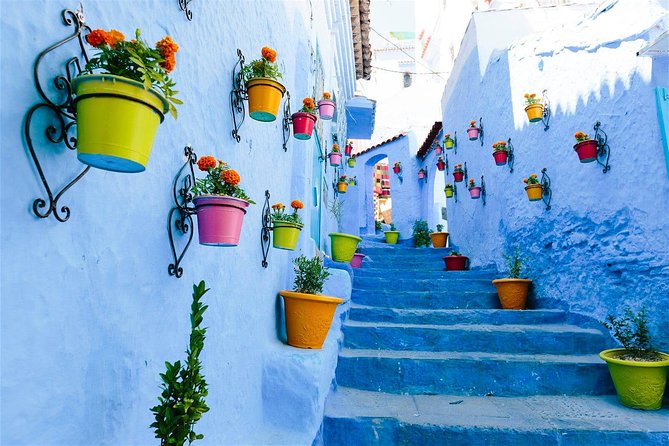
Chefchaouen is where the trip really changes tone. You check in to a riad, then you’re free to wander the blue lanes at your own speed. Outa el Hammam is a key town square for people-watching, and it’s also a good place to orient yourself before you start climbing into the smaller alleys.
Chefchaouen tip that pays off
Plan for the sunrise option. If you can get up early, the Spanish Mosque viewpoint gives you one of the best ways to see the town and the surrounding hills before the shops open.
Rif Mountains day hike: Akchour waterfalls and God’s Bridge
The next day stays in the Rif for a hike that feels more “real nature” than sightseeing. You depart Chefchaouen for the Akchour Cascades area, where cedar trees frame the walk and you follow the river toward multiple waterfalls. Depending on conditions, you might even get the chance to cool off in the water along the route.
There’s also a choice of paths. On one side you can take a steep route toward God’s Bridge, a natural rock formation. Or you can follow the canyon to view it from below. Once you’re back, you return to Chefchaouen for more medina wandering and market time, including fruit stops if you want a simple snack that feels local.
A practical note
Footwear matters here. The day is listed as flexible hiking time, so wear shoes that handle uneven paths, not city sandals.
Volubilis, Moulay Idriss, and Meknes to Fes: Roman to imperial in one arc
Leaving Chefchaouen, you travel toward Fes but stop for two quick layers of Morocco’s older stories. First is Volubilis, a UNESCO site with Morocco’s best-preserved Roman ruins. It’s not just standing stones, either. You can walk through merchant homes, see visible mosaic details, and notice elements like heating systems in the surviving structures. If you want a guide onsite, there are usually options available.
Then you go to Moulay Idriss, a town founded in 789 CE by Moulay Idriss and tied to the Idrisid dynasty. Even if you don’t go deep into the story, the architecture cues you in that this is an important religious center. A standout detail is the only round minaret in Morocco.
After that, you reach Meknes, a prosperous city where the medina is smaller than Fes, and that matters because it feels less stressful. Your driver shows you key parts of the imperial zone, including Bab al-Mansour, the Mausoleum of Moulay Ismail, and the Royal Stables. A fun connection here is the Roman materials reused from Volubilis, so keep an eye out for Roman columns tucked into places you might not expect.
You finish the day in Fes, staying in a riad inside the medina area.
Why this routing is smart
By the time you arrive in Fes, you’ve seen how empires shaped the geography, not just the buildings. It also spreads the driving stress into smaller, rewarding stops.
Fes el-Bali with a local guide: tannery views and old-world learning
Fes is where the medina experience becomes serious. You start with Fes el-Bali, often described as the most complete medina in Morocco because so much of the older layout remains intact. You’ll explore with a guide, beginning around the main thoroughfare Talâa Kebira and weaving into the narrow lanes.
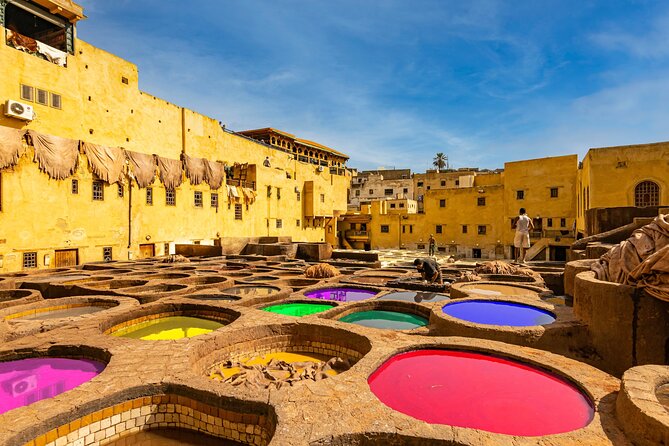
One of the best ways to understand the city’s daily rhythm is through the Chouara Tannery area. You’ll navigate streets, then climb to a rooftop view at a nearby leather shop for a wider look at men at work. The point isn’t just the scene, it’s how little the workflow has changed over hundreds of years.
From there you also visit Al-Qarawiyyin University, a 9th-century institution that’s among the oldest universities in the world. The tour can also include stops like Al Attarine Madrasa, which helps you see Moroccan artisanship in action.
Your “how to enjoy Fes” checklist
Wear layers. The medina streets can be cool in the morning and hotter later. And give yourself time after the guided segment to get your bearings, because the city will feel like it has its own rules.
Toward the Sahara: Middle Atlas cedars, monkey spotting, and Ziz Valley ksars
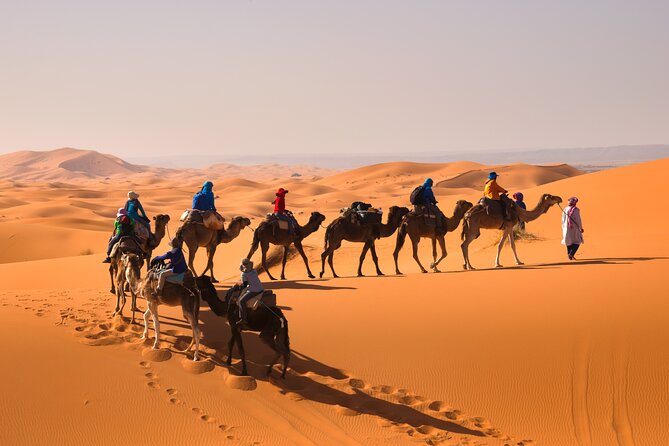
This is a long travel day, but it’s planned to keep interest high. You start by crossing the Middle Atlas Mountains, with a stop in Azrou and its cedar forests. If you want a quick nature break, you can detour to Cèdre Gouraud Forest where Barbary macaque monkeys hang around near the road.
Then you go to Midelt for lunch, a cold high plateau town known as Morocco’s Apple City. The reason it grows apples here is tied to the Moulouya River, which provides year-round water. After that, you start seeing the Saharan trade route shaping the view.
You follow the Ziz Valley, and you notice fortified houses called ksars built by merchants to protect goods moving along the route. Soon after crossing Ziz Gorge, the first signs of sand dunes appear, and near Erg Chebbi you see the real Sahara scale starting to form.
How the day sets up the desert night
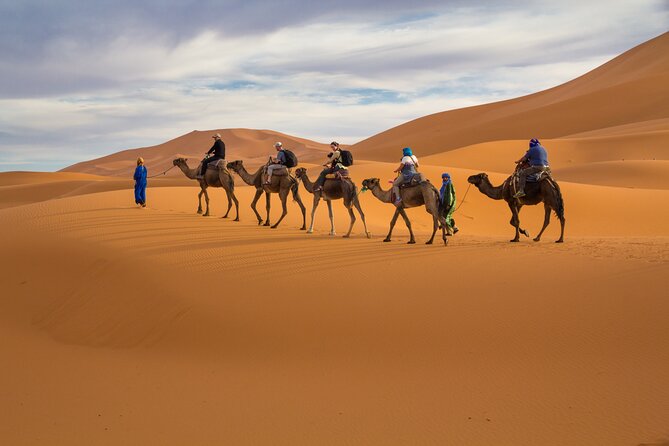
You prepare for the approach to Merzouga and the desert camp. The itinerary includes a camel ride option, with arrival before sunset so you can watch the dunes change color as light fades. Dinner and your night in the traditional camp follow.
Merzouga desert adventure: sunrise, nomad tea, camel ride, and Khamlia music
The Sahara day is split into morning and afternoon energy. If you wake early, sunrise over the sand dunes is a big payoff. Then after breakfast, you explore multiple desert stops.
You begin with Merzouga’s lake, known for exotic birds. Next you head into the middle of the desert where nomads live a traditional life, and you’ll sip tea with them. Then you visit sections along a route linked to the Paris Dakar rally days, giving the desert a modern connection too.
You can also explore Mifis mines, which were exploited by France. The final cultural note here is Khamlia village, inhabited by black Berber people originally from Mali, Niger, and more, with music and dance in the itinerary. It’s one of those stops where the Sahara feels less like a photo backdrop and more like a lived-in home.
What to pack for desert time
Keep a light layer for early mornings. Even when the day is warm, desert nights can feel cooler once the sun drops.
Rissani, Erfoud fossils, and Todra Gorge to Dades Valley
After leaving the desert camp behind, you head toward Rissani, a caravan stop from Saharan trade routes. If timing matches market days, you may visit the souk, with markets listed on Tuesdays, Thursdays, and Sundays, and it’s described as the largest in the region.
Then you go to Erfoud, famous for its date festival and fossil mining. Fossils show up in markets, but the real insight comes from stopping at a local artisan collective where you see the process of turning fossil-rich rock into finished objects of all sizes. This is a good day for shoppers who want meaning behind what they’re buying.
Next is Todra Gorge. The cliffs here can reach around 300 m tall, creating that classic narrow passage feel. You then reach Dades Valley, with rock formations known locally as monkies fingers and mud kasbah views.
A small reality check
This day includes driving between several towns. Plan for a relaxed dinner afterward because your legs might be fine for short walks, but not for hours of steep climbs.
Ait Benhaddou and Ouarzazate: kasbahs and Hollywood of Africa
On the way deeper south, you stop in El Kalaa Mgou’na, also called Rose Town. The rose story is tied to a spring harvest where hundreds of tonnes of rose petals are picked for processing into rosewater and perfume. You also hear about the rose festival in May, which helps explain why this region is famous even when the rest of the country feels focused on cities.
Skoura is the next important stop. It’s surrounded by palm groves, and it’s known for kasbahs across the area. Then you reach Ouarzazate, labeled Hollywood of Africa due to its cinema studios.
Finally, you visit Ait Benhaddou, the famous UNESCO World Heritage kasbah site that’s been widely filmed. You’ll have free time for your own paced exploration and lunch in the village before heading onward.
Why I like this portion of the route
Kasbah stops keep the trip from feeling like a series of cities. Here, you see Morocco’s building style shaped by geography, and the UNESCO site gives you a sense of scale you can’t get from roadside views.
Marrakech medina with private guiding: Bahia Palace, Saadian Tombs, and Jemaa el-Fnaa
Marrakech is your grand-city finale in the interior, and the tour builds it with guided segments. After breakfast, you meet a local private guide for the Medina area, with Bahia Palace as a key UNESCO site. This is where you’ll see Morocco’s city craft in motion, from souks and alleyways to the cultural rhythm of neighborhoods including the Mellah.
Your time also covers visual details like the street presentation of djellabas, babouches, lanterns, and spices in the souks. The guide part matters here because Marrakech can be confusing without context, and you’ll move faster once you know what to look for.
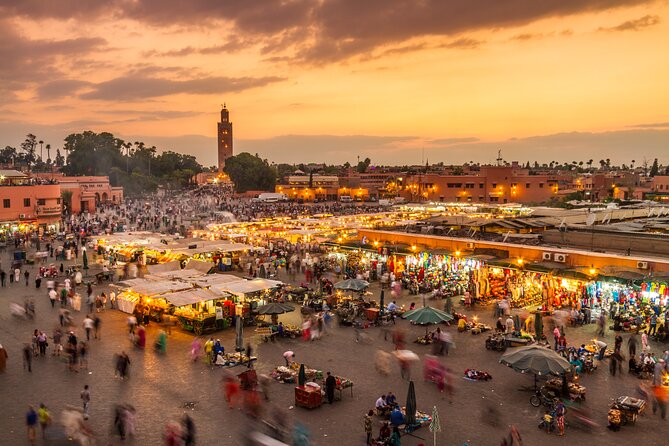
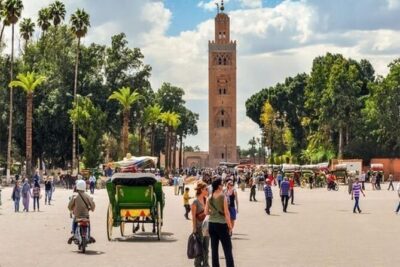
In the afternoon, the private tour continues with places around Bahia and El Badii Palaces, plus the Saadian Tombs. You also visit Majorelle Gardens, famous for being associated with Jacques Majorelle and later Yves Saint Laurent. Then you finish the day in Jemaa el-Fnaa as night brings musicians, storytellers, acrobats, and even snake charmers.
Food stalls run the square, and there are also cafés above where you can eat while watching the show below. Entrances at some of these sites are marked as not included, so keep that budget in mind.
One good way to enjoy Jemaa el-Fnaa
Pick one simple meal or drink, then watch the square change. If you try to do everything at once, you’ll end up stressed.
Essaouira coast: argan forests, harbor fishing, and Scala ramparts
Next you travel west to Essaouira, a coastal town with a slower pace. The route passes through rolling plains and argan forests, and you might see goats grazing on argan trees when conditions allow. There’s also an option to stop at an Argan Oil Cooperative to see how oil is extracted from the nut, which is useful if you want to buy argan products with more context.
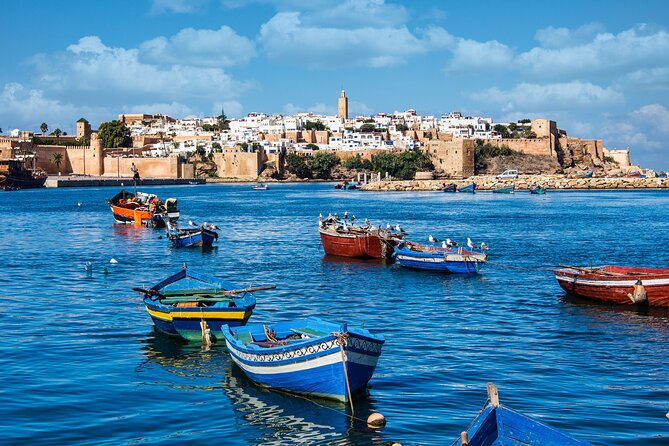
In Essaouira, you stroll the harbor where fishermen sell fresh fish from traditional blue boats. Then you visit the fortified harbor area at Scala for photos, including views of Bab al Mersa, the Door of the Port. The old medina is part of the UNESCO area too.
The best use of time here
Just walk. Essaouira is one of the few places on this tour where you can let the day be lighter, and that helps your energy before your final coastal stops.
Safi, El Jadida, and Casablanca farewell: Portuguese cisterns and sea-views
The last stretch turns back toward Casablanca. You leave for Safi, a seaside town known for pottery and ceramics. You visit Ksar el Bahr, built in the 16th century, then walk the walkway for port and ocean views.
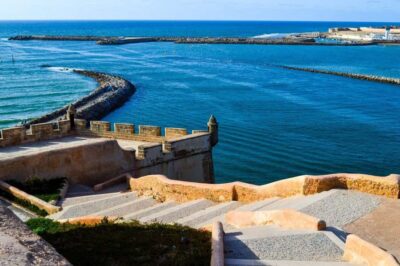
Then you stop in El Jadida for the Portuguese cistern, described as hauntingly beautiful. You can also walk the ramparts and visit the Church of the Assumption.
When you arrive in Casablanca, you get a bit of old Medina time and a stroll along the Corniche. The tour specifically includes time near Rick’s Café area so you can grab a bite and soak up the classic film-era vibe from the outside.
Finally, you drive to Casablanca airport for departure.
Don’t overschedule after this
Even if your flight is later, you’ll still be tired from days of driving and walking. Keep your last evening flexible so you’re not sprinting between seats and taxis.
Price and value: what you’re paying for in a 15-day private tour
At $1,825.27 per person for a 15-day private grand tour, the value depends on what you hate doing. If you like planning every route change and finding each guide, you might feel you can DIY Morocco cheaper. But if you want your time spent on sights and not on logistics, this price starts to make sense quickly.
You’re paying for:
- Private transportation with a driver/guide through major regions
- 14 nights of accommodation in hotels or traditional riads
- Desert adventure including camel ride and a luxury night camp with a private tent, toilet, and shower
- Breakfast every day (15 breakfasts), plus three dinners included
- Local city guides in Fes and Marrakech medina
- Bottled water during touring
That combination is what turns this from a list of places into a working trip. You can go to Volubilis, Fes, Marrakech, and the Sahara in one flow without constantly renegotiating transport or guessing timing.
What to consider for your budget
Some site admissions are not included. Examples in the itinerary include Hassan II Mosque, and entrances for parts of Bahia Palace and Jemaa el-Fnaa are marked not included. Tips are also not included, which is a real cost to factor in.
Who should book this Casablanca-to-South Morocco route
This tour fits best if you:
- Want a north-to-south overview without cutting out the interior
- Like guided context in big medinas like Fes and Marrakech
- Are excited by a Sahara night that includes comfort, not just a basic camp
- Prefer private pacing over a bus-group style schedule
It may not fit if you’re sensitive to long drive days. This itinerary is built for movement, and you’ll notice it most in the middle section heading toward the Sahara.
Should you book this 15-day private Morocco grand tour?
If your dream Morocco trip includes Casablanca, Chefchaouen, Fes, Marrakech, one true desert night, and a coastal ending in Essaouira, Safi, and El Jadida, I’d seriously consider booking. The biggest strength is the way it ties together very different regions, with the right amount of guiding in the places where you most need it.
Book it if you want the trip to run smoothly, especially if you value staying in riads and having breakfast handled daily. Skip it if you dislike car time or want a slower, stop-everything travel rhythm, because the route is designed to cover a lot.
If you do book, pack comfortable shoes, bring a light layer for desert mornings, and plan your day snacks for the moments when meals are on your own. That way, the tour feels like freedom, not rushing.
FAQ
How long is the Morocco private grand tour from Casablanca?
It lasts about 15 days.
What is included in the tour price?
It includes air-conditioned transport, private transportation, a driver/guide, accommodations for 14 nights, desert adventure with camel ride and luxury night camp (with private tent and toilet and shower), bottled water during touring, local city guides in Fes and Marrakech medina, and breakfast every day plus three included dinners.
Are meals besides breakfast included?
Yes, breakfasts are included for 15 days, and dinners are included for three days. Meals not specifically listed are not included, and drinks are not included.
Is airport or hotel pickup included?
Yes. The tour includes airport arrival and departure, plus hotel pickup and drop-off.
Are entrance tickets included for the main sights?
Not always. Some places are marked as admission ticket free, while others are not included, such as Hassan II Mosque. Some Marrakech sites are also marked as not included.
What does the Sahara desert night include?
You get a desert excursion in the Merzouga area, including camel ride timing to arrive before sunset, and one night in a luxury desert camp with a private tent that includes a toilet and shower.
Which cities and areas are covered on this route?
You’ll visit Casablanca, Rabat, Asilah, Tangier, Tetouan, Chefchaouen, Fes, Meknes, Volubilis, Moulay Idriss, the Merzouga desert area, Rissani, Erfoud, Todra and Dades areas, Ouarzazate, Ait Benhaddou, Marrakech, Essaouira, Safi, El Jadida, and you end back in Casablanca.
Is this tour private?
Yes. It is a private tour/activity, so only your group participates.
What is the cancellation window?
You can cancel for a full refund up to 24 hours in advance of the experience start time. If you cancel less than 24 hours before, the amount paid is not refunded.
Latest additions near Casablanca
- Casablanca Airport Transfer from hotel in Casablanca★ 5.0 · 18 reviews
- Private Transfer from Casablanca Airport to Marrakech★ 5.0 · 13 reviews
- Your Private Casablanca Transfer★ 5.0 · 52 reviews
- Amazing airport pickup/ drop off in Casablanca/ safe&easy★ 5.0 · 218 reviews
- Morocco Tours 10 Days from Casablanca : Imperial Cities & Sahara Desert★ 5.0 · 12 reviews
- Exclusive tour of Casablanca with access to the Hassan II Mosque★ 5.0 · 205 reviews
- Sunset Camel Ride in the Palm Grove Of Marrakech★ 5.0 · 34 reviews
- 11 Days Adventurous Must-Do Morocco Cultural Tour from Casablanca★ 5.0 · 15 reviews
Day Trips from Casablanca, compared.
Marrakech Day Trip with Camel Ride from Casablanca
Read our review →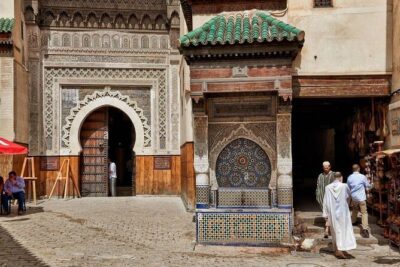
10 Day Desert Tour From Casablanca via the Imperial Cities
Read our review →
Browse the lists this tour appears in