
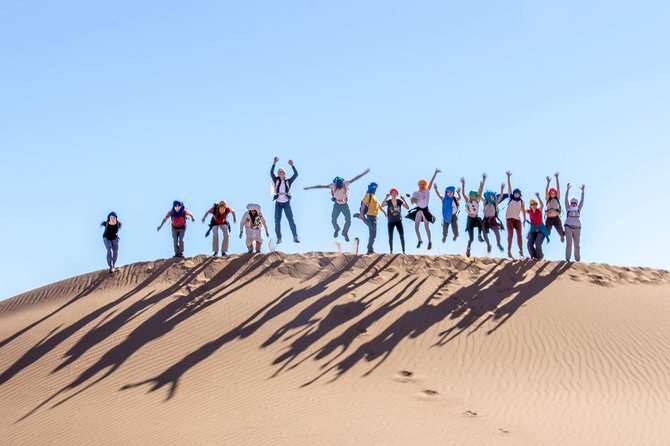
Reviewed · SAHARA DESERT TOURS TO MERZOUGA
3-day trek – In the shade of palm trees
Palm shade in the Sahara feels unreal. This 3-day trek in M’Hamid mixes a gentle start through the village palm grove, big dune country around Bertham, and a stony return through hamada with breaks at desert wells. What I like most is the family-style warmth reported by guide teams like Hassan and Bachir (plus Bakar, Ibrahim, and Mohammed in other groups), and how the food is handled like part of the experience, not just a stopgap. One consideration: you will need to bring your own sleeping bag, since it is not included.
You’ll start at 8:00 am and return to the same meeting point. This is a private trek, so you are not sharing camp with random strangers, and it runs at a pace that fits people with moderate fitness.
In This Review
- Quick highlights
- Why this trek in M’Hamid works as a first Sahara trip
- Day 1: from M’Hamid El Ghizlane palm grove to Marabout Sidi Naji
- Day 2: Bertham dunes, nomad traces, and a night near ostrich plains
- Day 3: hamada stone desert, fossils, and desert wells
- Food and camp comfort: what’s included, what to plan for
- The guide team vibe: warm people, real conversations, and a family feel
- Price and value: is $424.09 per person a fair deal?
- Who this Sahara palm-trees trek suits best
- A simple decision checklist before you book
- Should you book this 3-day palm-trees trek from M’Hamid?
- FAQ
- What time does the trek start?
- Where does the trek begin and end?
- Is pickup included?
- Is this a private tour?
- What’s included in the price?
- Do I need to bring a sleeping bag?
- What fitness level do I need?
- Are admission tickets included?
- What is the cancellation window for a full refund?
Quick highlights
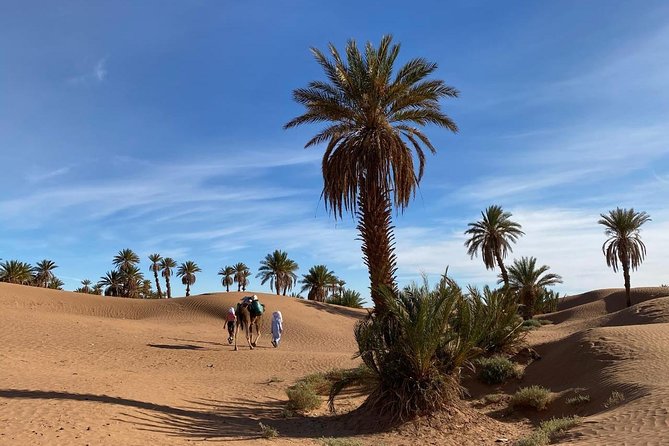
- Palm grove start from M’Hamid El Ghizlane with a meal in the shade before dunes take over
- Bivouac at Marabout Sidi Naji, with an evening around the fire under the starry sky
- Dunes of Bertham and traces of nomads plus a night close to plains associated with ostrich flocks
- Hamada return where fossils or desert treasures can be spotted, plus stops at desert wells
- Included meals and sleeping setup, with all fees and taxes covered
Why this trek in M’Hamid works as a first Sahara trip
This is one of those Sahara experiences that feels practical, not just scenic. You spend time moving on foot, then you settle into a camp rhythm where the day’s walking makes sense. The best part is that it does not treat the desert like a single big postcard. You see different faces of the region in a short window, from palm shade to dunes to a stone desert.
The experience also has a strong human side. You are not just dropped into the sand with a playlist and a prayer. You travel with the desert bird team, including camel drivers, guides, and cooks. That matters because it shapes your comfort level, your pace, and how smoothly the evenings work. In the groups described, people consistently connect with the guides, and that tends to be what makes a short trek feel like a real memory instead of a checkbox.
There is also a smart balance in how the days are paced. Day 1 starts relatively gentle with the palm grove and a cultural sanctuary stop. Day 2 turns the dial toward dunes. Day 3 shifts to hamada and practical desert landmarks like wells.
More Merzouga desert circuits:
- From Marrakech: 3-Day Merzouga and Sahara Desert Tour
★ 4.9 · 15,308 reviews - From Marrakech: Merzouga 3-Day Desert Safari with Food
★ 4.7 · 12,232 reviews - 3 Days Desert Tour From Marrakech To Merzouga Dunes & Camel Trek
★ 5.0 · 10,125 reviews
Day 1: from M’Hamid El Ghizlane palm grove to Marabout Sidi Naji
You begin in M’Hamid El Ghizlane, and the walk opens right where you want it to open, in the palm grove. That first stretch is not just for views. It helps you adjust to the trek before the sand and heat factor in harder. You cross the palm grove and stop for a meal in the shade of palm trees, which is a big quality-of-life upgrade for anyone who does not love the idea of eating while sweating.
From there, the trail continues toward Marabout Sidi Naji, described as a sanctuary of the Nouajis tribe’s ancestor. This is a meaningful cultural stop, so it feels like more than “walk to a random point.” You then set up camp, the bivouac for the night, in this sanctuary area. The evening is built around a fire and the sky above it. The starry night element is a classic desert payoff, but here it is tied to an actual setting you walked to, not just a campout somewhere generic.
One practical note for day 1: you are starting at 8:00 am, so plan for an early morning. If you are coming in from elsewhere, make sure you are not scrambling right before pickup. A smooth start makes the palm grove meal feel like a reward, not a forced stop.
Day 2: Bertham dunes, nomad traces, and a night near ostrich plains
After breakfast, the trek shifts to the dunes of Bertham, called out as magnificent. This is where the Sahara starts to feel fully Sahara, with sand forms that change how the horizon looks from one hour to the next. You also get something important for context: you see traces of nomads and their herds that once lived there. Even when you are not looking at “evidence” in a museum sense, the land feels used and understood, not empty.
This day keeps the focus on movement and camp. You set up the bivouac for the night near the plains associated with ostriches, where nomads still keep their flocks. That detail matters because it signals continuity. The region is not only “then.” It is still part of a lived pastoral rhythm.
Expect day 2 to feel longer in your legs than day 1. Dunes tend to do that, even when the group pace is managed well. If you have moderate fitness, you will still likely feel the sand in your thighs by evening. The upside is that day 2 also tends to be the part people remember hardest, because dunes make light look different and sunsets can be spectacular.
If you are someone who hates feeling rushed, this style of trek should suit you. The focus is walking, camp, food, and conversation, not speed records.
Day 3: hamada stone desert, fossils, and desert wells
On day 3, you return toward M’Hamid through the hamada, the stone desert area where fossils or other treasures can be found. Hamada is interesting because it feels like a different world from dunes. Instead of soft sand, you get a stony surface that changes footing. It can be easier on some people’s energy, but it also demands attention underfoot.
You also stop at wells, described as real meeting places in the desert. That is one of those small details that makes the final day feel meaningful. Wells are where movement turns into community. In a short trek, stopping by wells gives you a sense of how people historically timed routes and social life around water.
Then it’s time to say goodbye to the caravan and return to the meeting point. The ending is not just logistical. You have seen three distinct terrain types, and you have had a chance to feel how the day changes as the terrain changes.
Other Merzouga days to consider
- 3-Day Tour to Merzouga Erg Chebbi with Food & Camel Trek
★ 5.0 · 1,770 reviews - From Merzouga: Overnight Camel Trek over Erg Chebbi Dunes
★ 4.5 · 558 reviews - From Fes To Marrakech: 3-Day Sahara Desert Tour & Camel Trek
★ 4.8 · 389 reviews - 2-Day Zagora Tour from Marrakech Including the Atlas Mountains, Camel Trek and Desert Camp
★ 4.5 · 328 reviews
Food and camp comfort: what’s included, what to plan for
The trek includes all meals listed as lunch (3), breakfast (2), and dinner (2), plus eating and sleeping equipment. That is a huge part of the value. Many desert tours advertise meals, then make you scramble for basics. Here, you can plan around the rhythm: breakfast before walking, lunch on the move or during a stop, and dinner at camp.
What is not included is your sleeping bag. That is the big gear gap. Even if you are comfortable while awake, desert nights can cool down fast. Bring a sleeping bag that matches reasonable night temperatures, or at least one you already know works for you.
Also not included is private transportation, so if you need a transfer from Marrakech or another city, you will have to arrange it separately. The good news is that pickup is offered, and the meeting point is near public transportation, so you are not completely stuck figuring everything out alone.
A smart packing mindset for this kind of trek:
- Comfortable walking shoes with decent grip for sand and stone
- A light layer for early mornings and night cooling
- Sun protection, since you will start in 8:00 am light and then move through open areas
- A sleeping bag you trust, because it is on you
One more comfort tip: desert footwear and head coverage are not optional. Even when the trek includes palm-shade breaks, you will be in bright sun a lot.
The guide team vibe: warm people, real conversations, and a family feel
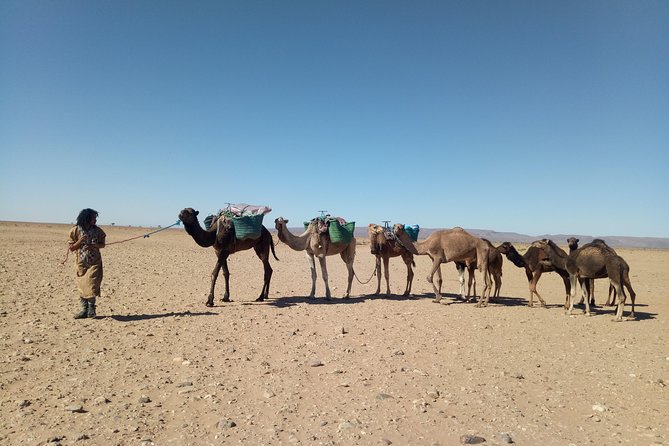
The guide team and camp atmosphere are repeatedly what makes this trek feel special. People describe guides as warm, genuine, and smiling, and they highlight friendly discussions as part of the camp experience. Names like Hassan and Bachir show up in accounts of first-time desert joy, and other groups reference Bakar, Ibrahim, and Mohammed. In practice, that means you are likely to meet a guide who enjoys explaining the region, not just leading a line.
There is also a clear team structure. You are traveling with camel drivers and cooks, which helps explain why mealtimes feel handled. When you have dedicated roles, the camp runs smoother, and you are not stuck waiting around for someone to figure out food logistics after dark.
I also like how this experience tends to feel socially safe for a short trip. People call it family-like and even describe spending the evening around the fire in a relaxed way. If you want a Sahara night that includes conversation and comfort, this style delivers more than a silent photo mission.
Price and value: is $424.09 per person a fair deal?
At $424.09 per person for an approximate 3-day trek, the real question is what you are buying. You are getting:
- Meals (3 lunches, 2 breakfasts, 2 dinners)
- Eating and sleeping equipment
- All fees and taxes
- A private group experience
- Mobile ticket, plus pickup offered
You are paying extra only for what the trek does not cover: a sleeping bag and private transport.
On a pure value level, this looks reasonable because desert tours often charge more for lodging and meals separately. Here, most of the big day-to-day needs are rolled in. The only “gotcha” is sleeping gear. If you already have a good sleeping bag, you are set. If not, factor that cost into your budget.
So if you want a true desert experience without worrying about buying food every day, this price can be a good fit. If you are traveling very light and do not want to think about overnight cold at all, you may need to re-plan your gear.
Who this Sahara palm-trees trek suits best
This trek is aimed at people who want the Sahara to feel human, not just dramatic. It works especially well if:
- You want a first Sahara trek that includes culture and not only dunes
- You like a mix of walking and camp time
- You prefer a private group vibe over meeting strangers in every moment
- You have moderate physical fitness and can handle sand and stone surfaces
It may be less ideal if you are expecting a luxury hotel feel. This is bivouac living, with camp structure and meals, but it is still a trek. Also, if you want a very long trek, 3 days can feel short. That is not a flaw, it is just a style choice.
A simple decision checklist before you book
Before you book, ask yourself these questions:
- Do you have (or want to buy) a sleeping bag suitable for desert nights?
- Can you handle walking on sand at a moderate pace for a few days?
- Are you okay with camp evenings that center on fire, stars, and conversations rather than screens?
- Do you want terrain variety in a short time, palm grove to dunes to hamada?
If you said yes to most, this is an easy choice.
Should you book this 3-day palm-trees trek from M’Hamid?
I would book it if you want the Sahara in three textures: palm shade, dune country, and stone desert hamada, with cultural stops like Marabout Sidi Naji and practical desert landmarks like wells. The strongest reason to choose it is the combination of warm guiding teams and the way meals and camp support your day. At this price, the included food and equipment make the trek feel well put together.
I would think twice only if you are unprepared for sleeping bag needs and the fact that you are walking outdoors for multiple days. If that part sounds manageable, this trek is a solid value way to experience Morocco’s desert beyond the usual photo stop.
FAQ
What time does the trek start?
The activity starts at 8:00 am in Mhamid, Morocco.
Where does the trek begin and end?
It begins in Mhamid, Morocco, and ends back at the same meeting point.
Is pickup included?
Pickup is offered, and the meeting point is near public transportation.
Is this a private tour?
Yes. It is a private tour or activity, and only your group participates.
What’s included in the price?
Included are eating and sleeping equipment, all fees and taxes, and meals (3 lunches, 2 breakfasts, and 2 dinners).
Do I need to bring a sleeping bag?
Yes. A sleeping bag is not included.
What fitness level do I need?
Travelers should have moderate physical fitness.
Are admission tickets included?
The information provided notes admission ticket free for the stops.
What is the cancellation window for a full refund?
You can cancel up to 6 days in advance of the experience for a full refund.
Latest additions near Merzouga
- 3-Day desert tour Marrakech to Fes via Merzouga★ 5.0 · 110 reviews
- Private 4-day Moroccan Sahara Discovery Tour from Marrakech★ 5.0 · 13 reviews
- Private 8 Days Morocco Tour From Marrakech with Sahara Desert★ 5.0 · 27 reviews
- 4-Day Private Merzouga Desert Tour From Marrakech★ 5.0 · 14 reviews
- Private 4 Days Tour From Marrakech to Fes Via Merzouga Desert★ 5.0 · 94 reviews
- 3 Days Private Sahara Tour from Marrakech to Merzouga★ 5.0 · 35 reviews
- Marrakech to Merzouga on Private Tour: 3 Days of Desert Adventure★ 5.0 · 36 reviews
- Private Sahara Discovery Tour from Marrakech to Fez in 4WD★ 5.0 · 35 reviews
Sahara Desert Tours to Merzouga, compared.
3 Days Desert Tour From Marrakech To Merzouga Dunes & Camel Trek
Read our review →
3-Day Marrakech to Merzouga Desert Tour: Camel Rides & Overnights
Read our review →
3-Day Marrakech to Fes Sahara Desert Tour via Merzouga
Read our review →
3-Day Merzouga Desert Experience Camel & Meals
Read our review →
3-Day Tour to Merzouga Erg Chebbi with Food & Camel Trek
Read our review →Browse the lists this tour appears in