
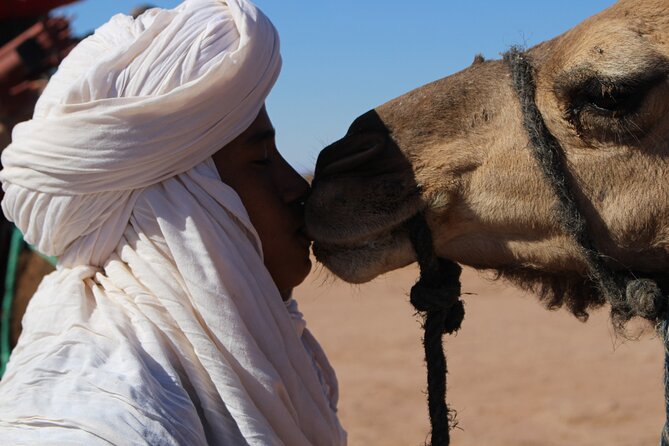
Reviewed · SAHARA DESERT TOURS TO MERZOUGA
5-day trek – In the Draa Valley
Walk where the dunes remember life. This 5-day trek around M’Hamid is a hands-on introduction to nomadic living, following paths animals have used for ages and exploring how the desert can look green, not just sandy. I love the way the route combines erg country with the quieter, less-visited stretch of the Draa Valley, so you get both big desert drama and calm footpath moments.
I also really like the human side: the team behind L’oiseau du désert (including guides such as Bakkar and Mohammed) focuses on organization and hospitality, with days that can run about 13 to 17 km and evenings that turn into bread-baking and fireside hangouts. One thing to consider up front, though, is comfort planning, because the sleeping bag is not included and nights can still feel chilly out there.
In This Review
- Key highlights to know before you go
- 5 days in M’Hamid: what this trek actually feels like
- Why the Draa Valley route is more interesting than the usual Sahara stops
- L’oiseau du désert and the nomads: what the best reviews are really saying
- The day-by-day flow: how a 13 to 17 km desert trek breaks down
- Day 1: Starting in M’Hamid and easing into desert rhythm
- Day 2: Following animal paths and spotting the desert’s living details
- Day 3: More erg country, more focus, more quiet
- Day 4: Desert variety, camps, and the rhythm of nomadic hospitality
- Day 5: Wrapping up back at the meeting point
- Food, sleeping setup, and what you should expect at night
- Price and value: is $581.62 fair for a 5-day trek?
- Who this trek is best for (and who should skip it)
- Should you book the Draa Valley trek with L’oiseau du désert?
- FAQ
- Where is the trek based?
- What time does the trek start?
- How long is the trek?
- Does the tour offer pickup, and do I get a mobile ticket?
- What is included in the price?
- What is not included?
- What fitness level do I need?
- Is this a private tour?
- Can I get a refund if I cancel?
Key highlights to know before you go
- Nomadic-life intro with local guides, including Bakkar and Mohammed, focused on real daily rhythm
- Daily walking range of about 13 to 17 km, so you will earn your views
- Draa Valley variety, alternating arid stretches with the desert’s acclimatized plants
- Erg country that feels tied to long desert history, not a theme-park Sahara
- Strong team organization, plus fireside evenings and shared meals reported in multiple reviews
- Expect minimal charging opportunities, with one guest describing no power outlets
5 days in M’Hamid: what this trek actually feels like
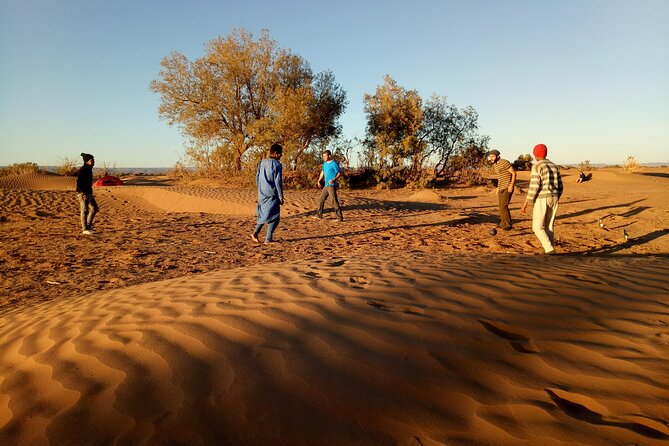
This trek is built for people who want to walk, listen, and slow down. You start in M’Hamid at 8:00 am, and the schedule is designed around walking days, camp nights, and constant contact with people who know the desert as home, not as scenery.
From the way the experience is described, it is not “hardcore trekking” in the mountains sense. The requirement is moderate physical fitness, which lines up with the daily distances people reported, roughly 13 to 17 km a day. If you can handle long walking on shifting sand and you do not mind being “off grid,” you are in the right place.
The other big emotional note is the reset. One guest wrote about going with almost no modern distractions, including no power outlets, and that is exactly the kind of trip where your phone becomes a minor character, not the main actor. I like that trade-off, because it makes the desert feel personal instead of distant.
The experience is also private, meaning you and your group only. That matters. In a setting like this, smaller and quieter often means better pacing, more conversation, and less waiting around.
More Merzouga desert circuits:
- From Marrakech: 3-Day Merzouga and Sahara Desert Tour
★ 4.9 · 15,308 reviews - From Marrakech: Merzouga 3-Day Desert Safari with Food
★ 4.7 · 12,232 reviews - 3 Days Desert Tour From Marrakech To Merzouga Dunes & Camel Trek
★ 5.0 · 10,125 reviews
Why the Draa Valley route is more interesting than the usual Sahara stops
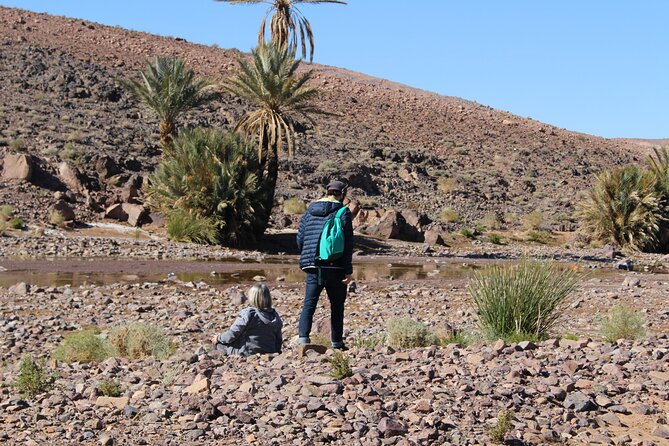
Most people picture the Sahara as a single type of scene. The Draa Valley route is different. You are still in desert country, but the story shifts as you move. The trekking description specifically mentions the “green face of the desert,” which is the part many visitors miss.
In practice, that means you are not just walking through blank sameness. You are looking for plants that have adapted, small signs of survival, and stretches that feel fertile compared to what your brain expects. Multiple reviews also point to alternating conditions, so you get that push-pull of arid and fertile.
Then there is the erg focus. An erg is a sea of dunes, and walking through it gives you the sense that the desert has layers, even if you cannot see them. The route also follows “the footsteps of many animals,” which is a great way to think about how you move. You are not just making footprints, you are using paths shaped by life.
If you like your desert experiences a bit less packaged and more shaped by foot travel, this part of Morocco can feel unusually satisfying.
L’oiseau du désert and the nomads: what the best reviews are really saying
The strongest praise in the reviews is not about fancy facilities. It is about people. Names like Bakkar and Mohammed show up as guides who explain nomadic life and guide the group with confidence. Multiple write-ups also credit professionalism, organization, and genuine warmth.
That shows in the details: you are not dumped into the desert and told to figure it out. Reviews mention attentive support during the 5 days, plus help from roles like camel drivers and a cook. Even if you are not personally involved in every task, you benefit from the fact that someone is managing the practical side so you can concentrate on the walk, the sky, and the conversation.
You will also see how hospitality works out here. One guest highlighted fireside evenings and the cultural side of meals. Another mentioned the special feeling around bread baking, which tells you this is not just about eating, it is about shared routine.
A good warning, though, is to match your expectations to the setting. This is a walking and desert-camp style trek. If you expect hotel-style comfort, this will not be that. If you want real human connection and good guidance, it looks like a strong fit.
The day-by-day flow: how a 13 to 17 km desert trek breaks down
You will need to plan for consecutive walking days. The clearest pattern from the information given is that daily walking is commonly around 13 to 17 km, depending on conditions and the pace your guide sets.
Other Merzouga days to consider
- 3-Day Tour to Merzouga Erg Chebbi with Food & Camel Trek
★ 5.0 · 1,770 reviews - From Merzouga: Overnight Camel Trek over Erg Chebbi Dunes
★ 4.5 · 558 reviews - From Fes To Marrakech: 3-Day Sahara Desert Tour & Camel Trek
★ 4.8 · 389 reviews - 2-Day Zagora Tour from Marrakech Including the Atlas Mountains, Camel Trek and Desert Camp
★ 4.5 · 328 reviews
Day 1: Starting in M’Hamid and easing into desert rhythm
You kick off at 8:00 am in M’Hamid. The first day sets your pace. Even if the total distance feels manageable on paper, sand makes every step slower and more work. You will likely focus on settling into footing, learning what to do with water and sun, and listening to the guide’s guidance on how to move through dune country.
This is also where the “introduction to nomadic life” starts to feel real, because the trek is framed around daily living, not just sightseeing. Expect early orientation, then a mix of walking and camp time as you move away from easy distractions.
Day 2: Following animal paths and spotting the desert’s living details
By day two, the trip shifts from “where are we?” to “how does the desert work?” The trek is described as following the footsteps of animals that inhabit the doorstep of the Sahara. That gives you a mental map for what you are seeing.
This is also a good day to watch for the things the green face of the desert implies. The route aims to show plants that have acclimatized, which means you will not just look for sand dunes. You will look for signs of life adapted to harsh conditions.
Possible drawback here: if it is very hot, your best strategy is to trust your pace rather than push for speed. The guides are there to keep you comfortable enough to continue.
Day 3: More erg country, more focus, more quiet
Erg terrain tends to feel big and slow at the same time. The “history of our people” language in the trek description is about more than romance. When you walk dune country, you understand how routes, supplies, and animal movement shaped life over time.
This day often feels like the deepest disconnect. A guest explicitly described going without smartphone, laptop, or power outlets. So if you come expecting constant signal and entertainment, you will feel the change. If you come expecting quiet and conversation, this is where it clicks.
Day 4: Desert variety, camps, and the rhythm of nomadic hospitality
Late into the trek, the alternation between fertile and arid stretches becomes part of how you judge the day. You are not always walking through the same “type” of emptiness.
This is also a common day for the most memorable camp moments: shared meals, fireside time, and the kind of hands-on culture guests mention. If bread baking shows up on your departure, treat it like a moment you do not rush through. In this kind of setting, those small rituals become the memories.
Day 5: Wrapping up back at the meeting point
On the last day, the focus is finishing strong and staying aware of how far you have already walked. The experience ends back at the meeting point in M’Hamid, so it is a loop rather than a transfer to another region.
This is the day where you feel the contrast: the dunes are still there, but you finally notice how much your body has learned the terrain. Even if you feel tired, the payoff is that quiet satisfaction that comes after steady walking.
Food, sleeping setup, and what you should expect at night
The tour includes eating and sleeping equipment, which is a big deal because it reduces your packing load. The one thing you must bring is your sleeping bag. That part is not optional, and it matters for comfort.
What about camp life? Reviews point to shared meals, fireside evenings, and a focus on tradition. The vibe sounds social but not staged, like you are being treated as a temporary member of the camp rather than a customer passing through.
Also plan for charging reality. One review described no power outlets anywhere. Even if your situation is slightly different, treat it as a strong hint: pack to go offline. Bring a downloaded map offline if you use one, and consider a book or journal.
Weather is the wildcard in the desert. I cannot promise specific temperatures here because they are not provided, but you should dress in layers. Daytime sun can be intense, and desert nights can still feel cool.
Price and value: is $581.62 fair for a 5-day trek?
At $581.62 per person for about 5 days, you are paying for a full guided desert experience, including all fees and taxes and eating and sleeping equipment. That combination usually costs more than most people expect if they try to assemble it themselves.
Here is what you should weigh for value:
- Included services: equipment for sleeping and eating, plus all fees and taxes
- Not included: the sleeping bag, and private transportation
- Logistics handled on the desert side: guides, desert pacing, camp management, and the structured trek days
If you already have a sleeping bag and you can handle getting to M’Hamid, the price looks more reasonable. If you do not have a sleeping bag and you need to add that cost, your total trip budget rises quickly.
One more value check: it is private. In practice, that means less compromise on pace and interaction. If you want a smaller group feel with strong communication, you are likely getting good value for the cost.
Who this trek is best for (and who should skip it)
This experience is best for you if you want a genuine desert walk with local guidance, and you are comfortable with daily distances around 13 to 17 km. The stated fitness requirement is moderate, which suggests it is accessible to many active travelers, as long as you do not expect short days.
You will also enjoy it if you like conversation and cultural exchange. Reviews highlight that the guides share nomadic knowledge and that the team’s hospitality stands out.
Skip it if you:
- hate walking multiple days in shifting terrain
- need constant modern conveniences like charging and constant connectivity
- are not ready for the packing requirement of bringing your own sleeping bag
Should you book the Draa Valley trek with L’oiseau du désert?
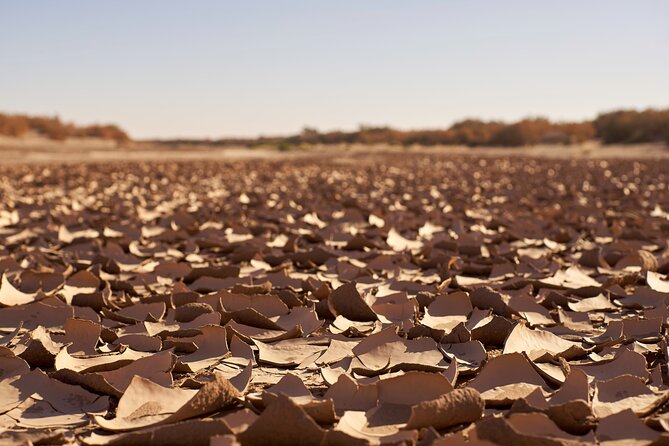
If you want the Sahara in a way that feels lived-in, not just photographed, I think this is a strong choice. The combination of nomadic-life introduction, erg walking, and the Draa Valley’s fertile plus arid contrast is exactly the kind of itinerary that makes people remember more than dunes.
Book it if you can do long walks, you are okay going mostly offline, and you will bring your sleeping bag. Pass if you are expecting a lightweight comfort vacation or you cannot handle the steady walking rhythm.
If you match that mindset, this trek sounds like the kind of trip where you come home tired in a good way, with stories that are hard to explain to people who stayed safely on the road.
FAQ
Where is the trek based?
The trek starts in M’Hamid, Morocco. It ends back at the meeting point in M’Hamid.
What time does the trek start?
The start time is 8:00 am.
How long is the trek?
It is listed as 5 days (approximately).
Does the tour offer pickup, and do I get a mobile ticket?
The experience offers pickup. You also receive a mobile ticket.
What is included in the price?
The price includes eating and sleeping equipment, plus all fees and taxes.
What is not included?
The sleeping bag is not included. Private transportation is also not included.
What fitness level do I need?
You should have a moderate physical fitness level, since the trek involves several days of walking.
Is this a private tour?
Yes. It is described as a private tour/activity, with only your group participating.
Can I get a refund if I cancel?
You can cancel up to 6 days in advance for a full refund. Cancelling 2 to 6 days before the start time gives a 50% refund. If you cancel less than 2 days before the start time, the amount paid is not refunded.
Latest additions near Merzouga
- 3-Day desert tour Marrakech to Fes via Merzouga★ 5.0 · 110 reviews
- Private 4-day Moroccan Sahara Discovery Tour from Marrakech★ 5.0 · 13 reviews
- Private 8 Days Morocco Tour From Marrakech with Sahara Desert★ 5.0 · 27 reviews
- 4-Day Private Merzouga Desert Tour From Marrakech★ 5.0 · 14 reviews
- Private 4 Days Tour From Marrakech to Fes Via Merzouga Desert★ 5.0 · 94 reviews
- 3 Days Private Sahara Tour from Marrakech to Merzouga★ 5.0 · 35 reviews
- Marrakech to Merzouga on Private Tour: 3 Days of Desert Adventure★ 5.0 · 36 reviews
- Private Sahara Discovery Tour from Marrakech to Fez in 4WD★ 5.0 · 35 reviews
Sahara Desert Tours to Merzouga, compared.
3 Days Desert Tour From Marrakech To Merzouga Dunes & Camel Trek
Read our review →
3-Day Marrakech to Merzouga Desert Tour: Camel Rides & Overnights
Read our review →
3-Day Marrakech to Fes Sahara Desert Tour via Merzouga
Read our review →
3-Day Merzouga Desert Experience Camel & Meals
Read our review →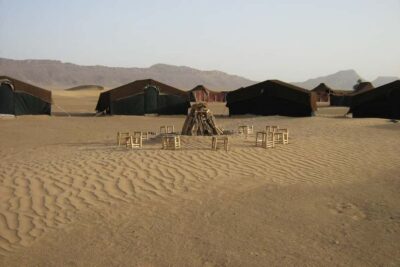
3-Day Tour to Merzouga Erg Chebbi with Food & Camel Trek
Read our review →Browse the lists this tour appears in