
Reviewed · CITY TOURS
Guided Marrakech City Tour
Four hours in the Medina, and you get it.
This guided Marrakech city tour is a well-paced sampler of the places that define the city, from Ben Youssef Medersa to palaces and major squares. I like that you get a real local guide, and names like Maaffar and Houcine come up again and again for being patient, organized, and great at explaining both history and how daily Marrakech works.
I also like the practical structure: pickup is offered, you ride in an air-conditioned vehicle, and you get breaks so the walk-and-see parts stay enjoyable. One thing to consider is that ticket prices for several sights are not included in the $40.67 tour price, so you should budget extra for entrances and take it slow when you hit crowded medina streets.
In This Review
- Key highlights you should plan around
- First impressions: 9:00 am, pickup, and a plan that saves time
- How the day flows: 4 to 8 hours, with a break for tea or coffee
- Stop 1, Medersa Ben Youssef: zellige tilework and a school for scholars
- Stop 2, Mellah and Slat Al Azama: synagogue courtyard, market streets, and memory
- Stop 3, Bahia Palace: 150 rooms and the story behind the walls
- Stop 4, El Badi Palace ruins: gold, turquoise, crystal, and the scale of 25 years
- Stop 5, Rahba Kedima Square: a market square with history in everyday work
- Stop 6, Jemaa el-Fnaa: street performances and the feeling of Marrakech in motion
- Stop 7, Saadian Tombs: the rediscovery story that changed what you see
- What this tour really costs: the tour price plus entrance fees and non-included meals
- The guide makes the difference, especially in the souks
- Who should book this guided Marrakech city tour, and who might not love it
- Should you book this Marrakech city tour?
- FAQ
- What time does the guided Marrakech city tour start?
- How long does the tour take?
- Is pickup included?
- What is included in the tour price?
- Are entrance fees included for the sights?
- What about meals and drinks?
- How many people are in the group?
Key highlights you should plan around
- A local guide people actually trust, including Maaffar and Houcine, with clear explanations and helpful advice for souks
- Air-conditioned transport plus walking, so you do the city on foot without exhausting yourself
- Ben Youssef Medersa for stunning zellige tilework, with an affordable entrance fee
- Mellah and Slat Al Azama synagogue area, including the tiled courtyard, exhibits, and the nearby cemetery and markets
- Bahia Palace and El Badi Palace, two very different palace styles with separate (but reasonable) entrance fees
- Jemaa el-Fnaa and Rahba Kedima, free public-life stops that help you understand Marrakech after dark and during the day
First impressions: 9:00 am, pickup, and a plan that saves time
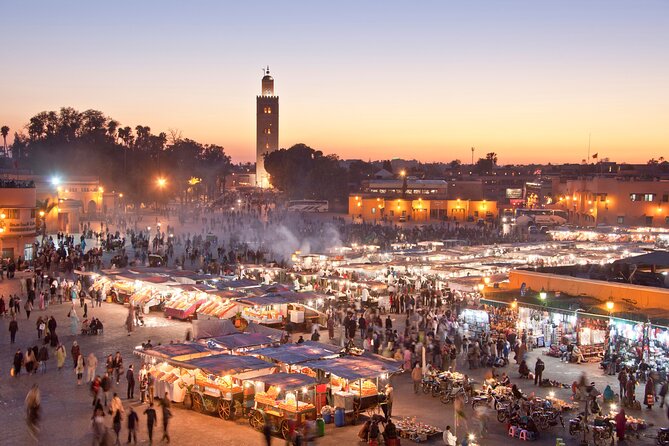
If you only have a day or two in Marrakech, this kind of guided loop is a smart way to get your bearings fast. The tour starts at 9:00 am, and that matters because the medina gets busy early, and you want daylight for photos and walking.
The group stays small, with a maximum of 25 travelers, which is usually the difference between a calm, guided experience and a chaotic stampede. You also get an air-conditioned vehicle for the transfers, so you are not spending the entire day in transit fumes and sun glare.
Pickup is offered, and that reduces one of the biggest headaches in Marrakech, where getting from your riad to the main sights can eat up time. The meeting point is near public transportation, which is handy if you are staying somewhere not directly on a main route.
Other Marrakech days to consider
- Marrakech: Agafay Desert Sunset, Camel Ride, and Dinner Show
★ 4.6 · 35,119 reviews - From Marrakech: Ouzoud Waterfalls Guided Hike and Boat Trip
★ 4.7 · 33,630 reviews - Marrakech: Agafay Desert Quad & Camel Rides with Dinner Show
★ 4.8 · 27,382 reviews
How the day flows: 4 to 8 hours, with a break for tea or coffee
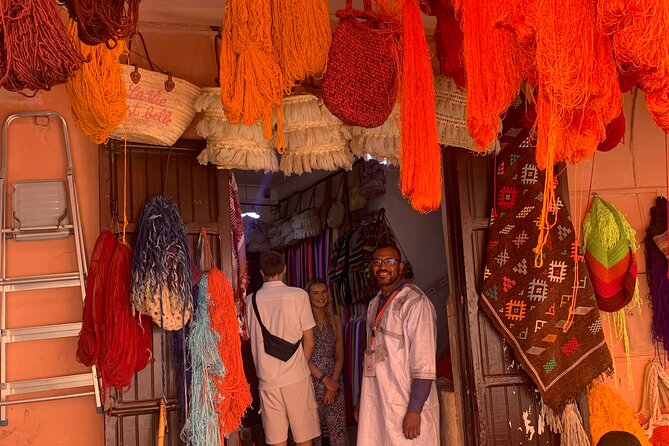
The tour runs about 4 to 8 hours with a stated total of roughly 7 hours, and you will have a break in the middle for cafe time or Moroccan tea. That break is not a small detail, it is what keeps the day from feeling like a nonstop checklist.
Expect a mix of sightseeing and walking through the medina. That can be wonderful, but it also means your pace depends on the group and the guide’s rhythm. The good news here is that the guide is part of the product, and the tour is designed so the group can see a lot without feeling lost.
Lunch is not included, and coffee or tea is not included either. So plan ahead with your own snack strategy, or treat the tea stop as your chance to recharge before the next palace or market moment.
Stop 1, Medersa Ben Youssef: zellige tilework and a school for scholars
The day kicks off (after the intro routing) at Medersa Ben Youssef, one of the most impressive education buildings in the medina. It was established in the 1560s by Sultan Abdullah Al-Ghaleb Assaadi, and it served as a center for scholars and students, especially in religious studies and other subjects like philosophy, medicine, and math.
What you will notice first is the craft. The courtyard and interiors are decorated with detailed zellige tilework, featuring geometric and floral patterns. It is the kind of place where you end up looking longer than you planned, because the design repeats just enough to keep your eye moving.
You get about 1 hour here, which is a good amount for reading a bit, looking closely at the tilework, and not feeling rushed. The entrance fee is 50 dirhams per person, and it is not included in the tour price, so keep that in your budget.
A practical tip, especially if you are not a huge museum person: take your time on this stop. It is easier to appreciate the rest of the day when you start with a place that explains how Marrakech learned to impress through architecture.
Stop 2, Mellah and Slat Al Azama: synagogue courtyard, market streets, and memory
Next comes a very different feel: Mellah, the historic Jewish neighborhood area. The stop centers on the Slat Al Azama Synagogue, where you can see a tiled courtyard and exhibits about Jewish life.
This is paired with time to look around the neighborhood atmosphere, including the Miaara Jewish cemetery nearby. You also get a look at the Mellah Market and the Bab Mellah Spice Souk area, which is where Marrakech daily life spills into the sightseeing route.
You have about 45 minutes for this stop. That sounds short, but it fits the style of a guided tour: you are getting the core landmarks plus the surrounding street context, not trying to do a deep self-guided research session.
One consideration here is that the Mellah market streets can be busy and sensory-heavy. If you prefer quiet, save your long wandering for another day. In a group tour, the value is the guide’s ability to point you to what matters and keep the time focused.
Within striking distance:
- Marrakech: Agafay Desert Quad Biking Tour with Dinner-Show
★ 4.8 · 16,569 reviews - Marrakech: Atlas Mountains, Ourika Valley, Waterfall & Lunch
★ 4.8 · 15,834 reviews - From Marrakech: 3-Day Merzouga and Sahara Desert Tour
★ 4.9 · 15,308 reviews - Berber villages : Atlas Mountains Day Hike from Marrakech
★ 5.0 · 14,007 reviews
Stop 3, Bahia Palace: 150 rooms and the story behind the walls
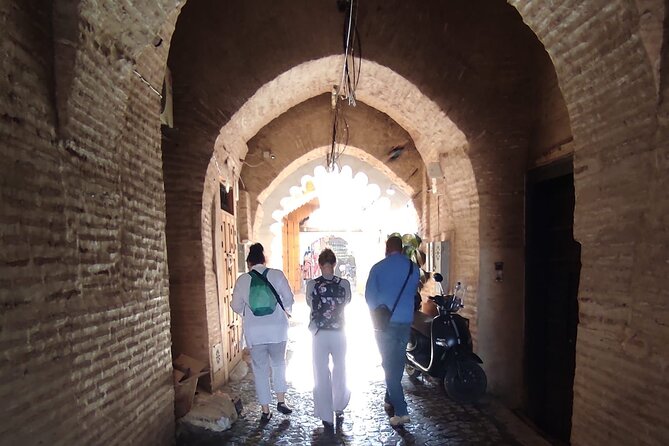
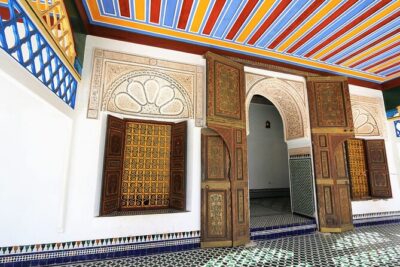
Then you shift to luxury, but not in a modern-theme-park way. Bahia Palace is built to impress, and it is labeled in Arabic as representing brilliance. It was built between 1866 and 1867 by Si Moussa and is known for its 150 rooms, including a harem section that opens to a main courtyard area called the Court of Honour.
This palace also connects to Marrakech political life. It was later used during the French Protectorate period, and it became a museum that welcomes visitors daily. The palace’s ownership story continues with Si Moussa’s son, Bou Ahmed, who ruled from 1894 until 1900, before his death.
You get about 1 hour here, which works well because palace interiors are easiest to understand with a guide pointing out the key layout. The entrance fee is 100 dirhams per person, not included in the tour price.
If you like architecture, this is one of the better value stops because the scale of the palace gives you enough variety to stay interested for the full hour. If you are more into street life than buildings, still go. The palace helps you understand what the city looked like when power lived inside the walls.
Stop 4, El Badi Palace ruins: gold, turquoise, crystal, and the scale of 25 years
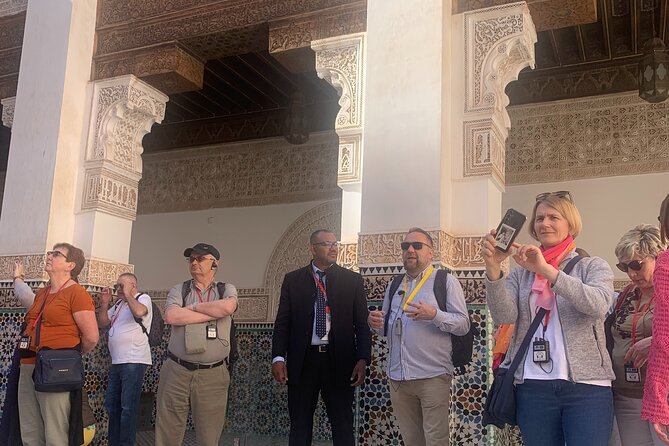
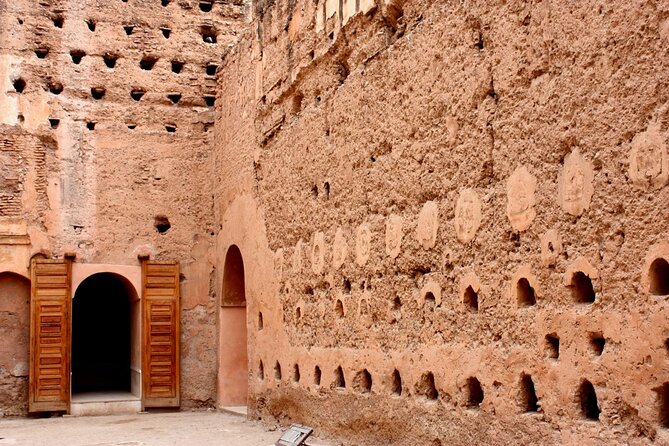
El Badi Palace is where the tour turns cinematic. This Saadian-era palace was built in the late 1500s by Sultan Ahmed al-Mansur, meant to celebrate a major victory against Portugal. The project took an astonishing 25 years and involved a large workforce.
The building itself is described as a 360-room marvel, and it is known for decorations with gold, vibrant turquoise colors, and crystal details. Even as ruins, the palace keeps the sense of grandeur, and you also get gardens as part of the visit.
You have about 1 hour here, and the entrance fee is 70 dirhams per person, not included. This is a strong stop for anyone who wants palace architecture without needing to read a long academic text first, because the size and details do a lot of the storytelling for you.
A practical consideration: ruins can be a lot of stairs and open areas depending on where you walk. The guide helps keep you on a smart route so you are not wandering in circles, but still, if you are sensitive to heat or uneven ground, pace yourself and take breaks when offered.
Stop 5, Rahba Kedima Square: a market square with history in everyday work
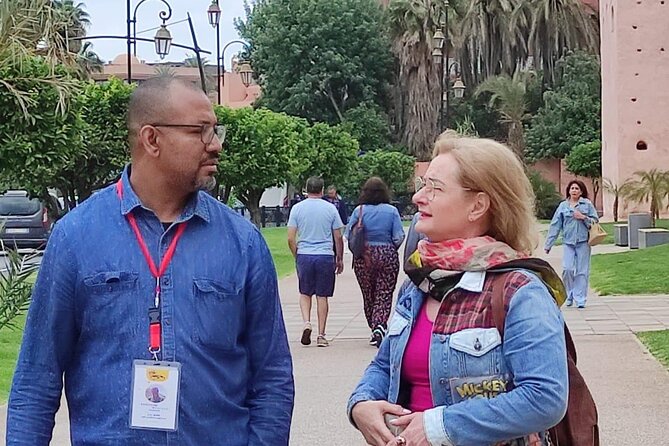
After palace grandeur, you return to markets, but with a more local, work-focused vibe. Rahba Kedima Square is tied to older market life in the medina, and the route includes discussion of Souk Laghzal and the role of women who historically sewed clothing and crafted Moroccan hats.
In the smaller Rahba Lakdima market, the focus today is spices and herbs, plus a major connection to carpets. This stop is free, and you get about 45 minutes, which is enough time to understand the purpose without turning it into a shopping marathon.
The upside of doing this as part of a guided tour is context. In Marrakech, markets can feel like a maze, and a guide can help you identify what you are looking at and why it matters.
Stop 6, Jemaa el-Fnaa: street performances and the feeling of Marrakech in motion
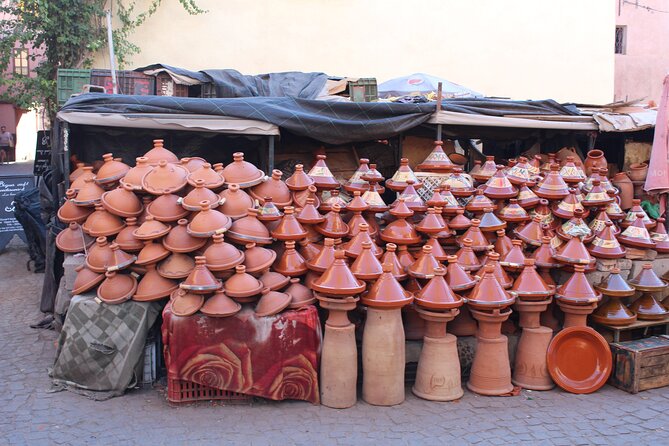
Then comes the big stage: Jemaa el-Fnaa. This square is described as a cultural cornerstone of Marrakech, tied to the city’s presence since the 11th century. You get about 45 minutes here, and it is centered on performances and street-life energy, including music, spiritual rituals, and artistic shows.
This stop is free, which is always nice when your day already includes multiple paid entrances. It is also a helpful moment to let your brain switch gears. Palaces teach you about past power, and Jemaa el-Fnaa shows the living culture side of the city.
One consideration is that it can feel busy and attention-grabbing. If you do not enjoy crowds or constant street interaction, you can still enjoy it. Just treat it like a show, find a spot, watch for a bit, and do not feel obligated to engage with everything happening around you.
Stop 7, Saadian Tombs: the rediscovery story that changed what you see
The final major history stop is Saadian Tombs, built during Sultan Ahmad al-Mansur’s reign (from 1578 to 1603). The tombs were forgotten for a long time and were rediscovered in 1917, then restored.
What you see today reflects that restoration and the artistry behind it. The tombs house the remains of sixty Saadians, including Al-Mansour. There is also a standout feature called the room of twelve columns, featuring the sultan’s tomb with a carved cedar dome and intricate stucco designs. The graves are made with Italian Carrara marble, which is a detail worth noticing if you like material craft.
This stop costs 70 dirhams, not included, and it lasts about 45 minutes. The time is tight enough to keep the day moving, but long enough to see the main areas and understand the story with your guide’s help.
If you are the type who loves a good “wait, what happened next” history moment, this is one of the most satisfying stops. The rediscovery piece makes the tombs feel less like a static museum item and more like a chapter that came back into view.
What this tour really costs: the tour price plus entrance fees and non-included meals
On paper, the tour price is $40.67 per person, booked on average about 22 days in advance. That is the part that includes your guide and air-conditioned vehicle support.
But the important value question is the entrance fees. Here are the ones you know for sure from the itinerary:
- Medersa Ben Youssef: 50 dirhams
- Bahia Palace: 100 dirhams
- El Badi Palace: 70 dirhams
- Saadian Tombs: 70 dirhams
Rahba Kedima Square and Jemaa el-Fnaa are free public stops. The synagogue visit is marked as ticket not included, but no fee amount is listed for that specific stop in the info you were given.
On top of that, lunch is not included, and coffee or tea is not included even though there is a break for cafe or Moroccan tea during the day. So I recommend you treat this as a half-day sightseeing plan plus a “budget for entrances and a meal.”
For many first-time visitors, that is still good value. You get multiple major landmarks in one shot, with a guide who can translate what you are looking at, plus transport so you do not have to plan rides between far-apart points in the medina area.
The guide makes the difference, especially in the souks
One of the most praised parts of this experience is the guides. Names like Maaffar and Houcine show up in a consistent pattern: they are described as polite, patient, and focused on sharing not just facts, but how Marrakech works day to day.
That shows up in small but useful ways. For example, there is mention of advice on how to deal with salespeople in the souks, and also help with practical things like food and shopping. If you have ever felt overwhelmed in a busy market, you know how valuable a calm guide can be.
Another plus: the guides are described as organized and reliable, with good communication before the meeting. That kind of follow-through matters in Marrakech, where your day can fall apart quickly if you miss a pickup window or get turned around.
If you want more than photo stops, this tour is built for you. The route includes palaces, medersas, religious sites, and public squares. A guide helps connect them into one story instead of a pile of separate monuments.
Who should book this guided Marrakech city tour, and who might not love it
This is a great fit if you are visiting Marrakech for the first time and want a focused overview without doing five separate bookings and figuring out routes. It is also ideal if you like history but want your day to keep moving, with the guide controlling the pace and deciding what is essential.
It is also a good match for people who want help with souk navigation. The guide’s advice on dealing with sellers is a practical advantage, especially for first-timers who might not know Marrakech shopping etiquette.
You might want a different plan if you prefer lots of free time to wander on your own. A guided route is still a route. You will have set time windows at each stop, and you cannot stretch every square or palace into a longer deep visit.
You might also reconsider if you are trying to keep strict costs. Entrance fees for several major sights are separate from the tour price, and lunch is not included. It is still manageable, but you need to plan.
Should you book this Marrakech city tour?
Yes, if you want an efficient, guide-led introduction that covers Medersa Ben Youssef, Bahia Palace, El Badi Palace, the Saadian Tombs, and the big public-life stops like Rahba Kedima and Jemaa el-Fnaa. I especially like that the guide quality is a recurring theme, and that you get both monuments and market squares in one half-day style loop.
Book it early in your visit if you can. Starting around 9:00 am gives you the best odds of enjoying the walking parts, seeing the landmarks clearly, and using the rest of your trip with a smarter sense of where things are and how to navigate.
If you want, tell me your travel dates and whether you are more into architecture, street life, or shopping. I can suggest how to plan your remaining time around these stops so your day feels relaxed, not rushed.
FAQ
What time does the guided Marrakech city tour start?
The tour start time is listed as 9:00 am.
How long does the tour take?
The duration is listed as 4 to 8 hours (approx.), with the total described as about 7 hours including a break.
Is pickup included?
Yes, pickup is offered.
What is included in the tour price?
The included items are the guide and an air-conditioned vehicle.
Are entrance fees included for the sights?
No. Entrance tickets are listed as not included for several stops, including Medersa Ben Youssef (50 dirhams), Bahia Palace (100 dirhams), El Badi Palace (70 dirhams), and the Saadian Tombs (70 dirhams). Rahba Kedima Square and Jemaa el-Fnaa are free.
What about meals and drinks?
Lunch is not included, and coffee or tea is not included. The tour includes a break for cafe or Moroccan tea in between.
How many people are in the group?
The tour has a maximum of 25 travelers.
Latest additions near Marrakech
- Marrakech Street Food Tour★ 5.0 · 220 reviews
- Marrakech Souks and Hidden Sites -Half Day★ 5.0 · 33 reviews
- Marrakech Souks Guided Walking Tour★ 5.0 · 11 reviews
- Marrakech Shopping Souks Tour By Local Guide★ 5.0 · 18 reviews
- Marrakesh Shopping Tour★ 5.0 · 17 reviews
- Marrakech: Exclusive Private Shopping Adventure in The souks★ 5.0 · 200 reviews
- Marrakech- Route of the Kasbahs- Merzouga Desert 6 nights / 7 days★ 5.0 · 30 reviews
- 4 Day Desert tour from Marrakech to Fez★ 5.0 · 35 reviews
City Tours, compared.
Casablanca City Tour with Hassan II mosque ticket
Read our review →
Blue City magic: Affordable Day Trip from Fez to Chefchaouen
Read our review →
Marrakech Historical and Cultural Tour – Half Day City Tour
Read our review →
Browse the lists this tour appears in