Reviewed · MARRAKECH TOURS & ACTIVITIES
Hidden Sights of Marrakech:
A guided walk can change how you see Marrakech.
This one takes you off the main monument path and into the daily rhythms of the Medina. You’ll move on foot through corners most people miss, with stops tied to food, craft work, and older religious sites.
I like that the route stays small-group sized, up to 6 people, so your guide can slow down when a question pops up. I also like that you get to see working food spaces like a local bakery and a cooking oven for tangia, not just photo stops. One thing to keep in mind: it is still a walk through the Medina and souk streets, so it will feel like a guided local stroll more than a set of secret, off-the-map locations.
In This Review
- Key Highlights You Should Care About
- Why This Marrakech Medina Walk Makes Your Trip Easier
- Starting at Café Argana and Bab Ftouh, Not the Usual Monument Line
- A Local Bakery Stop That Feels Like Daily Life
- El Mouassine Mosque and the Layers of Neighborhood History
- Foundouk Sarsar, Caravan Inns, and Trade Routes You Can Still Read
- The Tangia Cooking Oven Stop, Where Food Takes Time
- Sidi Abdel Aziz Tabaa Mausoleum and the Saints of Marrakech
- Souk Talaa and the Animal-Skins Auction Detail
- Souk Haddadine Blacksmith Workshops, Craft Work in Motion
- Rahba Kedima Spice Square and the Optional Stall Visit
- Souk Semmarine and the Reality Check of the Busiest Streets
- Ending at Jemaa el-Fnaa, With Better Bearings
- Guides Matter: The Mohamed and Azim Effect
- Price and Value: Why $39 Can Feel Like a Deal
- What to Expect Day Of: Pace, Steps, and Practical Comfort
- Who This Tour Suits Best
- Should You Book Hidden Sights of Marrakech?
- FAQ
- How long is the Hidden Sights of Marrakech tour?
- What is the price per person?
- Where do we meet, and when does the tour start?
- What is included in the price?
- Are there admission fees for the stops?
- What is the cancellation window?
Key Highlights You Should Care About
- Up to 6 people means a calmer pace in narrow streets and real time for questions
- Tangia cooking oven visit gives you a practical look at how a famous dish is prepared
- Caravan inn stop spotlights Marrakech’s trade history through everyday architecture
- Blacksmith and spice areas show craft work and ingredients that drive the souks
- Free bottled water included, helpful for a morning under the sun
- End back at Jemaa el-Fnaa, so you land in the action with better bearings
Why This Marrakech Medina Walk Makes Your Trip Easier
Marrakech can feel like two cities at once. There is the big, obvious postcard loop around the famous squares. Then there is the older Medina maze where most life happens at street level.
This tour is built for the second Marrakech. It starts at Bab Ftouh, one of the older gate entries, then moves through areas where you can still sense older neighborhoods and trade routes. The value here is not only what you see, it is how you learn to see it. With a good guide, you start noticing why certain streets exist, how craft areas cluster, and what local food actually looks like when it is in motion.
You also get a structure that helps you avoid getting lost. The group walks together, stops at key places, and keeps moving. That matters because the Medina’s navigation is half the challenge. A morning like this can help you return later on your own with confidence.
Other Marrakech days to consider
- Marrakech: Agafay Desert Sunset, Camel Ride, and Dinner Show
★ 4.6 · 35,119 reviews - From Marrakech: Ouzoud Waterfalls Guided Hike and Boat Trip
★ 4.7 · 33,630 reviews - Marrakech: Agafay Desert Quad & Camel Rides with Dinner Show
★ 4.8 · 27,382 reviews
Starting at Café Argana and Bab Ftouh, Not the Usual Monument Line
You meet at Café restaurant Argana in Jamaa el-Fnaa square, and the start time is 10:00 am. From there, you head toward Bab Ftouh, described as one of the oldest inside gates and a souk entrance.
This opening sets expectations. Bab Ftouh is not a random starting point. It is a gateway into how the city funnels people into market streets. Seeing the gate and the entry souk area early helps you understand the Medina’s logic before it gets crowded.
It also tends to be a better time of day for walking. By the time you’ve finished your first couple stops, you usually have the rhythm of the streets. If you arrive with no plan, the Medina can be overwhelming. If you arrive with this kind of orientation, the city starts to click.
A Local Bakery Stop That Feels Like Daily Life
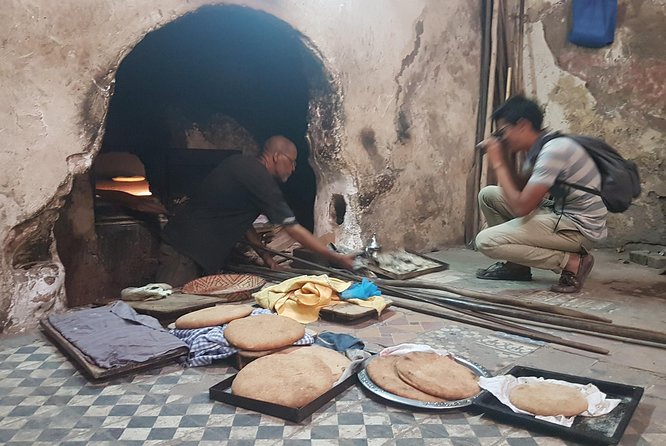
One of the best parts of this tour is how it treats food as part of the city’s fabric. A short stop at a local bakery is where the tour shifts from architecture and streets to everyday smells and routines.
You might not see a single “must-eat” tourist meal here. Instead, you see the smaller, more ordinary moments that make Moroccan food possible. That is the point. Marrakech is famous for flavors, but the flavors come from systems, ovens, bakers, and supply chains that local people rely on every day.
This is also a helpful time to ask practical questions. Your guide can often explain what you are seeing and what it means in daily terms, like how bread and pastries fit into the bigger food culture of the Medina.
And since bottled water is included, you can focus on the walking and the stories instead of scrambling for hydration.
El Mouassine Mosque and the Layers of Neighborhood History
Next comes a stop at El Mouassine Mosque, noted as one of the older mosques of Marrakech dating back to the 16th century. The tour also highlights that the surrounding area used to be a residential quarter associated with Moroccan Jews, with the term Toshavim mentioned.
This is the kind of context that makes a place more meaningful. A mosque is not just a building. It sits inside a human map, shaped by older communities and shifting neighborhoods.
If you care about how cities evolve, this stop gives you a real anchor. You can look at the architecture and then connect it to the idea of how people lived, worshiped, and traded in the same general zones over centuries. That helps you avoid seeing Marrakech as a collection of disconnected sights.
Within striking distance:
- Marrakech: Agafay Desert Quad Biking Tour with Dinner-Show
★ 4.8 · 16,569 reviews - Marrakech: Atlas Mountains, Ourika Valley, Waterfall & Lunch
★ 4.8 · 15,834 reviews - From Marrakech: 3-Day Merzouga and Sahara Desert Tour
★ 4.9 · 15,308 reviews - Berber villages : Atlas Mountains Day Hike from Marrakech
★ 5.0 · 14,007 reviews
Foundouk Sarsar, Caravan Inns, and Trade Routes You Can Still Read
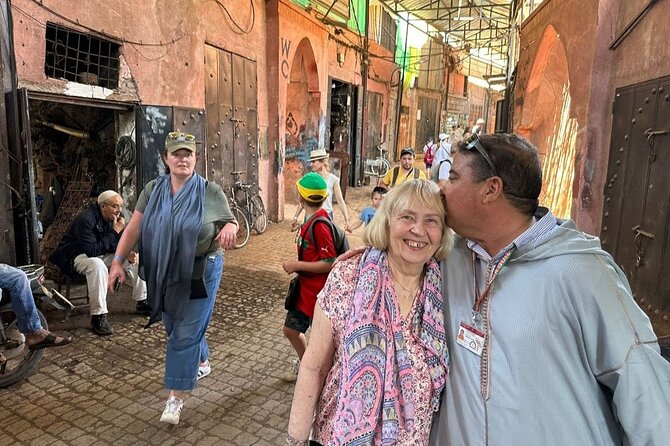
The tour includes a visit to Foundouk Sarsar, described as one of the oldest caravan inns of Marrakech. Caravan inns are not like modern hotels. They were built for movement and commerce, where goods and travelers needed shelter in the heart of trade districts.
Seeing a foundouk on foot, and hearing it explained by a guide, changes how you interpret the surrounding streets. Suddenly you notice the narrowness, the sense of inward movement, and how the Medina supports business rather than just sightseeing.
It is also a great stop for people who like structure and function. You get to see where trade happens, where travelers would rest, and how commerce shaped the architecture you see today.
The Tangia Cooking Oven Stop, Where Food Takes Time
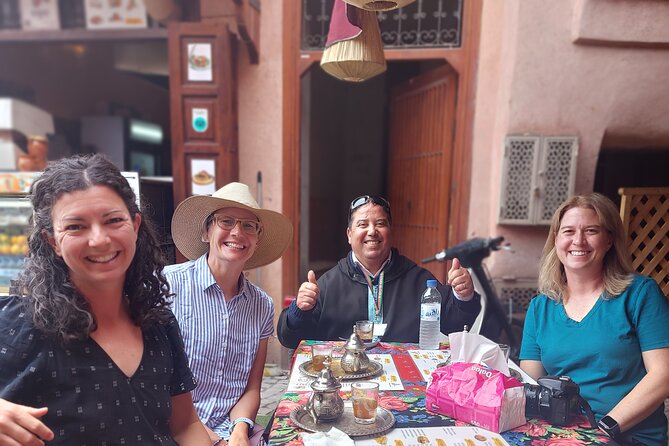
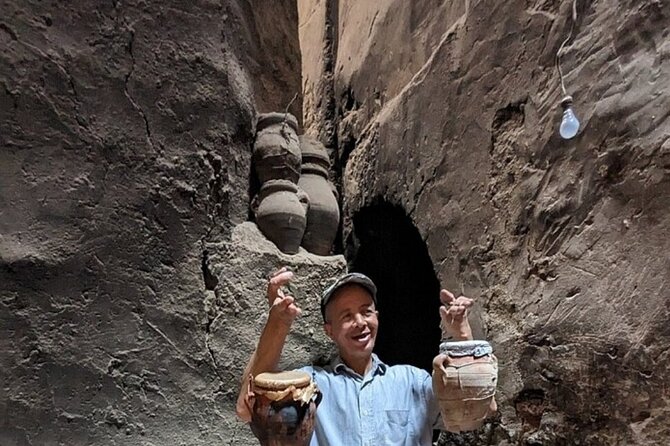
One of the most memorable sections is the visit to a cooking oven linked to tangia, a traditional dish cooked slowly for long flavor development.
The tour frames this as a place where locals bring their tangia for slow cooking. That single detail matters, because it shows the difference between food that is assembled for show and food that is cooked with time.
If you like food and you want Marrakech to feel more real than Instagram, this is a strong stop. A tangia oven visit helps you understand why Marrakech flavors are often about process. Even if you never eat tangia during the tour, you can later order it with a much clearer mental picture of how it is prepared.
It also gives you a chance to appreciate the city’s practical genius. In a dense urban layout, cooking methods adapt to space and routine. You start seeing the Medina as a system that feeds itself.
Sidi Abdel Aziz Tabaa Mausoleum and the Saints of Marrakech
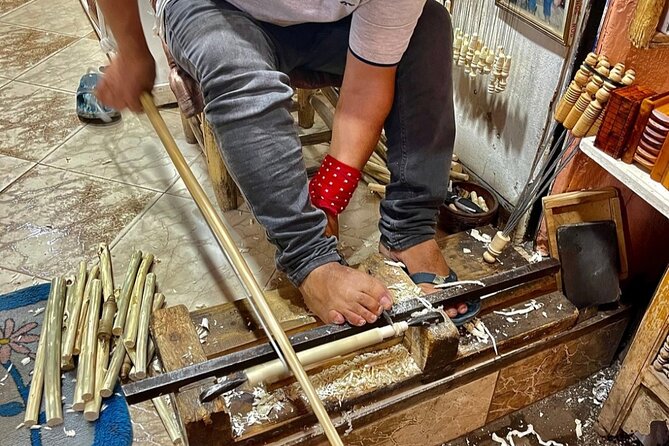
The tour then heads to the Mausoleum of Sidi Abdel Aziz Tabaa, described as one of the seven saints of Marrakech.
Mausoleums can be tricky for independent travelers. Without context, you might treat them as simply another building. With a guide, you learn why they matter and how the city remembers certain figures.
This stop is a good example of what makes a guided walk valuable. It connects visible landmarks to stories people use to understand their city and faith. That is the difference between seeing and understanding.
Souk Talaa and the Animal-Skins Auction Detail
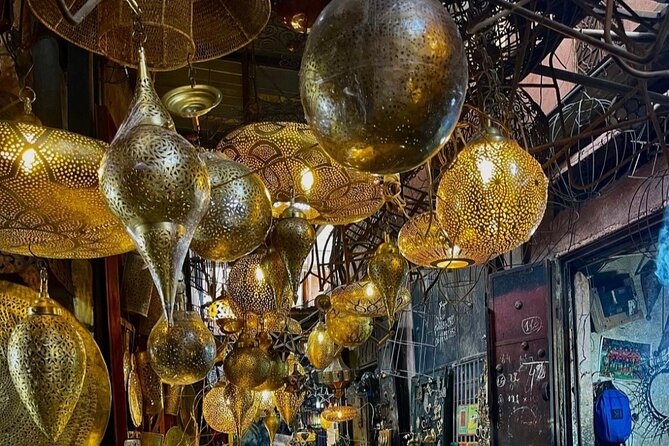
Next is the Talaa souk, described as a souk where auctions involving skins take place, except Friday.
This is one of those “only in the Medina” details that can feel unusual at first. It also explains why particular areas exist and why certain trades cluster in specific streets. You are not just browsing. You are witnessing trade patterns that have shaped the city for generations.
If this kind of market detail feels uncomfortable for you, it is okay. You control your pace and your comfort level. A good guide should keep things respectful and explain what you need to know without turning it into shock value.
Souk Haddadine Blacksmith Workshops, Craft Work in Motion
Souk Haddadine is where you walk through blacksmith workshops. This is craft-focused, and it is exactly the kind of area independent wandering often misses.
If you think of Marrakech souks as shops that sell souvenirs, this stop corrects that assumption. You get a glimpse of tools, metalwork, and the kind of hands-on production that makes the souks more than just retail.
It also helps with decision-making later. After seeing how crafts are made, you are more likely to buy with clearer eyes. You can ask about materials and processes, instead of only judging by style.
Rahba Kedima Spice Square and the Optional Stall Visit
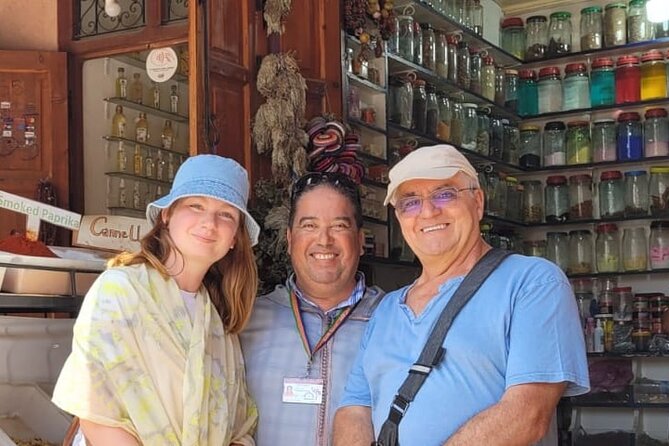
At Rahba Kedima Square, the tour focuses on fresh spices, described as la place des épices. Visiting a local spice stall is optional.
Spice squares can be overwhelming because the senses hit all at once. This is why I like that this stop is framed as fragrance and ingredients, not just sales pressure. An optional stall visit also lets you choose your comfort level. If you want to browse and sample, you can. If you prefer just to walk and observe, that works too.
Even if you do not buy anything, this is a great place to learn how spices are presented and how people talk about them in daily terms.
Souk Semmarine and the Reality Check of the Busiest Streets
Then you move into Souk Semmarine, described as the most famous and busiest section of the souks.
This is the part where the city’s energy spikes. You feel the crowds, the noise, the flow of foot traffic. It is a useful contrast because it shows the difference between calmer back streets and the main souk arteries.
The guide’s job here is important. In busy sections, you need someone who knows where to pause, where to walk through, and how to avoid getting turned around. If you have any anxiety about navigating a crowd, this portion can still feel manageable because the group moves with a plan.
Ending at Jemaa el-Fnaa, With Better Bearings
The tour ends back at Jemaa el-Fnaa. The description notes performances you might see around the square, including snake charmers, musicians, storytellers, and more.
Ending here makes practical sense. If you’re doing this as an early trip, you get a foundation for everything that happens afterward. Later, when you return to the square for dinner or a night walk, you will recognize the approach streets and the direction back to your lodging.
It also helps you decide what to do next. Do you want more crafts, more spices, or a calmer corner for photos? You can make those calls with more confidence after you’ve seen the city’s internal logic.
Guides Matter: The Mohamed and Azim Effect
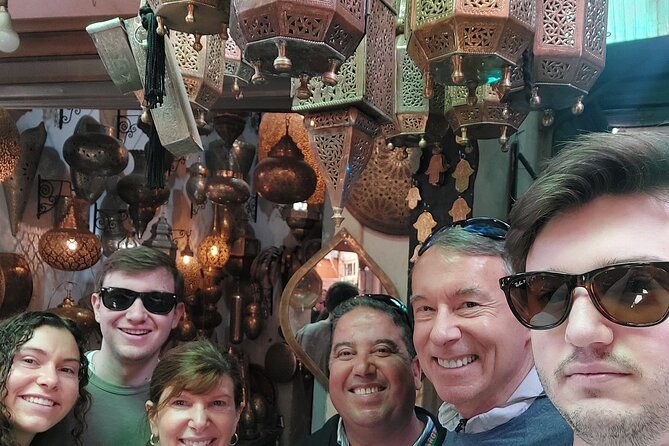
The biggest common thread across the experience is the guide. Names like Mohamed and Azim show up in the stories, and the themes are consistent: clear explanations, pacing that lets you look and listen, and practical help like when shop prices feel too high.
I like that the tour can focus on how to navigate markets without feeling aggressive. That includes talk about bargaining practices. Even if you plan to buy nothing, learning the rhythm of negotiation helps you avoid getting flustered when someone calls out a price.
A great guide also gives you reading material, not just speeches. You leave with context that makes your later wandering more rewarding.
Price and Value: Why $39 Can Feel Like a Deal
At $39 per person for about 3 to 4 hours, with a small group size and included bottled water, this is the kind of cost that usually makes sense if you want more than the main square circuit.
What you get for your money:
- Free access at the listed stops, like gate entries and mosque visits
- Bottled water included
- A local guide and a professional guide
- A walk plan that gets you into the working Medina zones by foot
The value is not just “time.” It is the guide’s interpretation. A gate, a souk, a mausoleum, and a caravan inn can all look similar if you are just passing through. Here, they are connected to stories and to how people live and trade.
If you only have a single half day and want a smart introduction, this price can be a strong use of budget. If you already feel fully confident navigating the Medina, you might spend less. But you would lose the structure that prevents time-wasting wrong turns.
What to Expect Day Of: Pace, Steps, and Practical Comfort
The tour is designed for a moderate physical fitness level. It is a walking experience through narrow streets and market areas, so comfortable shoes matter. Plan for uneven ground and for moments where you need to slow down in crowds.
The group cap at 6 people usually helps with pace. Your guide can stop when someone wants to look closely, and you are less likely to feel like a passenger in a human conveyor belt.
You’ll also want to dress for sun and dust. You are walking in the Medina. Bring layers if it is cooler, but plan for warm conditions in the morning.
One small plus: the tour includes bottled water. That sounds minor, but in Marrakech it can be the difference between a good walk and a rushed one.
Who This Tour Suits Best
This fits best if you want:
- A first or early look at Marrakech with Medina navigation help
- More food and craft context, not just monuments
- A smaller-group pace with time for questions
- A guided way to see places like Bab Ftouh, a caravan inn, and tangia cooking setups
It may be less ideal if you expect truly secret locations far from any main souk streets. This walk is still part of the Medina’s public life. You will see trade areas and busy sections, even if the route focuses on quieter back lanes and historical points.
Also, if you dislike market environments, you might feel better doing separate museum or garden time first, then adding this only if you still have the energy.
Should You Book Hidden Sights of Marrakech?
I think you should book this if you want your Marrakech morning to do two jobs at once: teach you how the Medina works, and show you the city beyond the obvious postcard route. The guide-led stops around bakeries, the tangia oven, the caravan inn, craft workshops, and spice areas give you a strong mix of food, trade, and older landmarks.
If you already know the Medina well and you want zero crowds and zero souk streets, you might find it closer to a guided walking orientation than a scavenger hunt of secret places. Still, the focus on practical context and the small group size make it a solid option for most first-time visitors.
If you can, do it early in your trip. You will enjoy the rest of Marrakech more after you learn where you are and why the streets and trades are where they are.
FAQ
How long is the Hidden Sights of Marrakech tour?
It runs for about 3 to 4 hours.
What is the price per person?
The price is $39.00 per person.
Where do we meet, and when does the tour start?
You meet at Café restaurant Argana in Jamaa el-Fnaa square. The start time is 10:00 am, and the tour ends back at the meeting point.
What is included in the price?
Included items are bottled water, a local guide, and a professional guide.
Are there admission fees for the stops?
The stops listed include free admission ticket entries.
What is the cancellation window?
Free cancellation is available up to 24 hours in advance for a full refund. If you cancel less than 24 hours before the start time, the amount paid is not refunded.
Latest additions near Marrakech
- Three valleys, Atlas Mountain, waterfalls & Agafay Desert★ 5.0 · 13 reviews
- Essaouira: Surf Trip from Marrakech★ 4.9 · 31 reviews
- Marrakech: Tailor-Made City Tour With Your Own Private Guide★ 4.9 · 236 reviews
- Surf Training and Lunch on Essaouira Day Trip from Marrakech★ 4.9 · 51 reviews
- Marrakech palm grove: Sunset camel ride★ 4.8 · 194 reviews
- Marrakech: Sunrise Desert Tour with Camel Ride and Breakfast★ 4.4 · 36 reviews
- Marrakech : Agafay Desert Sunset Camel Ride & Luxury Dinner★ 4.3 · 39 reviews
- Marrakech: Cycling Tour in Palm Groove with Local Breakfast★ 4.7 · 73 reviews
Marrakech Tours & Activities, compared.

Agafay Desert Sunset, Camel Ride, and Dinner Show
Read our review →
Agafay Desert Quad & Camel Rides with Dinner Show
Read our review →
Agafay Desert Quad Biking Tour with Dinner-Show
Read our review →
Atlas Mountains, Ourika Valley, Waterfall & Lunch
Read our review →

Berber villages : Atlas Mountains Day Hike from Marrakech
Read our review →