Reviewed · TOURS
Marrakech: Day-Trip to UNESCO Kasbahs and Ouarzazate Tour
Marrakech to Ouarzazate is a full day of big scenery and big stories. I love the High Atlas drive through the Tizi N’Tichka Pass, and I especially liked stepping into the UNESCO kasbah world at Aït Ben Haddou. The main thing to consider is this is a long, early start, lots of kilometers kind of day.
I also really appreciated the human touch, like having a professional driver/guide and a local specialist at the UNESCO site. It’s a private group format, so you are not just herded along. The tradeoff is you need to be comfortable with walking at Aït Ben Haddou and being on the road most of the day.
In This Review
- Key highlights you should know
- A Long Day Through the High Atlas to UNESCO Kasbahs
- Tizi N’Tichka Pass, 2,260 Meters Up for Real Mountain Views
- Aït Ben Haddou UNESCO Kasbah, Built for Defense and Film Magic
- Taourirt Kasbah and the Cinema Museum in Ouarzazate
- Ouarzazate Cinema Studios, Where Set Lighting Meets Desert Reality
- Lunch, Mint Tea, and the Green Valley Views Before the Return
- Price and Value, What Costs Extra, and Why the Inclusions Matter
- Who This Tour Fits Best (and Who Should Skip It)
- Should You Book This Marrakech to Ouarzazate Day Trip?
- FAQ
- How long is the Marrakech to UNESCO Kasbahs and Ouarzazate tour?
- What is the price per person?
- What will I see during the day?
- Is pick-up included, and where do we start?
- What is included in the tour price?
- What is not included?
- What languages is the guide available in?
- What should I bring or wear?
- Is the tour suitable for people with mobility impairments?
- Are pets allowed?
Key highlights you should know
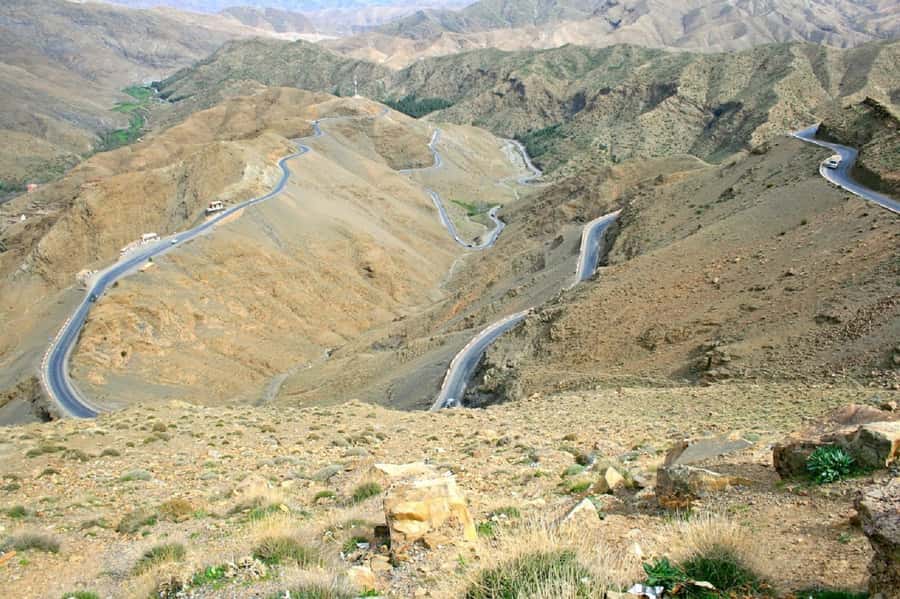
- Tizi N’Tichka Pass (2,260 meters): Morocco’s highest road crossing, with dramatic High Atlas views.
- Aït Ben Haddou UNESCO Kasbah: A fortified village that has doubled for major films for decades.
- Taourirt Kasbah + cinema museum: Ouarzazate’s kasbah details paired with movie-making history.
- Ouarzazate cinema studios: See how international productions turn desert light into sets.
- Mint tea and green valley time: A calmer break after the main kasbah visits.
A Long Day Through the High Atlas to UNESCO Kasbahs
This trip is built around one idea: get you out of Marrakech early, then reward you with a chain of unforgettable places across the Atlas to the desert edge. You start with a scenic drive, then shift into kasbahs and film locations that explain why this region shows up on the big screen so often.
What makes it work well is the rhythm. You do the most important stop, Aït Ben Haddou, while the day is still fresh. Then you move into Ouarzazate, where the theme turns from architecture to cinema. After lunch, you get a lighter moment with tea and views before heading back.
The pace is intense, so if you hate long car days, set your expectations now. Also, this is not an all-wheelchair friendly outing. The walking at Aït Ben Haddou means you should wear proper shoes and keep your footing in mind.
Other Marrakech days to consider
- Marrakech: Agafay Desert Sunset, Camel Ride, and Dinner Show
★ 4.6 · 35,119 reviews - From Marrakech: Ouzoud Waterfalls Guided Hike and Boat Trip
★ 4.7 · 33,630 reviews - Marrakech: Agafay Desert Quad & Camel Rides with Dinner Show
★ 4.8 · 27,382 reviews
Tizi N’Tichka Pass, 2,260 Meters Up for Real Mountain Views
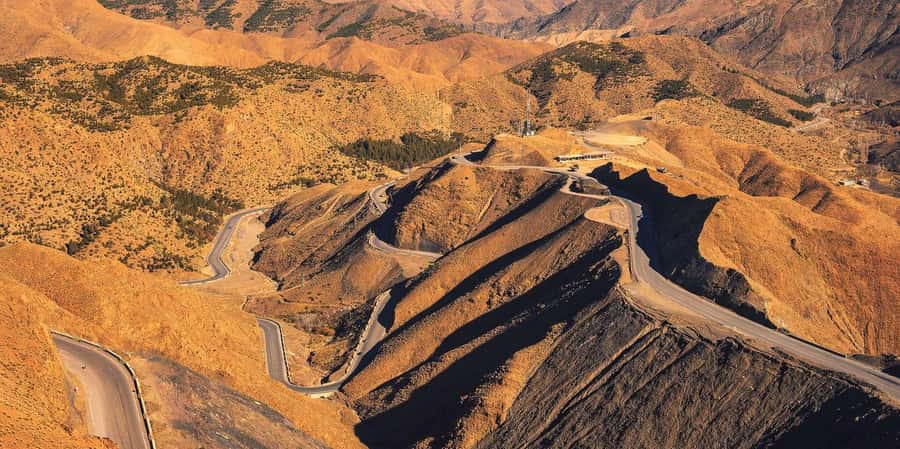
The day begins with departure from your accommodation area in Marrakech, then a drive toward Ouarzazate via the High Atlas. You pass through mountain roads that climb steadily, and at the top you reach Tizi N’Tichka Pass at 2,260 meters, described as the highest road crossing in Morocco.
Why this part matters: it is not just a transfer. It is the scenic backbone of the whole experience. From the road, you get a sense of how the Atlas connects Marrakech to the Saharan regions beyond, with the terrain changing in visible steps as the elevation rises.
A practical tip, bring sunglasses and a sun hat. At altitude, light can feel sharp, even when the temperature seems manageable. And keep water handy, though the trip includes mineral water.
Aït Ben Haddou UNESCO Kasbah, Built for Defense and Film Magic
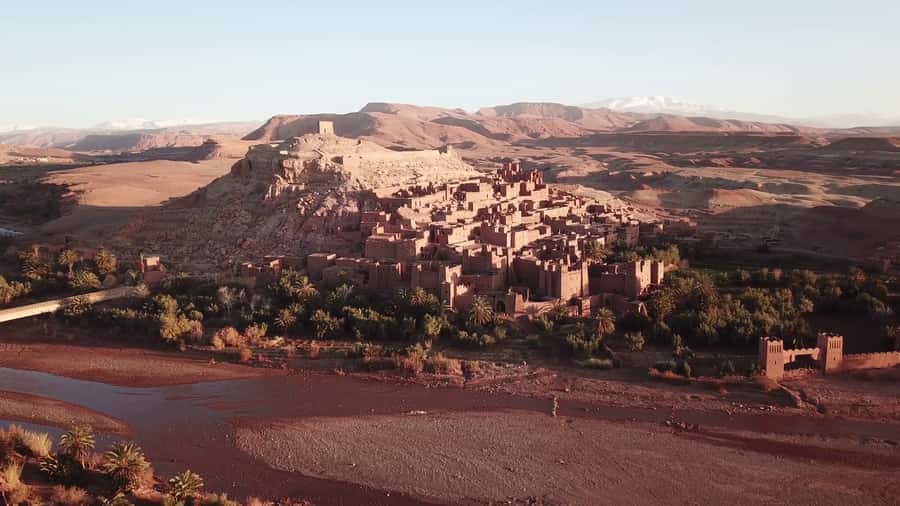
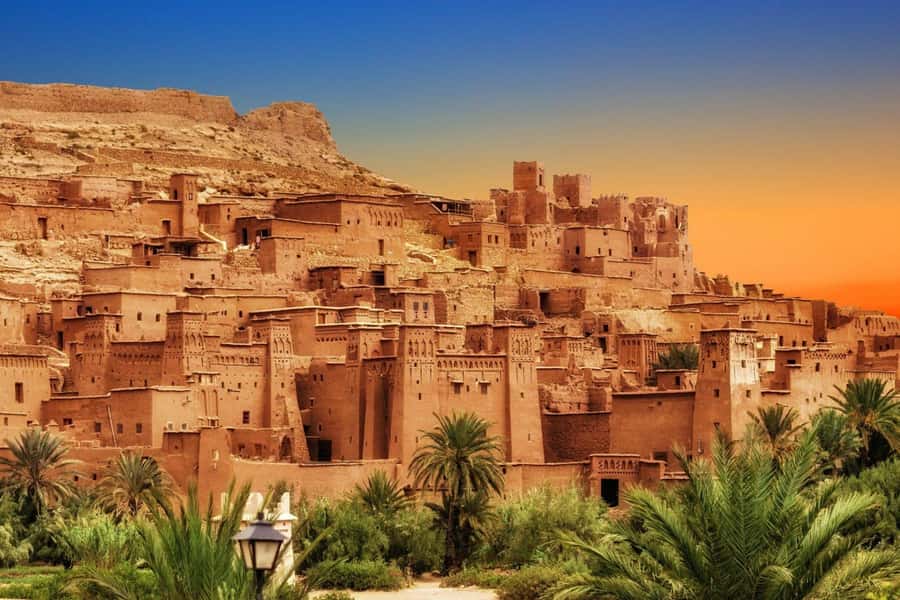
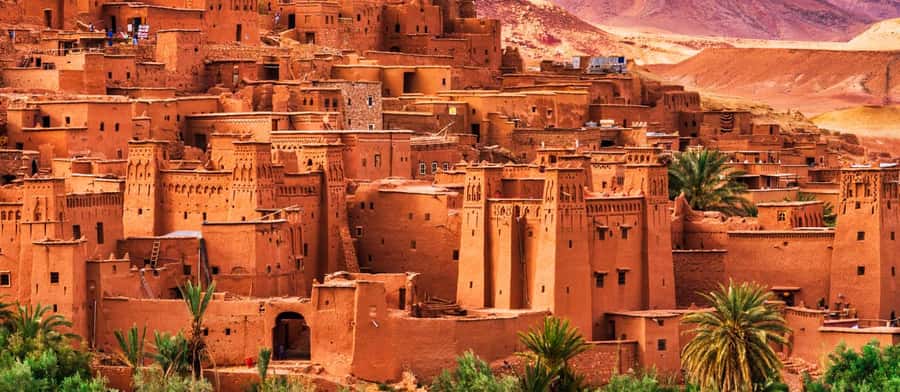
Aït Ben Haddou is the moment most people remember, and for good reason. You will visit the UNESCO World Heritage site fortified kasbah, and you’ll have a local guide for this UNESCO segment, which helps you understand what you are seeing instead of just photographing it.
The kasbah is a fortified village, meaning it was designed for protection, not comfort. The way the buildings stack, the maze-like feel, and the earthen materials all make sense once you focus on defense and climate. You also get the bigger picture of Berber living patterns in a harsh zone where water and crops matter.
Then there is the film connection, which is not random trivia here. Aït Ben Haddou has been used as a backdrop for major productions including Lawrence of Arabia, Gladiator, Babel, The Mummy, Jesus of Nazareth, and The Diamond of the Nile. That list matters because it explains why the setting looks both ancient and cinematic at the same time.
What to do on site: slow down. You will want to look for changes in textures and walls, and notice how the layout shifts as you move from one courtyard feeling area to another. If you only rush through, you miss the way this place is built to be experienced in layers.
Also, plan for walking. You will want sports shoes for the kasbah walking tour at Aït Ben Haddou. Comfortable shoes are not enough if you expect uneven ground and steps.
Taourirt Kasbah and the Cinema Museum in Ouarzazate
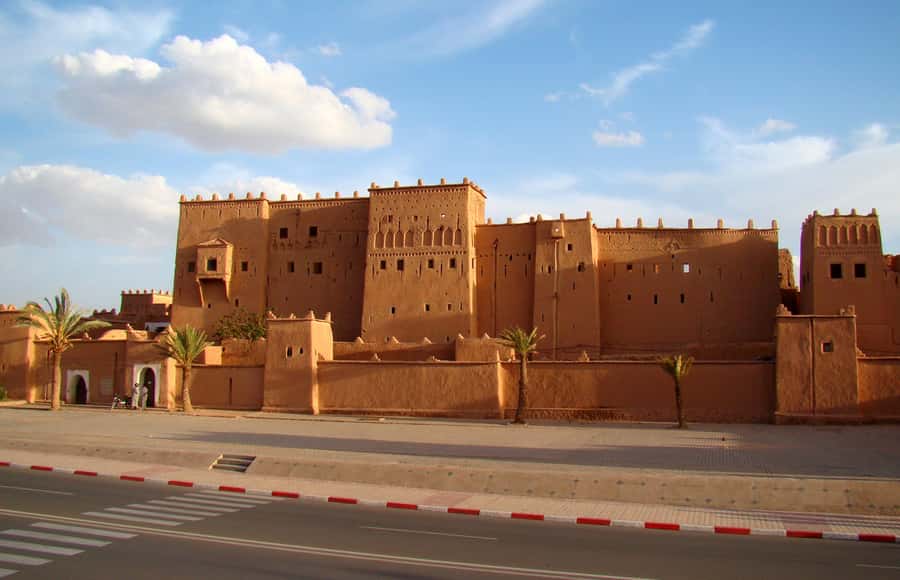
After the UNESCO visit, the day continues into Ouarzazate, a city that has become almost synonymous with film sets in Morocco. Here, you visit Taourirt’s kasbah and the cinema museum, tying the region’s traditional architecture to the modern movie business.
Taourirt’s kasbah is a great contrast to Aït Ben Haddou. You are still in kasbah territory, but the feel shifts to what Ouarzazate looks like when the kasbah world is part of a working city. You can see how these forts functioned as both homes and power centers.
The cinema museum adds context that makes your next stop more meaningful. Instead of only seeing studio life from the outside, you start to connect the dots on how productions use geography, light, and local building styles. If you have ever wondered why certain movies look so dust-toned and sun-bleached, this kind of museum stop is where you start getting the logic.
If you are short on energy after the morning drive, this is the part where you can slow your pace. You do not have to sprint between rooms, and you can take your time reading and looking.
Within striking distance:
- Marrakech: Agafay Desert Quad Biking Tour with Dinner-Show
★ 4.8 · 16,569 reviews - Marrakech: Atlas Mountains, Ourika Valley, Waterfall & Lunch
★ 4.8 · 15,834 reviews - From Marrakech: 3-Day Merzouga and Sahara Desert Tour
★ 4.9 · 15,308 reviews - From Marrakech: Merzouga 3-Day Desert Safari with Food
★ 4.7 · 12,232 reviews
Ouarzazate Cinema Studios, Where Set Lighting Meets Desert Reality
Next comes the cinema studios of Ouarzazate. This is where the day’s theme clicks into place: you stop treating film as magic and start seeing it as a craft that depends on very specific locations.
The advantage here is that Morocco’s studio culture is not just about buildings and cameras. It is about the desert edge, the bright sky, and the way shadows fall across earthen structures. Even if you are not a film fanatic, it makes the region feel purposeful rather than random.
You also get that satisfying wow-factor that comes from seeing the same kind of environments you just saw at kasbahs. It’s like your brain finally connects the architectural shapes to the cinematic framing that put them on screen worldwide.
One consideration: studio visits can be more visual than explanatory depending on how the day is run. If you have questions, keep them simple: what kind of terrain gets used, and why this area fits that look.
Lunch, Mint Tea, and the Green Valley Views Before the Return
Lunch is a stop in a local restaurant, but it is not included in the tour price. This means you should budget for it separately, either by carrying cash or checking what payment options are available where you are eating.
After lunch, you get free time that feels like a breather. You can enjoy mint tea and take in the views of the green valley and the High Atlas peaks. This is a nice shift from fortress walls and studio sets.
Here’s what you should notice in this phase: the region between the Atlas Mountains and the Sahara Desert has its own survival pattern. Kasbahs and small Berber villages cluster where water makes small crops and animal raising possible. That’s why the settlements can look scattered yet logical. They are shaped by geography and practical life, not only by tradition.
You may also see the kasbah colors described as the color of sand, with structures that blend into the environment instead of fighting it. When you have that mental model, the whole day feels more coherent.
Price and Value, What Costs Extra, and Why the Inclusions Matter
The price is $141 per person for a 12-hour day. That sounds like a lot until you break down what is covered, because the biggest expense in this kind of excursion is time, transport, and specialized guidance.
Included in the price:
- Professional driver/guide
- Hotel pick-up and drop-off
- Air-conditioned minivan or 4-wheel drive
- Fuel
- Mineral water during the trip
- A local guide to visit the UNESCO Kasbah site
Not included:
- Entrance fees
- Lunch
Why this feels like good value if you care about quality: you are getting the vehicle plus the driving solution for mountain roads, and you also get guidance for the UNESCO stop. If you try to DIY, you often end up paying for transport anyway and then figuring out interpretation on your own, especially at sites like Aït Ben Haddou where context matters.
My budgeting advice is simple. Plan entrance fees and lunch as separate line items, and you will avoid the last-minute sticker shock. Also, if you are traveling with someone who has zero interest in film history, the UNESCO kasbah alone can still justify the day. The cinema elements are a bonus, not the only reason to go.
Who This Tour Fits Best (and Who Should Skip It)
This is a strong match if you want a structured day with a clear set of highlights: High Atlas mountain roads, UNESCO kasbah architecture, Ouarzazate film culture, and time for tea and views.
You will likely enjoy it most if:
- You are okay with a long day of driving and a morning departure
- You are interested in how places get used in film and why
- You like guided context at major heritage stops
It is less suitable if:
- You have mobility impairments, since the itinerary includes a walking tour at Aït Ben Haddou
- You do not like uneven ground or steps, even with comfortable shoes
One more small but important point. The trip is private group, and that usually helps you ask questions and move at a pace that fits your comfort. Still, you are following a schedule for all the major stops. If you are the type who needs lots of unscheduled wandering time, you might feel the structure a bit.
Should You Book This Marrakech to Ouarzazate Day Trip?
Book it if you want one day to connect the dots: Morocco’s Atlas geography, UNESCO kasbah living, and why Ouarzazate became film country. The best part is that the day is not only about driving, you also get interpretation at the UNESCO site and focused stops that explain the cinema connection.
I would especially lean toward booking if you like practical comfort. The tour includes pick-up and drop-off, air-conditioned transport, fuel, and bottled water. And you are not stuck trying to handle a complicated mountain route on your own.
Skip it or consider a shorter alternative if your top priority is slow travel, minimal walking, or avoiding long road time. This is designed as a big highlight circuit. You will have a lot of time in the van, then concentrated bursts of kasbah and cinema.
If you do book, do yourself a favor: pack your walking shoes, bring sunglasses and a hat, and plan for lunch and entrance fees. Then settle in for the long drive, because the highest pass and the UNESCO kasbah are the kind of payoff that makes the hours feel worth it.
FAQ
How long is the Marrakech to UNESCO Kasbahs and Ouarzazate tour?
It lasts 12 hours, from early morning departure until you are returned to your accommodation in Marrakech.
What is the price per person?
The price is $141 per person.
What will I see during the day?
You’ll drive through the High Atlas and cross Tizi N’Tichka Pass, visit Taourirt’s Kasbah and the cinema museum in Ouarzazate, see the UNESCO Kasbah of Aït Ben Haddou, and visit the cinema studios of Ouarzazate.
Is pick-up included, and where do we start?
Yes. You get hotel pick-up in the old town area, plus the closest parking option in the medina.
What is included in the tour price?
It includes a professional driver/guide, hotel pick-up and drop-off, air-conditioned minivan or 4-wheel drive, fuel, mineral water during the trip, and a local guide for the UNESCO Kasbah visit.
What is not included?
Entrance fees and lunch are not included.
What languages is the guide available in?
The live tour guide is available in English and French.
What should I bring or wear?
Bring comfortable shoes and sports shoes for the Aït Ben Haddou walking tour, plus sunglasses and a sun hat.
Is the tour suitable for people with mobility impairments?
No, it is not suitable for people with mobility impairments.
Are pets allowed?
No, pets are not allowed.
Latest additions near Marrakech
- Marrakech: Desert and Palm Grove Quad Tour with Tea★ 4.8 · 177 reviews
- Marrakech: Half-Day Tour with Buggy Ride, Camel Ride and Spa★ 4.4 · 37 reviews
- From Marrakech: Day Trip to Ourika Valley with Waterfalls★ 4.9 · 43 reviews
- Marrakech City Tour: Souks, Palaces & Hidden Gems★ 4.7 · 35 reviews
- Marrakech: Day E-Bike Tour & Atlas Mountains★ 4.7 · 29 reviews
- Marrakech Day trip Atlas Mountains & Agafay Desert★ 4.6 · 78 reviews
- Marrakech: Customized Guided Walking Tour★ 4.3 · 82 reviews
- Marrakech: Cocktail Tasting Mixology & Moroccan Tapas★ 4.8 · 11 reviews
Tours, compared.
Agafay Desert Quad Biking Tour with Dinner-Show
Read our review →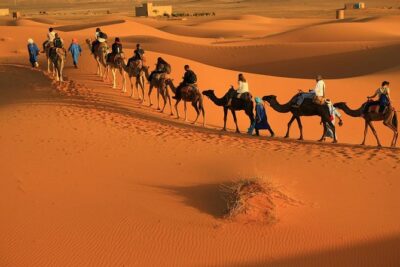
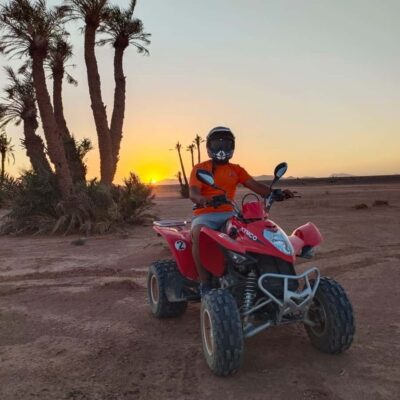
Quad Bike Tour to Palm Oasis and Jbilat Desert
Read our review →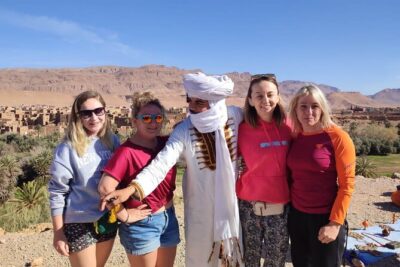
3 Days Desert Tour From Marrakech To Merzouga Dunes & Camel Trek
Read our review →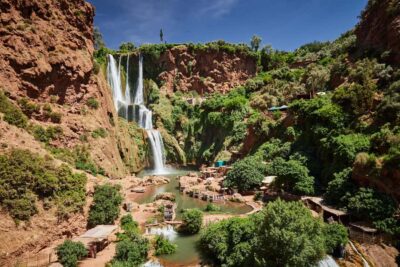
3-Day Marrakech to Merzouga Desert Tour: Camel Rides & Overnights
Read our review →
Desert & Mountain Tour with Camel Ride & Lunch
Read our review →