Reviewed · FOOD
Marrakech: Local Food Tasting Tour with a Guide
Marrakech smells like dinner if you plan it right. This 3-hour medina food tasting tour takes you through neighborhoods, not just photo stops, and it pairs classic Moroccan flavors with drinks that help you keep going. I love the way the lineup mixes hot comfort food with grill-and-smoke dishes, and I also like that vegetarian options are available so you are not stuck eating only bread. One catch: the route is walk-focused, and a few tastings can be filling fast.
What makes it work is the guide’s job is not just pointing and translating. The route is led by a local guide, often listed as Mohamed or Muhammed, and the pacing is set up so you can actually taste instead of rushing. The small group limit, capped at 8, also means you get more attention, especially when you have questions about ingredients or spice levels.
If you are sensitive to strong flavors, organ meats, or heavier dishes, you might want to eat lighter earlier in the day. And while the activity description says wheelchair accessible, it also notes it is not suitable for wheelchair users, so check carefully if mobility is a concern.
In This Review
- Key highlights worth knowing
- A 3-hour medina bite tour, starting at Argana Cafe
- Price and what you actually get for $45
- Small group pacing, and why the guide matters
- The tasting lineup, from msemen to eucalyptus infusion
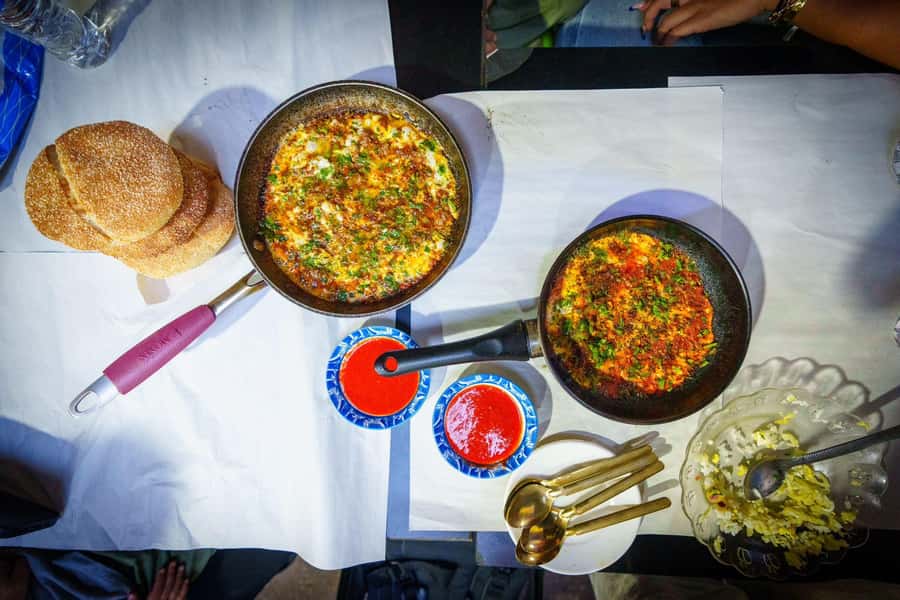
- Msemen with tomato sauce, onion, coriander, and spices
- Harira soup, dates, and chebakia
- Makkla bel kefta
- Sfenj, or Moroccan donuts
- Lfranatchi wood-fire stop for tanjia
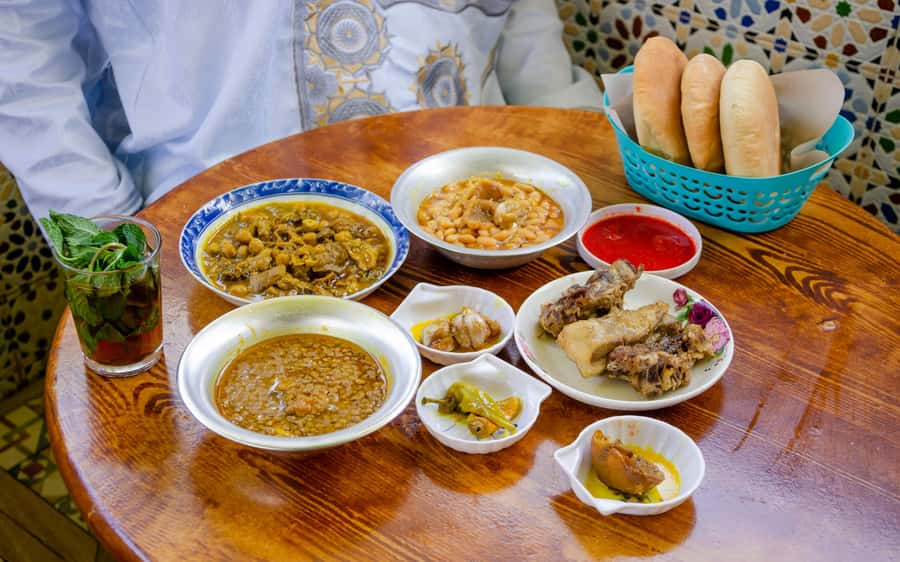
- Shwa Moroccan barbecue: beef, turkey, and liver
- Rass lmbkher, steamed sheep’s head with cumin
- Panache smoothie, seasonal fruits with milk or orange juice
- Khodnjal, herbal infusion with eucalyptus
- Local sweets and tea
- Stop-by-stop: Argana, local restaurant, and Mellah visit
- Local restaurant phase, with photo stop and a 30-minute walk
- Mellah, about 20 minutes
- Medina visits, then a guided 2-hour walk
- Medina walk and guided culture, with the food as your timeline
- What to expect from heavier dishes, and how to handle them
- Vegetarian options that actually help, not just token bites
- What to bring and how to dress for the medina
- Time, logistics, and what to plan around
- Should you book this food tour in Marrakech?
Key highlights worth knowing
- 10 local food and drink tastings, from msemen and harira to herbal infusion with eucalyptus
- Vegetarian options available, ask your guide which tastings fit your diet
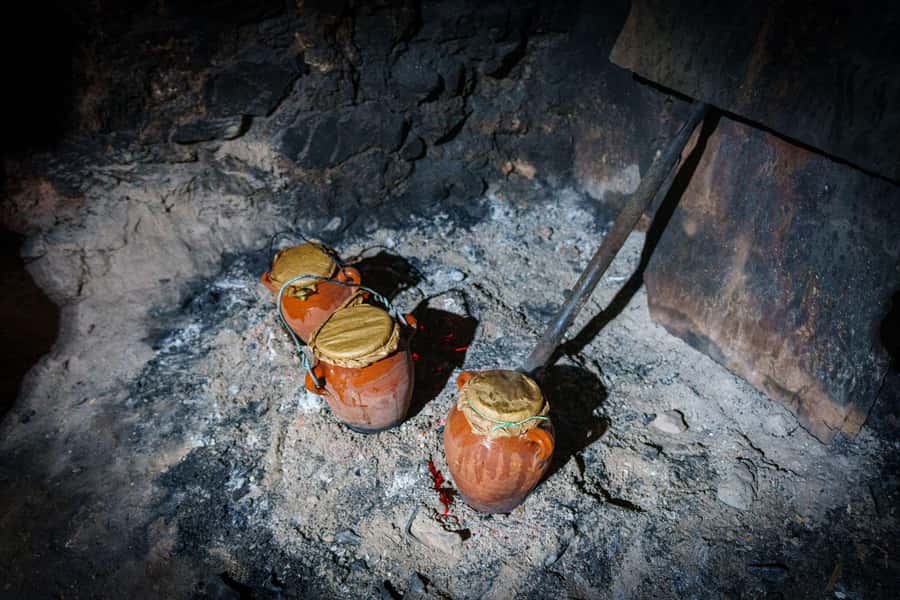
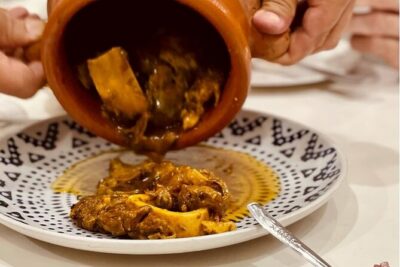
- Lfranatchi wood-fire stop for tanjia cooked in a clay-pot style with smoky flavor
- A long guided medina walk, plus neighborhood visits like Mellah
- Small group of up to 8, which helps the guide manage timing and attention
- Tea and local sweets included, so you get the sweet side of Morocco, not just savory
A 3-hour medina bite tour, starting at Argana Cafe
This tour is designed for a very specific kind of traveler, the one who wants to eat like a local and understand what is behind the flavors. You meet at Jame el Fna Square, in front of Argana Cafe, then start from there with your guide.
From the first moments, you can feel the difference between a food stop that is built for tourists and one built for Moroccans. The “plan” is not fancy, it is practical. You walk through parts of the medina, pause at places where food is served, and you taste your way through multiple categories, soups, pastries, grills, hot drinks, and cooling smoothies.
The total time is 210 minutes, so you are out long enough to get a real sense of the neighborhood rhythm, but not so long you lose your energy. It also means you can fit this into a first or second day in Marrakech, before you start feeling too settled into your hotel routine.
Other Marrakech days to consider
- From Marrakech: Merzouga 3-Day Desert Safari with Food
★ 4.7 · 12,232 reviews - Marrakech: Street Food Tour by Night
★ 4.8 · 2,838 reviews - From Marrakech: Zagora 2-Day Desert Safari with Food & Camp
★ 4.5 · 1,137 reviews
Price and what you actually get for $45
At $45 per person, the big question is whether you are paying for food, guidance, or just a branded route. In this case, you are paying for a combined package: a personal guide, multiple tastings, and the structure that lets you try dishes you would likely skip on your own.
You get tastings of traditional Moroccan dishes, plus local sweets and tea. You are also paying for access to a guide who knows where to go in the medina. That matters because medina navigation is not hard once you have the basics, but it is hard to do well when you only have one day. A good guide does two things fast: it gets you to the right places, and it keeps the group moving at an eating pace.
Also, the tour includes hidden gems as part of the experience, which usually means you are not just looping through the most obvious streets. Since you have a small group and a set number of tastings, you get more value than a casual “let’s wander and snack” plan.
The other cost to consider is your appetite. This is not one pastry and a sip of mint tea. There are 10 tastings built into the timeline, and at least a few are hearty enough that you will want room for dessert and hot drinks later.
Small group pacing, and why the guide matters
The guide is the whole engine here. The tour is led by a live guide in English and French, and the experience is run start to finish, so you are not left figuring things out mid-route.
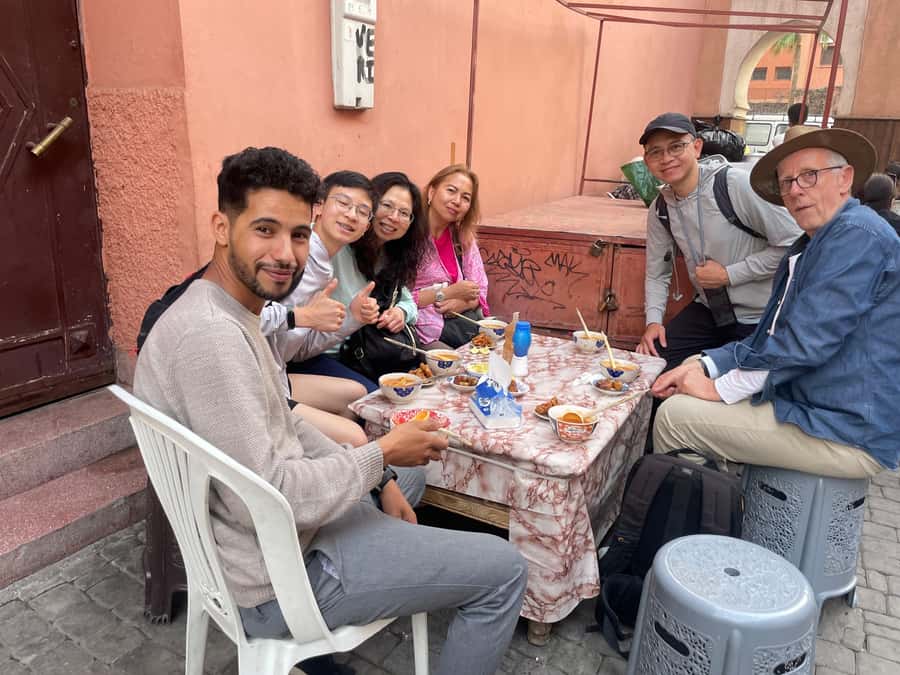
The small group size, limited to 8 participants, changes the feel. You can ask questions without shouting. Timing is easier, so tastings land when you are hungry, not when everyone has already eaten. The guide can also adjust for comfort, especially if someone is unsure about a dish.
Based on what people consistently praise, Mohamed or Muhammed stands out for staying attentive from the beginning to the end. That shows up in small ways, like keeping the group together in the medina and choosing local tables rather than making everyone eat standing next to a street stall.
This is also a cultural tour, not only a plate tour. You will be guided around the medina and neighborhood areas, including Mellah. Expect a mix of short visits, guided walking, and time to look around.
The tasting lineup, from msemen to eucalyptus infusion
One reason this tour gets repeat love is the lineup hits many parts of Moroccan eating, not just desserts or only street food. Here is what you can expect, in the order of what the tour describes and the kinds of tastings you are likely to encounter.
Within striking distance:
- Marrakech: Agafay Desert Sunset, Camel Ride, and Dinner Show
★ 4.6 · 35,119 reviews - From Marrakech: Ouzoud Waterfalls Guided Hike and Boat Trip
★ 4.7 · 33,630 reviews - Marrakech: Agafay Desert Quad & Camel Rides with Dinner Show
★ 4.8 · 27,382 reviews - Marrakech: Agafay Desert Quad Biking Tour with Dinner-Show
★ 4.8 · 16,569 reviews
Msemen with tomato sauce, onion, coriander, and spices
Msemen is a Moroccan flatbread you will recognize quickly once it shows up at the table. Here it comes with tomato sauce, onion, coriander, and spices. It is a great starter because it gives you warmth and spice right away, and it is an easy way to understand what “street food” can mean in Morocco when it is made fresh.
Harira soup, dates, and chebakia
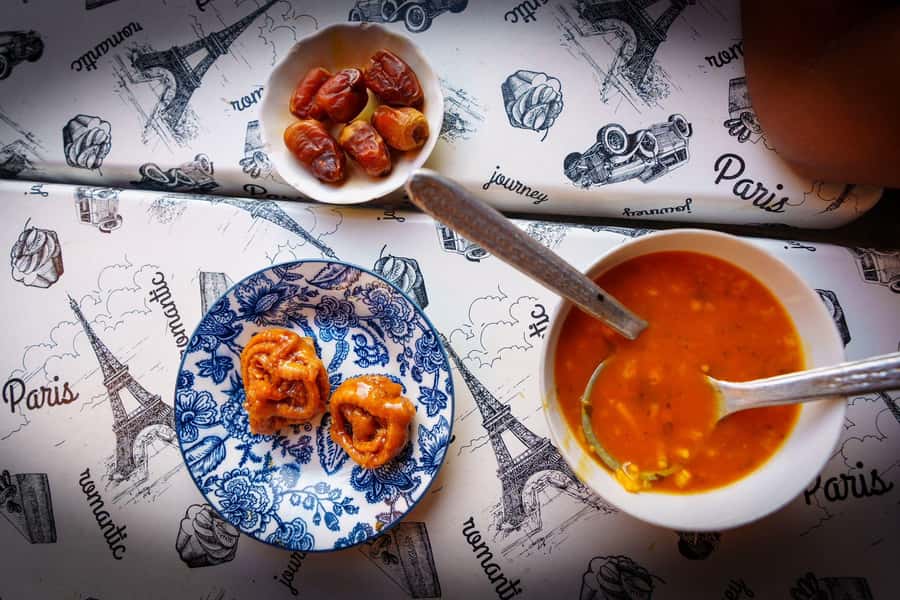
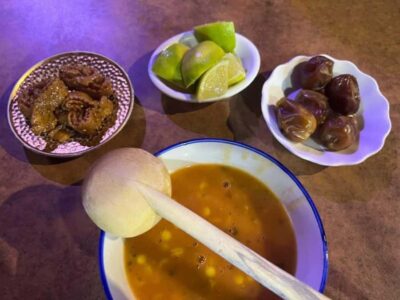
Harira is Morocco’s beloved soup, often associated with slower, communal meals. In this tour, it is paired with dates and chebakia, the syrupy fried pastry that people tend to crave once they get a bite. The combination works because soup resets your palate after bread, and the sweets let you experience that contrast between savory spice and honeyed richness.
Makkla bel kefta
This is another classic Moroccan preparation, and you will learn about it on the route. Even if you are not sure what it is before the tour, your guide will frame it so you understand what makes it special, not just how it tastes.
Sfenj, or Moroccan donuts
Sfenj are Moroccan doughnuts, but calling them donuts is almost an understatement. They are usually crisp outside, soft inside, and made to be eaten warm. If you have ever wondered why people get addicted to street sweets when they are properly made, this is where you start understanding.
Lfranatchi wood-fire stop for tanjia
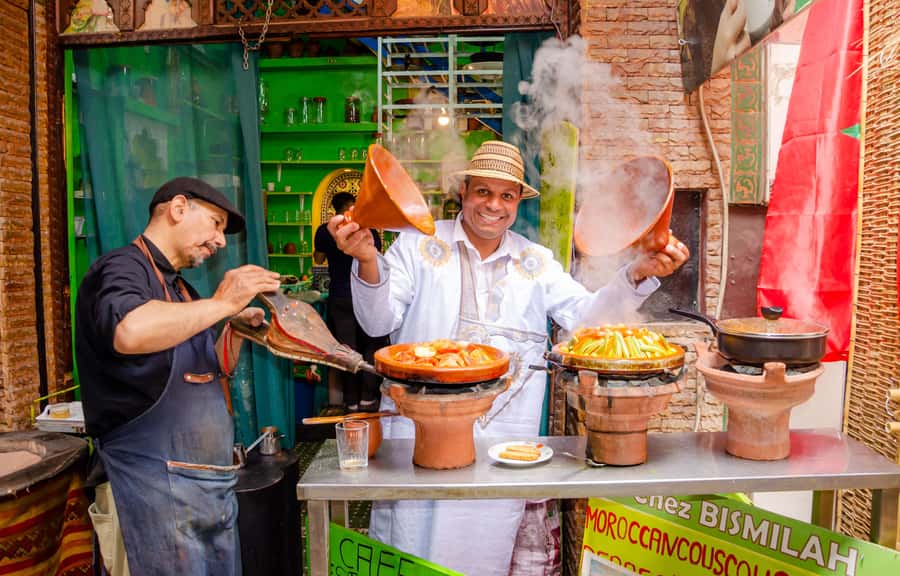
This is one of the most memorable parts of the itinerary. At Lfranatchi, the tour describes a wood fire and cooking tied to a clay-pot dish, tanjia. Tanji a is known for smoky flavor from the cooking method, and this stop is a visual one, you can see the cooking energy and smell that wood-fired atmosphere.
Practical tip: if you are a spice-avoider, this is a good moment to ask how the sauces are handled. Smoked dishes can taste strong even when the heat is moderate.
Shwa Moroccan barbecue: beef, turkey, and liver
Now you move into grill mode, with beef, turkey, and liver. Shwa is the kind of meal that feels complete because it is savory, smoky, and filling. If you eat lightly on purpose before a tour, you will probably be tempted to go back for “just one more bite,” but your schedule prevents that.
Rass lmbkher, steamed sheep’s head with cumin
This is not a dish for every stomach. The tour includes rass lmbkher, described as steamed sheep’s head with cumin. The guide’s job is to frame the cultural context so it feels less like shock food and more like a traditional Moroccan use of every part of an animal.
If you are squeamish, you can still enjoy the rest of the tastings, but be honest with yourself about how you handle unusual textures.
Panache smoothie, seasonal fruits with milk or orange juice
After heavier savory bites, you get something cooling. Panache is described as a smoothie from seasonal fruits, blended with milk or with an orange juice base. It is a palate cleanser that also helps you keep going, because the medina walking plus the food load can catch up.
Khodnjal, herbal infusion with eucalyptus
Finally, a hot drink that does the job it is meant to do. Khodnjal is a soothing herbal infusion with eucalyptus, described as helpful for clearing your senses and aiding digestion. It is also a nice finish when you are done chewing through the last sweet.
Local sweets and tea
The tour also includes local sweets and tea, which is important because it makes the experience feel like a proper Moroccan “meal arc.” You do not end with a random snack. You end with tea timing and sweet bites that fit the last part of your tasting journey.
Stop-by-stop: Argana, local restaurant, and Mellah visit
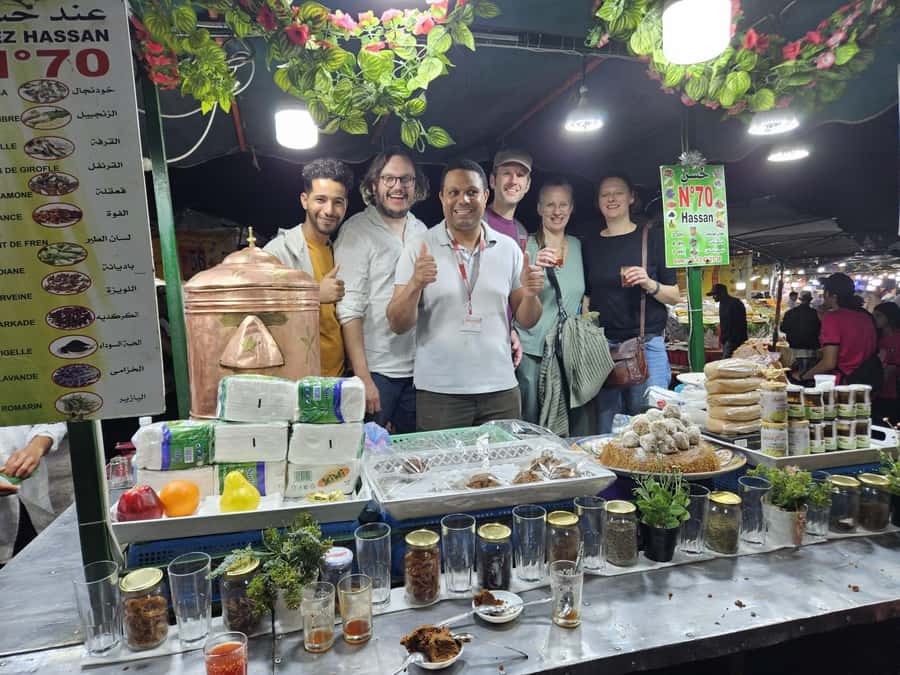
The itinerary begins at Argana, right at the meeting point. From there, you are set up for an early momentum phase where your guide gets everyone settled and moving.
Local restaurant phase, with photo stop and a 30-minute walk
The tour includes a local restaurant stop with a photo stop, visit, and walk for about 30 minutes. This is a good segment because it gives you a rhythm. You get your first tastes and start learning how the medina works in real time, not in theory.
This is also where you can gauge spice and portion size. If you are vegetarian, you can confirm what is being offered and how the kitchen handles substitutions.
Mellah, about 20 minutes
Next comes Mellah, visited for about 20 minutes. This short stop helps you understand how many different parts Marrakech contains beyond the most famous streets. Even if you do not go deep into local lore, the value is practical, it broadens your sense of where people live and eat.
The drawback with short neighborhood stops is that you may want longer time to wander at your own pace. But the trade-off is that you keep energy for the guided walking segment later.
Medina visits, then a guided 2-hour walk
After Mellah, the itinerary includes more time in Medina, Marrakech, with 20-minute visits and then a longer 2-hour guided tour and walk. This is where the guide earns their keep. A medina does not reward wandering randomly for too long. A guided route helps you keep your bearings fast and keeps you away from getting stuck in dead ends.
Also, the longer walk portion is where you will feel the pace. If the weather is hot, you will want to pace yourself, especially after several savory dishes.
Medina walk and guided culture, with the food as your timeline
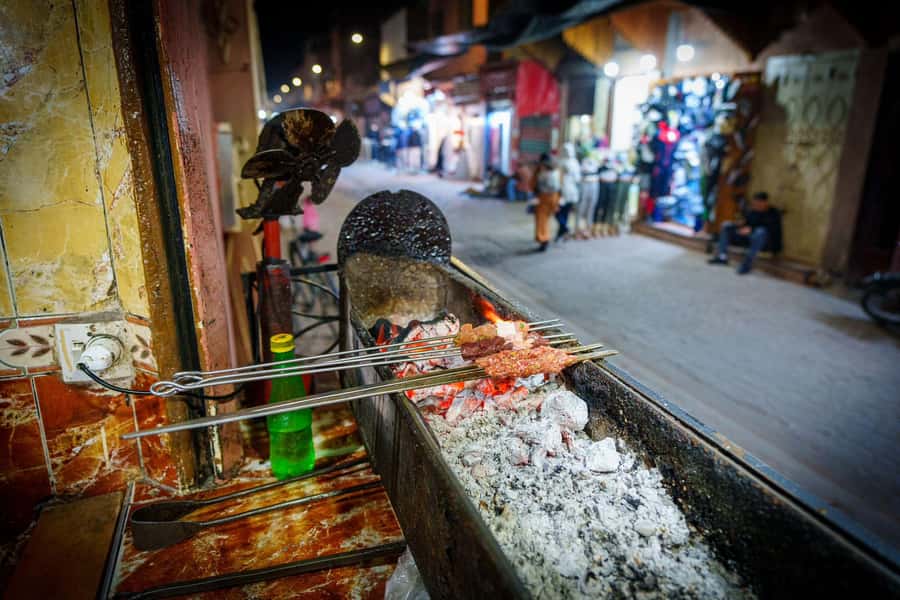
A food tour in Marrakech is not just about eating, it is about timing your senses. This itinerary uses food tastings as anchors, so you pause, taste, then move.
The guided walking part is important because medina streets can feel like a puzzle. When you have a guide, you spend less energy figuring out the next turn and more energy noticing what is around you, textures, storefront rhythms, and the general pace of everyday life.
This is also where you can learn how different dishes fit into daily or seasonal eating. Even when you only get quick explanations, it changes how you understand the foods when you taste them. Soup is not just soup. Pastry is not just pastry. The guide frames them so they become part of a larger picture.
One note, listen to your body. Reviews consistently highlight that people get full after multiple tastings, but the solution is simple: you might go slower for a couple of bites, take sips of tea, and let the smoothie and herbal infusion do the heavy lifting later.
What to expect from heavier dishes, and how to handle them
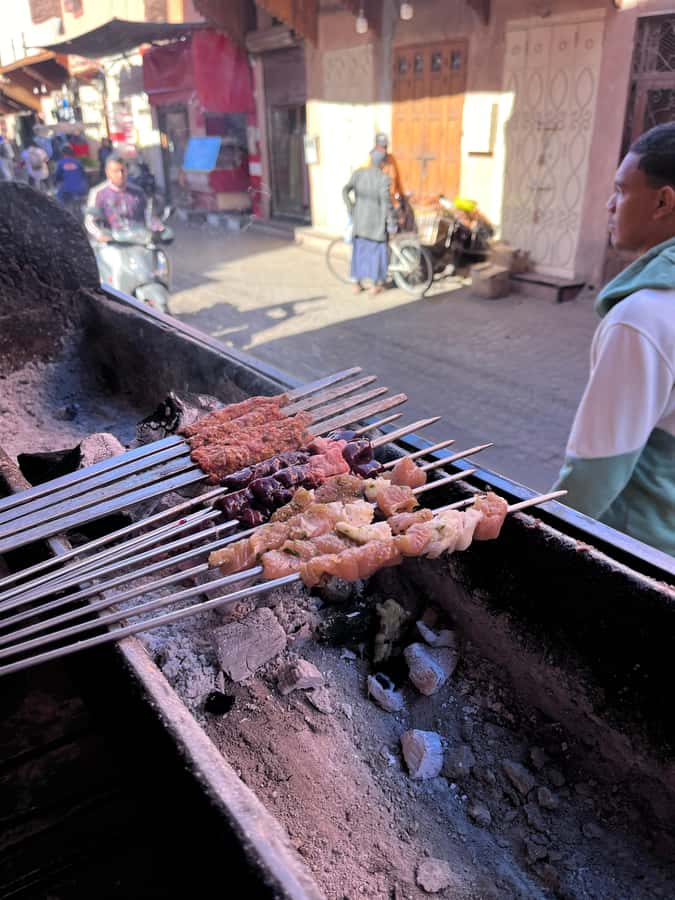
Not all Moroccan food tastings feel the same in your mouth or your mind. This tour includes dishes that are traditionally Moroccan but may feel unusual if you have never tried them.
You will encounter liver in the barbecue tasting and sheep’s head in the rass lmbkher tasting. If you are worried, do not fake bravery. Ask your guide what to expect in texture and flavor. You can also decide in advance how you want to approach it, for example trying a small bite first, then reassessing.
The good news is the tour balances heavier bites with lighter elements like the panache smoothie and hot herbal infusion. That means even if you pick one dish you are unsure about, you still get relief and variety.
If you know you only want vegetarian tastings, tell the guide early. Vegetarian options are available, but you still want clarity on which specific dishes are plant-based.
Vegetarian options that actually help, not just token bites
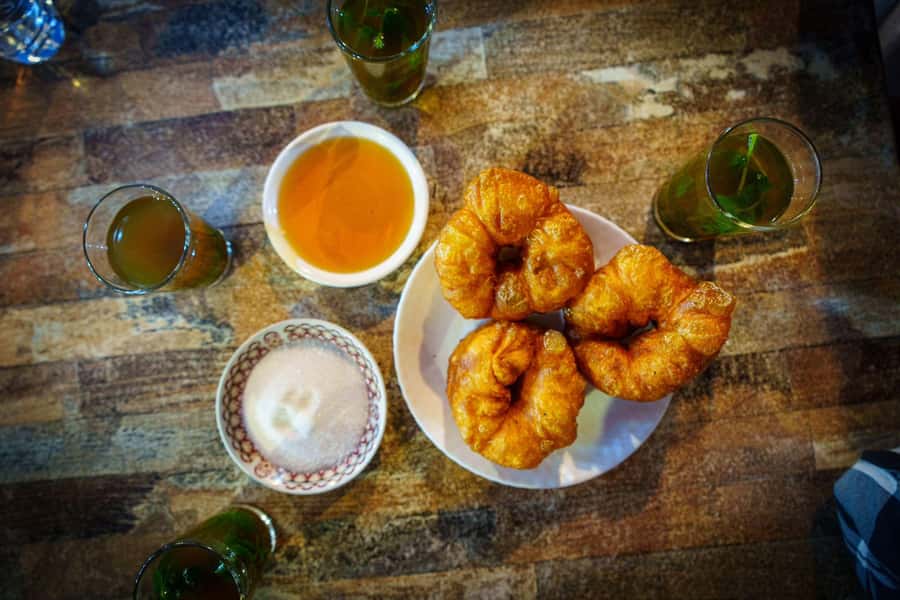
The tour states vegetarian options available, and that matters in Marrakech because some food tours treat vegetarian travelers like an afterthought. Here, the structure is set up so you can still taste through the meal arc while keeping your diet in mind.
What you should do is keep your expectations practical. Ask which dishes can be swapped or adjusted. Since the tour has specific items like msemen with tomato sauce and the included drinks, there is a good chance you will find options that match your needs. Still, do not assume every savory tasting has a vegetarian counterpart without checking.
Also, remember that some vegetarian Morocco food can still be spicy or rich. Vegetarian does not automatically mean light.
What to bring and how to dress for the medina
This is a walk-heavy experience inside Marrakech’s older streets, so your gear matters.
Bring:
- Comfortable shoes
- Sun hat
- Camera
- Sunscreen
Wear comfortable walking gear you can move in. Plan for sun exposure since the route is in open streets as you go between tastings and visits. And since the guide is with you through the tour, your job is to show up ready, not weighed down.
If you get motion discomfort easily, keep water nearby if allowed by your comfort level, and pace yourself through the tastings. Eating several hot items in sequence can be intense, especially when you are also walking.
One more practical note: the tour says alcohol and drugs are not allowed, and alcohol is also listed as not included. So do not plan to pair these tastings with drinks. Your drinks on the tour are tea and the included smoothies or herbal infusion.
Time, logistics, and what to plan around
The tour runs for 210 minutes, which is a bit over 3 hours. That means it works best when you do not have a stressful plan immediately afterward.
The meeting point is clear, Jame el Fna Square in front of Argana Cafe. Transportation to and from the meeting point is not included, so plan how you will get there. Also, personal expenses or extra food not part of the tasting menu are not included.
For people who like flexibility, the activity offers free cancellation up to 24 hours in advance and a reserve now, pay later option. That can help you lock in a spot without committing fully before you see weather and the rest of your schedule.
Should you book this food tour in Marrakech?
Book this tour if you want the medina experience to come with structure, and you want to eat more than the same two tourist meals. It is especially good value when you count what you get: a personal guide, 10 tastings, local sweets and tea, and a route that includes neighborhood stops like Mellah plus a longer guided walk.
You should think twice if:
- You are not a fan of heavier foods or the idea of organ meats and sheep’s head makes you uncomfortable.
- You struggle with long walking.
- You have mobility needs, because the description contains a contradiction about wheelchair friendliness. In that case, email or call the operator and confirm what the route and surfaces look like for your specific situation.
If you are flexible, hungry, and curious, this is the kind of tour that turns Marrakech into more than a postcard. It turns it into flavors you can remember, and it gives you a guide for navigating the medina while you eat your way through it.
Latest additions near Marrakech
- Three valleys, Atlas Mountain, waterfalls & Agafay Desert★ 5.0 · 13 reviews
- Marrakech: Tailor-Made City Tour With Your Own Private Guide★ 4.9 · 236 reviews
- Essaouira: Surf Trip from Marrakech★ 4.9 · 31 reviews
- Surf Training and Lunch on Essaouira Day Trip from Marrakech★ 4.9 · 51 reviews
- Marrakech palm grove: Sunset camel ride★ 4.8 · 194 reviews
- Marrakech: Cycling Tour in Palm Groove with Local Breakfast★ 4.7 · 73 reviews
- Marrakech: Sunrise Desert Tour with Camel Ride and Breakfast★ 4.4 · 36 reviews
- Marrakech : Agafay Desert Sunset Camel Ride & Luxury Dinner★ 4.3 · 39 reviews
Food, compared.


3-Day Tour to Merzouga Erg Chebbi with Food & Camel Trek
Read our review →
Authentic Moroccan Food Tour in Marrakech with Dinner
Read our review →