
Reviewed · CITY TOURS
Marrakech walking tour with official city guide
Marrakech clicks into place fast. This 4-hour walking tour helps you understand the city through an official city guide and a tight route of must-see stops, from Bahia Palace to Medersa Ben Youssef, ending at Jemaa el-Fnaa. I like the straightforward setup too, especially knowing that admission fees are included so you are not doing mental math mid-walk.
What I really enjoy is the practical flow and the personal feel. With a maximum of 15 people, you get enough time to ask questions and keep up, and pickup is offered so you are not stuck hunting for the right meeting point. One thing to consider, though, is that this tour depends on good weather and it is still a walking experience through the medina, so wear comfortable shoes and plan for crowds and uneven streets.
In This Review
- Key highlights that make this tour worth your time
- Why this guided walk makes Marrakech easier than doing it alone
- Starting at Jemaa el-Fnaa: the perfect place to orient yourself
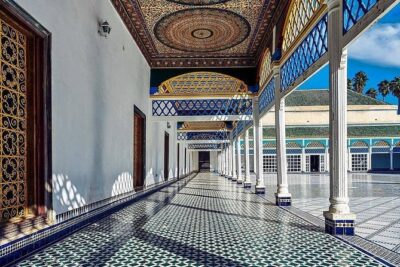
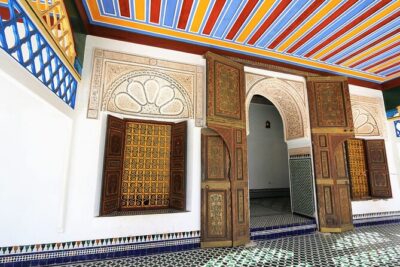
- Bahia Palace: how Moroccan craftsmanship shows up in details
- Saadian Tombs: quiet grandeur beside the Kasbah area
- Medersa Ben Youssef: an active lesson in design and study
- Jemaa el-Fnaa: the busy main square and why it belongs at the end
- Transfers, timing, and walking practicalities that affect your experience
- Price value: what $111.50 gets you and where the savings are
- Who this tour is best for (and who should rethink it)
- Should you book this Marrakech walking tour?
- FAQ
- What is the duration of the Marrakech walking tour with an official city guide?
- How much does the tour cost?
- Are admission fees included?
- Is hotel pickup available?
- What languages does the guide speak?
- What is the meeting point and start time?
Key highlights that make this tour worth your time
- Official city guide, multilingual support (English, Spanish, French)
- Admission tickets included for every main site on the route
- Small group size up to 15, so questions do not get lost
- Pickup offered plus a loop back to the meeting point after the tour
- Timed stops (about 30 minutes each, longer at Jemaa el-Fnaa) that keep things moving
Why this guided walk makes Marrakech easier than doing it alone
Marrakech is one of those cities where the streets can feel like a maze, even when you think you are being careful. The value of a guided walking tour is not just seeing landmarks. It is learning how to move through the medina, what to look for as you pass doorways and courtyards, and how to connect each site to the larger story of the city.
This tour is built for that. You start in the central area around Jemaa el-Fnaa, then head to three major monuments, including palaces and Islamic learning spaces, before finishing at the main square and surrounding market area. Because it is structured into a set route with an official guide, you spend less time guessing and more time understanding what you are looking at.
Also, the group size matters. Up to 15 travelers is small enough that a guide can actually respond to questions instead of rushing everyone along like an assembly line. In one standout case, the guide Ayoub was described as thoughtful and attentive, answering questions in detail. That is the kind of attention that turns a sightseeing walk into a real orientation.
More Walking Tours in Marrakech
- Marrakech: Ben Youssef, Secret Garden, & Souks Walking Tour
★ 4.6 · 2,802 reviews - Marrakech: Colorful Medina Souks Guided Walking Tour
★ 4.7 · 2,470 reviews - Marrakech: Medina by Night Walking Tour with Moroccan Tea
★ 4.6 · 586 reviews
Starting at Jemaa el-Fnaa: the perfect place to orient yourself
The tour begins at Jemaa el-Fnaa, the big central square that acts like a crossroads for the city. Starting here is smart because you get context right away. From the main square, you can begin to understand how the medina works, where the foot traffic funnels, and why the souks spread out from this area.
You also get a clean reference point for the day. The activity ends back at the meeting point, so you are not scrambling for a ride far from where you started. The start time is 8:00 am, which is a practical advantage because you are typically getting going earlier rather than spending the middle of your sightseeing window in the hottest, most crowded hours.
One note for your planning: the itinerary includes a full hour at Jemaa el-Fnaa. That gives you time to experience the market atmosphere without feeling like you are only passing through.
Bahia Palace: how Moroccan craftsmanship shows up in details
Bahia Palace is often the stop that clicks for first-time visitors, because it feels like a whole world contained within walls. This is a 19th-century palace with a large footprint, built between 1866 and 1867, and associated with Si Moussa, chamberlain of Sultan Hassan I. The palace is remembered for its scale and for the quality of Moroccan architecture from the period.
The structure and size are part of the appeal. You are not just looking at one room or one façade. The palace was built with ambition, and the guide’s job is to help you spot what matters as you move through. Expect the stop to last about 30 minutes, which means you get a meaningful taste of the place without it dragging into a full half-day.
Why it is a valuable stop on a walking tour:
- It gives you a baseline for later comparisons, because palaces and religious schools in Marrakech share artistic language, just used differently.
- It helps you see the medina as more than a street market. There are major monuments hidden in plain sight.
What to watch for:
- A 30-minute visit is not a slow museum pace. If you are the type who wants to read every tile inscription, consider this a “see the big ideas” stop, not a “study the palace for hours” stop.
Saadian Tombs: quiet grandeur beside the Kasbah area
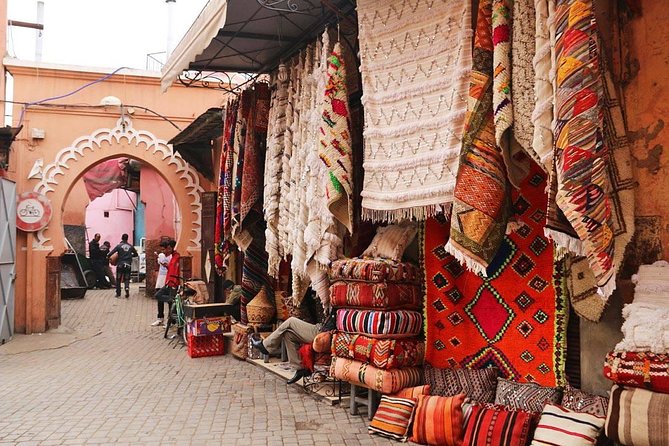
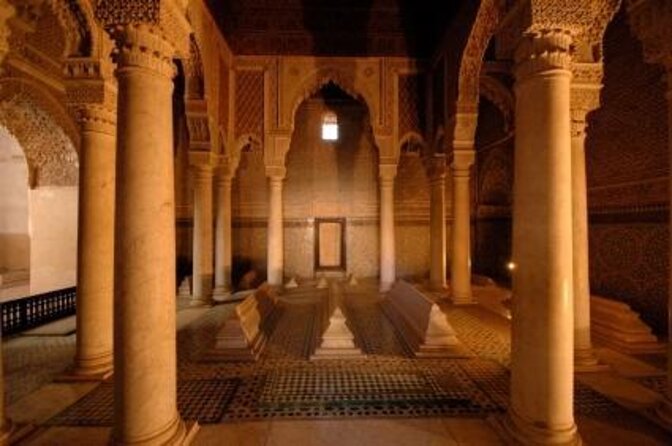
Next up are the Saadian Tombs, located next to the mosque of the Kasbah. Even though you are standing in a relatively small space compared to the vast medina, the story is big. The Saadian dynasty ruled Marrakech during what many people call the golden age, roughly from 1524 to 1659, and these tombs are among the only surviving remains tied to that era.
The history has a twist. In the early 18th century, Sultan Moulay Ismail pushed to erase traces of the dynasty’s past and ordered destruction of many vestiges. The burials were spared, but the necropolis entrance was completed in a way that helped the site remain hidden until its rediscovery in 1917. That timeline is the kind of detail that makes a short stop feel more meaningful, because you understand why the tombs exist in the form you see today.
The stop also lasts about 30 minutes. That is just enough time to take in the layout and absorb the significance without getting mentally fatigued. If you tend to like historical context with your monuments, this is the stop where your guide can really add value.
A practical consideration:
- Tomb and mosque-area sites can have more foot-traffic flow around entrances and pathways. If you are sensitive to crowds, go with the flow and keep your pace steady. Your guide will handle the timing and route.
Other Marrakech days to consider
- Marrakech: Medina Souks Guided Walking Tour
★ 4.5 · 381 reviews - Medina of Marrakech Walking Tour
★ 4.0 · 300 reviews - Marrakech: Authentic Moroccan Food Walking Tour & Dinner
★ 4.8 · 261 reviews - Medina Walking Tour Secrets
★ 5.0 · 245 reviews
Medersa Ben Youssef: an active lesson in design and study
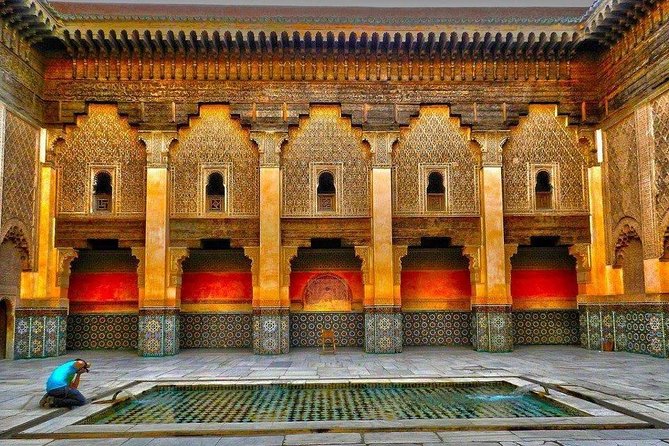
Medersa Ben Youssef is the Koranic school, founded in the early 14th century and later enlarged under the Saadians. This is the stop where Marrakech shifts from palaces and royal power to learning, theology, and community life. The medersa became one of the largest Islamic colleges in the Maghreb, with room for up to 900 students at its peak, based on the building’s historical use.
The Saadians expanded and redecorated the building in 1570, and the monarchy supported students with food and lodging, while at least some daily work, like kitchen tasks, was handled by students themselves. That detail matters because it paints the school as a real functioning place, not just a pretty backdrop for photos.
In modern times, the medersa was turned into a museum in 1960 and renovated again in 1999, which is why it is one of the most popular sites in Marrakech. In the real world, that popularity can mean higher visitor energy. Still, a guided visit helps because you are not just walking through rooms. You are learning what the building is trying to teach through its layout, design, and atmosphere.
Expect about 30 minutes here. That gives you time to see key architectural features and the overall structure. If you like Islamic art and architecture, this is often the stop that people remember most, because it feels intimate and focused compared to the open square later in the day.
Things to consider:
- Religious schools and museum spaces can involve rules about dress and behavior. Plan to cover shoulders and keep things respectful, and you will avoid stress.
Jemaa el-Fnaa: the busy main square and why it belongs at the end
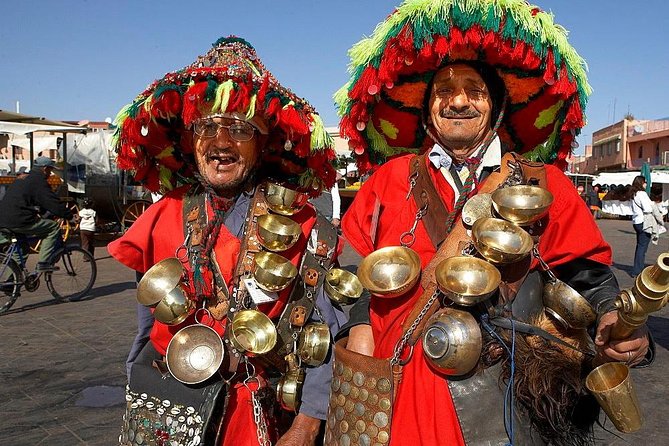
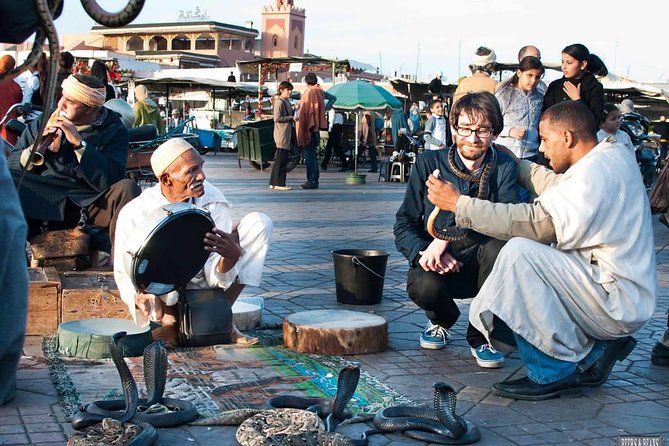
You finish at Jemaa el-Fnaa, the central square that anchors the city’s public life. This is the part where the tour turns from monuments into everyday energy. You get an hour here, which is long enough to notice how the souks and surrounding market life connect to the square.
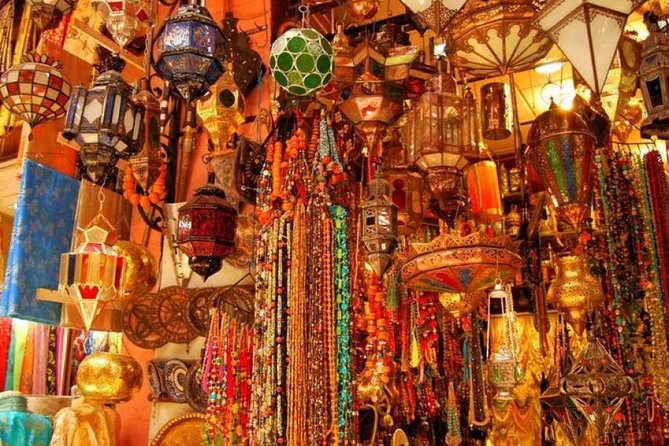
A souk is an Arab market, traditionally open-air, and historically linked to trading routes that brought goods into Marrakech from different directions. This tour frames that idea in a useful way, so you understand why the market feels like a network rather than random stalls.
Why end here:
- By the time you reach the square, you have already seen how power, learning, and craftsmanship show up in real buildings. The market now makes sense as the social and commercial counterpart.
- An hour gives you time to soak up the atmosphere on your own terms, without feeling rushed out the door.
How to get the most out of your hour:
- Keep your questions for your guide during the earlier part of the day, then use this last hour to wander and orient yourself. You will leave with better instincts for navigating afterward.
- If shopping is your plan, remember haggling is part of the culture, but you should also know when to walk away. The guide can help you understand what you are seeing, even if you do not buy.
Transfers, timing, and walking practicalities that affect your experience
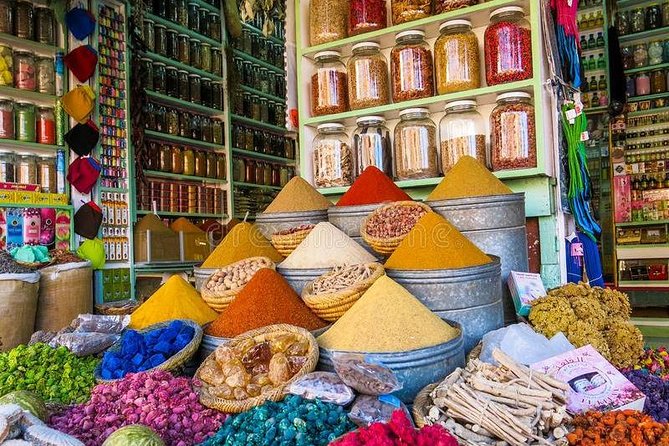
This is a half-day style tour, about 4 hours total. You start at 8:00 am and move through three main sites at roughly 30 minutes each, then spend about 1 hour at Jemaa el-Fnaa. That pacing is usually ideal for first-time visitors because you get real highlights without turning the day into a marathon.
Transfers matter here. Pickup is offered, and the activity ends back at the meeting point. That reduces the usual Marrakech stress of trying to figure out how to get from one area to another, especially once you are already in the medina.
The tour also lists mobile ticket and group discounts. Even if you never think about the ticket, the underlying point is convenience. You can focus on the walking route instead of managing multiple separate admissions.
One more planning detail: the tour requires good weather. If weather is poor, the tour can be canceled and you will be offered a different date or a full refund. In Marrakech, that is not a small detail. Weather can turn walking uncomfortable fast, especially in areas with limited shade.
Price value: what $111.50 gets you and where the savings are
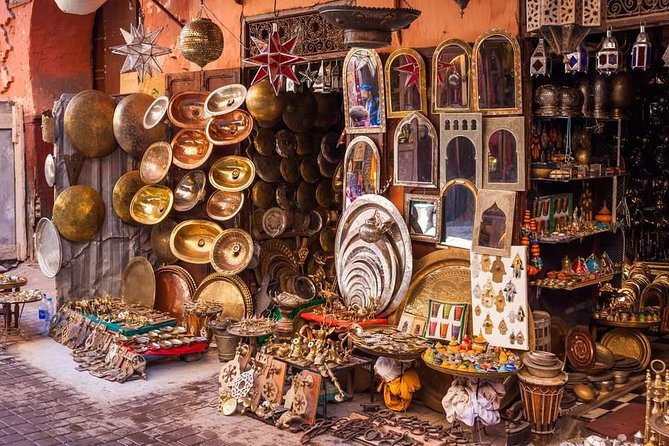
At $111.50 per person, this is not the cheapest way to see Marrakech. But value comes from what is included and how the time is managed.
Here is what you get that supports the price:
- An official guide speaking English, Spanish, and French
- Entrance fees included for the major sites on the route
- Pickup offered and a return back to the meeting point
- A maximum group size of 15 travelers, which helps with attention
When admission fees are included, you avoid a common travel annoyance: paying for tickets on your own and then trying to fit them into a schedule. Also, guides can save you time by pointing you to what to prioritize inside each site, rather than you walking around unsure what matters.
If you are visiting for a short time, paying for guidance can be a smarter use of vacation hours than trying to manage navigation, tickets, and timing by yourself. If you enjoy spending extra time alone in museums, you might find the 30-minute pacing a touch short. But for most first-timers, it is a solid introduction.
Who this tour is best for (and who should rethink it)
This tour is a good fit if you:
- Want a structured introduction to Marrakech with multilingual official guidance
- Prefer small groups so questions get answered
- Like seeing major monuments in a single morning
- Want admission fees handled without extra planning
You might rethink it if you:
- Hate walking or get easily worn out by uneven, crowded streets
- Want to linger at each site for long periods
- Are traveling on a day with uncertain weather, since the tour depends on good conditions
If you are traveling as a couple or with family members who need help navigating, the small group format can also feel more manageable than larger bus-style tours.
Should you book this Marrakech walking tour?
I would book it if you want Marrakech to feel organized from the start. The mix of stops is strong: Bahia Palace for architecture and scale, the Saadian Tombs for historical context, Medersa Ben Youssef for learning and design, and finally Jemaa el-Fnaa for the market-city heartbeat.
Also, the guide quality seems to be a real strength. Ayoub, for example, was highlighted as attentive and detailed when answering questions. That matters more than people think. When someone can explain what you are seeing in plain language, the city becomes easier to remember.
The main reason to pause is simple: it is still a walking tour in a dense medina, and it needs good weather. If you plan your day well, wear solid shoes, and keep expectations realistic about time inside each site, this tour is a practical way to get your bearings fast and see the key places without fuss.
FAQ
What is the duration of the Marrakech walking tour with an official city guide?
The tour lasts about 4 hours.
How much does the tour cost?
The price is $111.50 per person.
Are admission fees included?
Yes. Admission fees to the sites on the itinerary are included.
Is hotel pickup available?
Yes. Pickup is offered, and the tour includes round-trip transfers from your hotel.
What languages does the guide speak?
The guide speaks English, Spanish, and French.
What is the meeting point and start time?
The tour starts at 8:00 am at Jemaa el-Fnaa in Marrakech and ends back at the same meeting point.
Latest additions near Marrakech
- Marrakesh: Agafay Desert Sunset, Camel Ride, and Dinner★ 4.0 · 10 reviews
- Supratours Marrakech to Essaouira Moroccan Bus Tickets★ 3.5 · 26 reviews
- Marrakesh 3 Days Tour to Fez with Overnight Desert Camping★ 5.0 · 99 reviews
- Marrakech Private Shopping Tour: Historical Medina & Souks★ 4.5 · 13 reviews
- 4 Day Merzouga Desert Trip from Marrakech★ 5.0 · 18 reviews
- Marrakech with the 5 senses★ 5.0 · 10 reviews
- 3 Days Morocco Desert Marzouga Tour from Marrakech To Fès★ 4.5 · 66 reviews
- 3-Days from Marrakech to Merzouga Tour with Camel Trek★ 5.0 · 32 reviews
City Tours, compared.
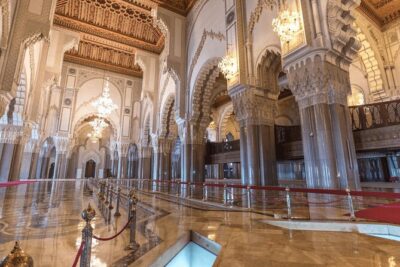
Casablanca City Tour with Hassan II mosque ticket
Read our review →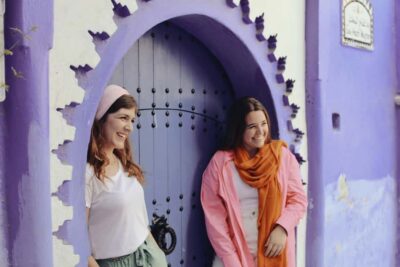
Blue City magic: Affordable Day Trip from Fez to Chefchaouen
Read our review →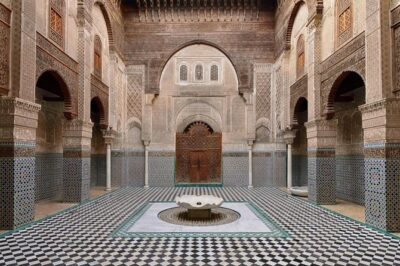
Marrakech Historical and Cultural Tour – Half Day City Tour
Read our review →
Browse the lists this tour appears in