
Reviewed · PRIVATE
Morocco Private Tour 8 Days 7 Nights (Imperial cities and Grand South Tour)
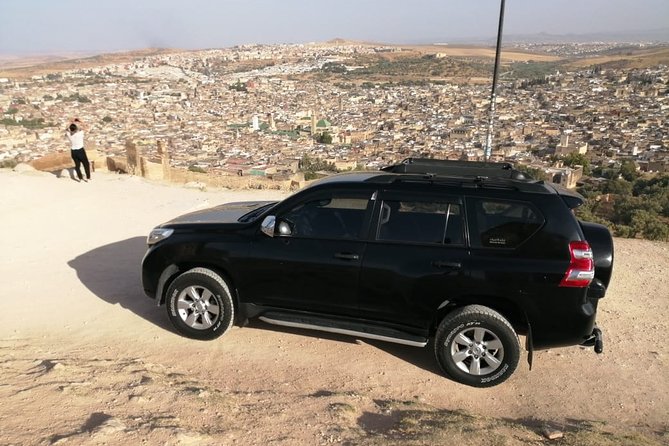
Casablanca to the desert in one smooth circuit is a great idea. I like the private driving with an English speaking driver because it keeps long distances from feeling like a chore, and I also like that you get local guides in the big cities so the medinas and monuments make sense. The one thing to consider is the pace: you will do a lot of sightseeing and long road days, so it helps to be okay with early starts and steady walking.
What makes this tour genuinely interesting is how it stacks very different Morocco experiences back to back. You start with Casablanca and end with Marrakech, but the middle is where you see the country’s range: imperial cities like Fez and Meknes, Roman Volubilis, then mountain roads and the Grand South.
In This Review
- Key Points Worth Noting
- Casablanca First, Then Real Morocco
- Hassan II Mosque and Corniche Views in Casablanca
- Rabat to Fez Through Meknes and Volubilis: A Big Day That Works
- Fez Medina With a Guide, Not a Map
- Middle Atlas to Merzouga: The Route Itself Is Part of the Trip
- Road of a Thousand Kasbahs, Todra Gorge, and Dades Valley
- Ouarzazate, Atlas Studios, and Ait Ben Haddou on the High Atlas Pass
- Marrakech Full-Day: Gardens, Palaces, Souks, and Jamaa el Fna
- Casablanca Departure Day That Stays Simple
- Price and Value: What $2,300 Gets You (and What It Does Not)
- Who This Tour Suits Best, and Who Might Not
- Should You Book This Morocco Imperial Cities and Grand South Tour?
- FAQ
- How long is the Morocco private tour, and what time does it begin?
- Is this tour private or shared with other groups?
- What is included in the $2,300 per person price?
- Are lunch and drinks included?
- Are entrance fees included?
- Do you provide English-speaking help during the city days?
- Is airport pickup offered?
- What fitness level do I need for this trip?
- What is the cancellation policy?
- What does the itinerary include in Casablanca and Marrakech?
Key Points Worth Noting
- Private, air-conditioned transport with a driver who speaks English for easier day-to-day logistics
- City specialists in Casablanca, Rabat, Meknes, Fez, and Marrakech, so you are not guessing your way around
- Imperial cities plus UNESCO sights like Ait Ben Haddou and Volubilis
- Grand South scenery and road stops that break up travel time with meaningful viewpoints
- Guide team support including Sister Soukaina and the Hassans, with hands-on help for comfort and safety
Casablanca First, Then Real Morocco
Casablanca is a smart opener. You get an orientation-style look at the city’s major zones, from the broad avenues to the older medina lanes, then you finish with one of Morocco’s most famous landmarks: Hassan II Mosque. You will also have dinner in the evening and sleep in Casablanca, which helps you adjust after arrival.
The big value of starting here is that the tour establishes the rhythm right away. You are collected by a driver, you get a clear plan for what to see, and you do it without the confusion of self-guided transit. Also, Hassan II is a major “yes, I’m really here” moment. It is described as the second-largest mosque in the world and is one of the rare mosques open to non-Muslims.
One practical note: Casablanca’s mix of modern and older neighborhoods means your day will be varied. Expect a few different vibes in the same outing, which is great, but it does mean your feet may get a workout.
Other Casablanca days to consider
- Casablanca: Hassan II Mosque Premium Tour with Entry Ticket
★ 4.5 · 2,971 reviews - Casablanca City Tour with Hassan II mosque ticket
★ 5.0 · 2,480 reviews - Casablanca: City Tour with Hassan II Mosque Entry Ticket
★ 4.6 · 1,137 reviews
Hassan II Mosque and Corniche Views in Casablanca
Your first day is built around getting your bearings fast. The tour covers United Nations Square, Place Mohammed V, the central market district, and the residential area of Anfa, plus time along the Corniche where you can see the coastline feel of the city. It is a good mix of “big-picture Morocco” and recognizable stops you can later revisit on your own.
Hassan II Mosque is the headline. The plan calls out its artistic beauty, and it also notes that it is one of the rare mosques opened to non-Muslims. If you are the kind of traveler who likes to photograph architecture, you will probably enjoy the scale and detailing.
At the same time, this is not a slow, lingering day. You are doing orientation and a major site, then dinner and an overnight. If you are jet-lagged, plan for an early night.
Rabat to Fez Through Meknes and Volubilis: A Big Day That Works
Day two is a long one, and it makes sense if you want maximum variety in a week. You leave after breakfast and stop in Rabat, then keep moving toward Fez with two strong additions: Meknes and Volubilis.
Rabat is Morocco’s political capital, with sea views and a distinctive old-wall character. The tour highlights the crenellated red ocher walls that stretch more than 5 km, connected to the era of Yacoub el-Mansour. Then you cross the medina and souks for a more local-feeling shopping atmosphere, and you finish with the Kasbah of the Oudayas and the Hassan Tower area.
Next comes Meknes, and it brings a different flavor from Rabat. You will see monumental gates like Berdaïne Bab and Bab Khemis, then explore parts of the city connected to historic storage and stables (Rua, Heri, and Stud, as listed in the plan). You also visit the Mausoleum of Moulay Ismail, which the plan specifically notes as historically one of the only mosques non-Muslims could visit in Morocco. Then you reach Hedim square and the Museum of Moroccan Art, Dar Jamai.
Finally, Volubilis is your Roman detour. The plan is clear about the payoff: 2000-year-old ruins and photo opportunities that help you picture life during the Roman Empire. That contrast, Roman remains in the middle of Moroccan travel, is one of the best “wait, what?” moments on the route.
By evening you arrive in Fez for dinner and overnight. This day works best if you are comfortable with nonstop transit and multiple guide-led stops.
Fez Medina With a Guide, Not a Map
Fez is where Morocco turns into an overwhelming sensory experience, and a good guide matters. The medina tour is built around the scale and complexity of the walled city, with narrow lanes lined by fruit stalls, spice mounds, and crafts like Berber carpets. You are not just seeing sights. You are learning how the city organizes daily life.
The plan includes several religious sites, including the Quaraouiyine Mosque and the Andalusian Mosque, but it also notes entry is not permitted for non-Muslims. That is useful to know in advance so you do not waste time trying to enter where you cannot.
You do get a lot that is open and visually meaningful: Nejjarine fountain, medersas dating back to early as the 13th century, the Batha Palace (now a museum of arts and traditions), and the Chouwara Tanneries. You also visit Souk Attarine, which is described as one of the liveliest in the city.
If you care about crafts and traditional industries, Fez is a strong fit. It is also a good day for buying small items thoughtfully, not rushing. Your guide support is important here, and the overall team approach is said to include help with bargaining and staying safe, including advice to help you avoid getting scammed.
This is also a day of walking. Even if you are moderately fit, wear shoes you trust and plan for uneven surfaces.
Within striking distance:
- Private Tour of Casablanca with Hassan II Mosque Entry Ticket
★ 5.0 · 1,102 reviews - Marrakech Day Trip with Camel Ride from Casablanca
★ 5.0 · 740 reviews - Casablanca: Hassan II Mosque & City Highlights Tour
★ 4.5 · 573 reviews - Casablanca: Hassan II Mosque & City Highlights Tour
★ 5.0 · 526 reviews
Middle Atlas to Merzouga: The Route Itself Is Part of the Trip
Leaving Fez for the desert region is not just a transfer. The day is designed to show the in-between Morocco, from forest and mountain roads to desert approaches.
You start by passing through Ifrane, described as a French-built winter ski resort from the 1930s that resembles a Swiss village. It is a strange and fun contrast against what most people expect from Morocco. Then you cross the Middle Atlas Mountains, driving through forests, jagged rock faces, and Berber villages.
Midelt is your halfway-feeling break for lunch. The plan calls it famous for fossils and rocks, which makes a stop like this feel purposeful rather than just a rest break. After that you continue via the Ziz Valley and more Berber villages.
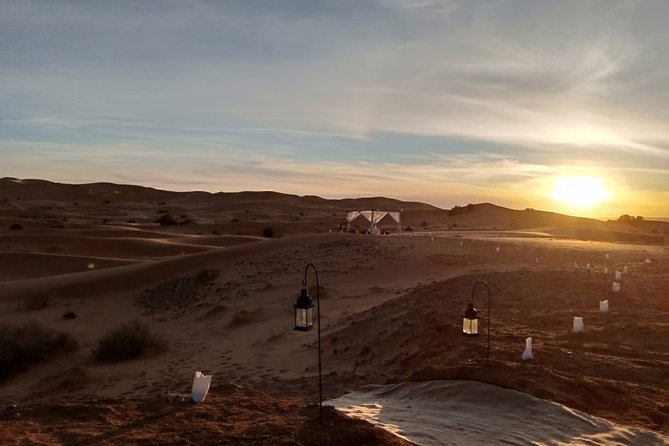
Then you reach Merzouga in the afternoon. The plan notes mint tea, and that you will meet the camels with your guide. That moment is one of the big emotional shifts of the whole trip: from paved roads into the edge of Sahara terrain.
The main drawback to keep in mind is weather and comfort. Driving days can be long, and desert-region conditions can be surprising. The tour also states it requires good weather, which is a real clue that timing and conditions matter on this part of the route.
Road of a Thousand Kasbahs, Todra Gorge, and Dades Valley
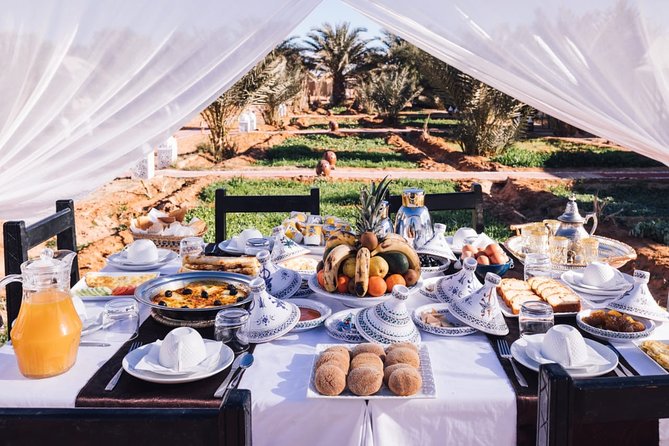
Day five leans into scenery. You depart after a special Berber breakfast toward Dades, and you add Rissani first, described as the first capital of the Alouite dynasty. You also get a look at historical kasbahs and a local market, which helps anchor the day in living culture rather than only scenery.
Then it is the Road of a Thousand Kasbahs. The plan describes it as a rugged route where kasbahs rise like turreted sand castles along an ancient caravan trading route. Even if you have seen desert scenes before, this kind of repeated architecture along the road creates a strong sense of place.
You travel through the Ziz Valley and then via Tinghir toward dramatic gorges. The highlight stop is Todra Gorge, where you have a lunch stop and a walk-in gorge moment. This is one of those places where you can feel the scale in your body, not just through pictures.
Finally, you continue into Dades Valley for dinner and overnight. This is a good day for anyone who likes Morocco as a mix of people, architecture, and physical geography all at once.
Ouarzazate, Atlas Studios, and Ait Ben Haddou on the High Atlas Pass
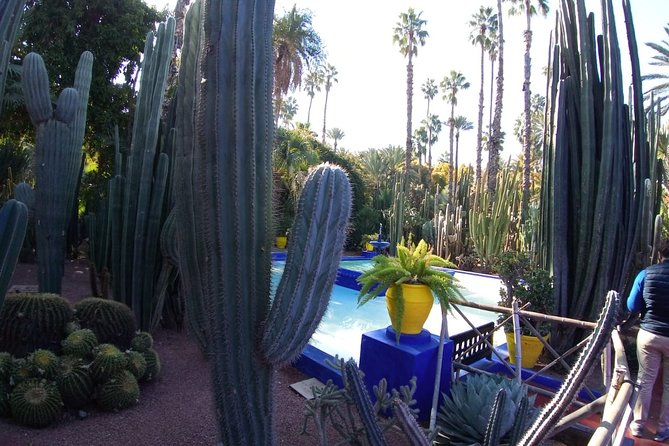
If you want famous Morocco settings, this is the day. You start with Ouarzazate, including the Taourirt Kasbah and Atlas Studios movie studios. The plan calls Atlas Studios the largest and most famous in Africa, so even if you are not a film buff, you get a real sense of the region’s role in global cinema.
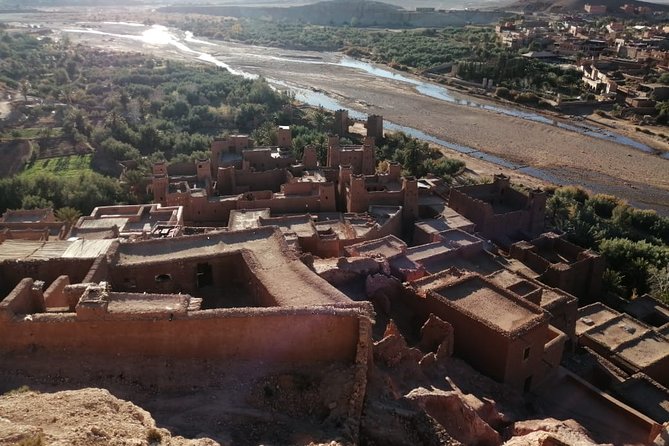
Next is Kasbah Ait Ben Haddou, listed as UNESCO World Heritage. The plan also name-checks films like Gladiator, Babel, and Lawrence of Arabia tied to the site. That helps a lot when you are walking around because it gives your brain an easy frame for what you are looking at.
Then you tackle the High Atlas and the Tizi-n-Tichka pass. The plan notes it climbs up to about 2260 m above sea level and moves from plains to mountain villages. It also mentions small waterfalls and changing scenery and colors along the way.
This is where the drive becomes a major feature, not just transportation. A good driver plus breaks at meaningful stops make a difference on a mountain route like this.
You arrive in Marrakech in the afternoon for dinner and overnight. This day can feel full, but it is one of the reasons the tour feels like a complete Grand South circuit.
Marrakech Full-Day: Gardens, Palaces, Souks, and Jamaa el Fna
Marrakech is structured so you get the key monuments and then free time vibes. The plan includes Menara gardens with a pool surrounded by flowers, the Koutoubia Minaret, Saadian Tombs, and Dar Si Said, a museum described as showcasing Berber arts and crafts. You also visit Bahia Palace.
You will have lunch in a local restaurant, then walk through the souks. The day ends with a sunset drink overlooking Jamaa el Fna square, which is a great way to shift gears from daytime history to evening energy.
Then you travel back to Casablanca for dinner and overnight. That means you are not ending the tour in a blur of separate city nights. You are finishing with a final Moroccan city circuit before your airport transfer on day eight.
If you love photography, Marrakech is one of your best chances on this schedule, especially around palaces and the square area at sunset.
Casablanca Departure Day That Stays Simple
On the last day, you keep it easy. After breakfast, you transfer to the Casablanca airport based on your departure time, with about 3 hours allocated.
This is a relief after a week of long sightseeing. It also reduces the chance of stress about what you do with your last morning. If your flight is later, you may still enjoy a calmer start.
Price and Value: What $2,300 Gets You (and What It Does Not)
At $2,300 per person for 8 days, you are paying for three things that matter on a route like this: private driving, guided city time, and seven nights of accommodations.
The included value is clear. You get an air-conditioned vehicle, a professional driver who speaks English, accommodations for 7 nights, and all applicable taxes. You also get local guides in the major cities, including Casablanca, Rabat, Meknes, Fez, and Marrakech. Meals are also partly handled, with 7 breakfasts and 7 dinners included.
What is not included is also important. Lunches are not included, drinks are not included, and entrance fees and personal expenses are not included. That means your total trip cost can rise a bit depending on how many ticketed entrances you choose to take and whether a site ends up being free or paid in practice.
So how do you judge value? I’d do it like this. If you want to cover Casablanca, Fez, Marrakech, and the Grand South without coordinating bus schedules, you are paying for time and stress reduction. If you enjoy learning through guided stops, you are paying for interpretation, not just transport. And if you want desert and mountain scenery in a single week, the private setup makes that realistic.
Who This Tour Suits Best, and Who Might Not
This tour fits best if you want a guided, structured Grand South circuit with minimal planning. You like the idea of imperial cities plus major UNESCO stops, then mountain drives and desert-region experiences, all with English support.
It also fits travelers who value safety and comfort. The guide team is reported to be especially attentive, including helping with bargaining know-how and safety, and stepping in when comfort issues come up, like an AC problem that required quick action during the night. That kind of responsiveness is not universal, so it is worth noting.
The main mismatch is physical pace. The tour calls for moderate physical fitness, and medina walking plus gorge time can add up. If you are sensitive to long drives, you may find the schedule intense.
Should You Book This Morocco Imperial Cities and Grand South Tour?
I think this is a good booking if your goal is one clear, guided route through Morocco’s highlights, with private comfort doing the heavy lifting. The mix is strong: Hassan II Mosque in Casablanca, imperial cities like Fez and Meknes, Roman Volubilis, then the Grand South with Morocco’s kasbah road feel, Todra Gorge, and Ait Ben Haddou.
I’d say do not book if you want a slow, flexible vacation with lots of free time every day. This is a sightseeing-first plan with long stretches between stops.
If you are excited by desert-region travel, mountain scenery via Tizi-n-Tichka, and guided city days in Fez and Marrakech, you will likely find this route makes Morocco easier to understand and easier to enjoy.
FAQ
How long is the Morocco private tour, and what time does it begin?
The tour is 8 days (approximately) and it starts at 8:00 am.
Is this tour private or shared with other groups?
It is a private tour/activity. Only your group will participate.
What is included in the $2,300 per person price?
The price includes an air-conditioned vehicle, a professional driver who speaks English, accommodation for 7 nights, all applicable taxes, local guides in major cities (Casablanca, Rabat, Meknes, Fez, Marrakech), and 7 breakfasts and 7 dinners.
Are lunch and drinks included?
No. Lunch and drinks are not included.
Are entrance fees included?
Entrance fees are listed as not included. Some sites in the plan show admissions as free, but entrance fees in general are not part of what is included.
Do you provide English-speaking help during the city days?
Yes. You have a professional driver who speaks English, and local guides are included in the major cities listed above.
Is airport pickup offered?
Pickup is offered.
What fitness level do I need for this trip?
The tour notes that travelers should have a moderate physical fitness level.
What is the cancellation policy?
You can cancel up to 6 days in advance for a full refund. Poor weather can also trigger a cancellation, and then you will be offered a different date or a full refund.
What does the itinerary include in Casablanca and Marrakech?
In Casablanca, you get an orientation tour and time at Hassan II Mosque, plus dinner and overnight. In Marrakech, you get a full-day guided tour with gardens, minaret, tombs, palaces, souks time, and a sunset drink, then you travel back to Casablanca for dinner and overnight.
Latest additions near Casablanca
- Casablanca Airport Transfer from hotel in Casablanca★ 5.0 · 18 reviews
- Private Transfer from Casablanca Airport to Marrakech★ 5.0 · 13 reviews
- Your Private Casablanca Transfer★ 5.0 · 52 reviews
- Amazing airport pickup/ drop off in Casablanca/ safe&easy★ 5.0 · 218 reviews
- Morocco Tours 10 Days from Casablanca : Imperial Cities & Sahara Desert★ 5.0 · 12 reviews
- Exclusive tour of Casablanca with access to the Hassan II Mosque★ 5.0 · 205 reviews
- Sunset Camel Ride in the Palm Grove Of Marrakech★ 5.0 · 34 reviews
- 11 Days Adventurous Must-Do Morocco Cultural Tour from Casablanca★ 5.0 · 15 reviews
Private, compared.
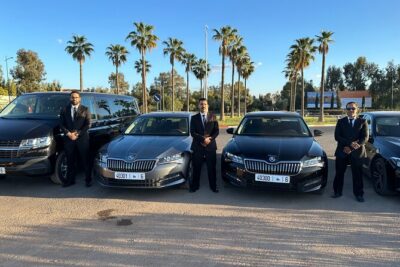
Private Chauffeur & Premium Transportation in Marrakech
Read our review →
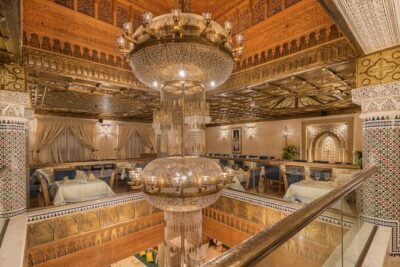
Private Tour of Casablanca with Hassan II Mosque Entry Ticket
Read our review →
Private Horseback Tour in the Palm Grove with Tea
Read our review →
Private Transfer – Marrakech Menara airport (RAK)
Read our review →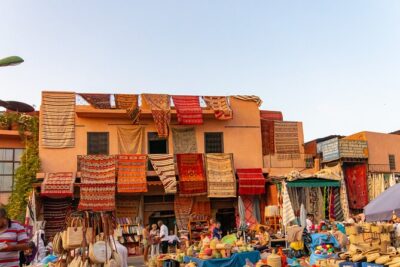
Shopping in the Souks of Marrakech Private Tour
Read our review →Browse the lists this tour appears in