
Reviewed · MEDINA & SOUK WALKING TOURS
Evening Marrakech: Gastronomic and Market Tour Inside the Medina
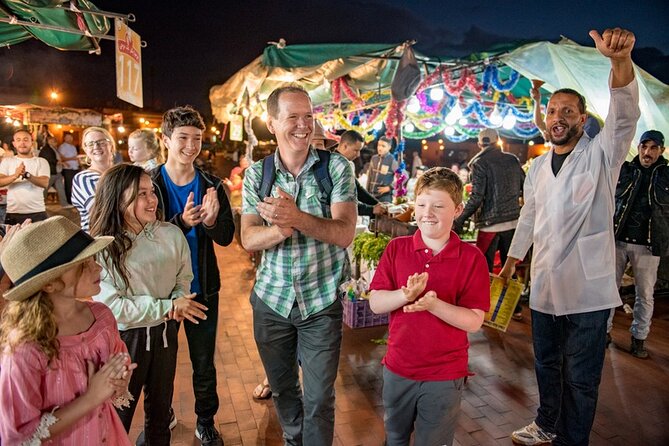
Marrakech at night tastes like real life. This 3.5-hour walk through the medina ends with dinner in Djemaa el-Fna, with a guide who points out what to try and how it all fits into Moroccan cooking. I like the small group size (max 12), which keeps questions simple and lets you actually linger at stalls. I also like the mix of spice market lessons and hands-on tastings, including ghoulal, Moroccan snail soup. One thing to keep in mind is that the experience depends heavily on the guide’s energy and pacing, and a few past departures had issues like arriving late or the soup not being hot.
You start at the Café de France meeting point near Djemaa el-Fna at 6:00 pm, then you walk side streets and souks that first-timers usually miss. In past tours, guides such as Jihad, Ibrahim, Atika, Tatika, Brahmin, and Yousif have been praised for being friendly, clear, and good at helping you navigate the chaos. If you’re the type who wants everything perfectly timed and served exactly the way you like, go in with flexibility.
In This Review
- Key things to watch for on this Marrakech food tour
- Why Djemaa el-Fna is the right place to eat
- The 6:00 pm start, the meeting point, and the pace you should expect
- Stop by Stop, what you’ll actually do and taste
- Jemaa el-Fna first: learning the square before you eat
- Riad Zitoun Jdid: tea, courtyards, and a calmer pocket
- Mellah: Jewish neighborhood alleys plus markets nearby
- Chez Lamine Hadj Mustapha: the mechoui alley and tangia pots
- Souk Semmarine: the medina artery for shopping and shoeing history
- Spices, haggling, and why the lessons help you eat better later
- Ghoulal and the more adventurous bites: how to decide in the moment
- Dinner time in the square: what you’re really getting at the finish
- Value, small group size, and the carbon neutral angle
- The main drawback to weigh before you book
- Should you book this Marrakech evening food tour?
- FAQ
- Where does the tour start?
- How long is the Evening Marrakech food and market tour?
- What food is included?
- Is hotel pickup included?
- Can vegetarians or vegans join?
- How large is the group?
- Is this tour suitable for children?
- Is the tour carbon neutral?
- What’s the cancellation window?
Key things to watch for on this Marrakech food tour
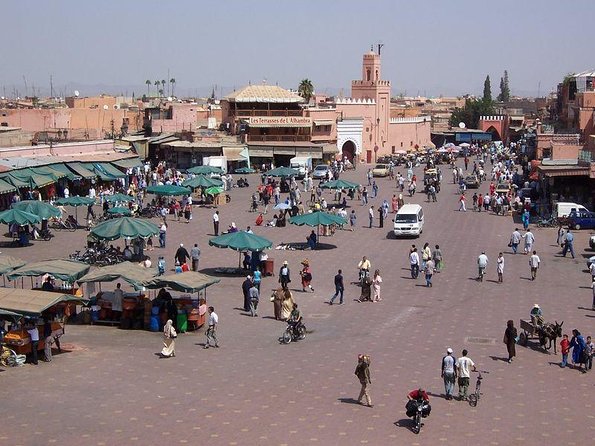
- Djemaa el-Fna timing matters: you’re there early evening and then return as the square hits its peak noise and color.
- Meat market + haggling window: you can see bargaining at a poultry and beef market, which explains a lot about how the medina runs.
- Spice stop is practical: saffron, anise, cumin, paprika, cardamom, and turmeric are tied to tagines and everyday staples, not just shown for photo ops.
- Ghoulal is the headline tasting: you get a chance to try herbal and spicy Moroccan snail soup.
- Chez Lamine Hadj Mustapha gives you the real meat-pot story: tangia and mechoui alley food cooked in coals from local bathhouse ashes.
- Dietary fit is decent, but not for everyone: vegetarian and vegan options are possible, but gluten intolerance is not catered for.
Why Djemaa el-Fna is the right place to eat
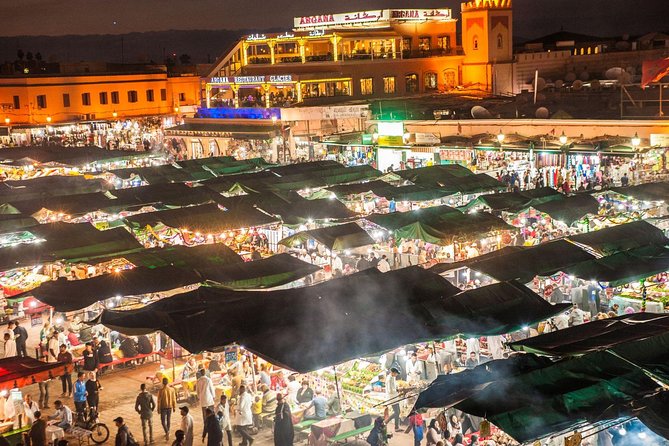
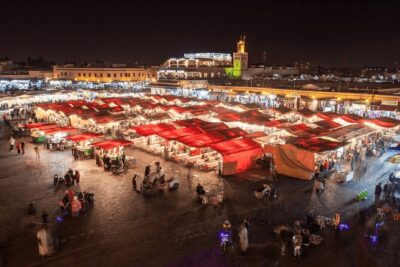
Djemaa el-Fna is the main stage of the Marrakech medina, and at night it becomes a sensory full-contact sport. You hear snake charmers, you pass storytellers and performers, and food stands brighten up the square as locals and visitors move through. What makes this tour work is that it doesn’t treat the square like a photo background. It uses the square as a dining destination and a reference point, so your tastings and lessons make sense.
I love that you start with a guided introduction to the square, then you walk away to side streets and markets, and later you come back for dinner when the atmosphere is at full volume. That rhythm makes the evening feel like a story you can actually follow with your feet. You’re also not expected to solve the medina alone, which is huge if it’s your first day in Marrakech.
The main consideration is that you are walking in crowded lanes. If you get stressed by noise, close spaces, and vendors calling out, you’ll still manage, but you should go slower mentally and let the guide do the steering.
More Medina Tours in Marrakech
- Marrakech: Bahia Palace, Saadian Tombs, Souk and Medina Tour
★ 4.7 · 4,974 reviews - Marrakech: Ben Youssef, Secret Garden, & Souks Walking Tour
★ 4.6 · 2,802 reviews - Marrakech: Colorful Medina Souks Guided Walking Tour
★ 4.7 · 2,470 reviews
The 6:00 pm start, the meeting point, and the pace you should expect
Your tour meets at Hôtel Restaurant Café de France on Rue des Banques, near Jamaâ el-Fna, at 6:00 pm. There’s no hotel pickup or drop-off, so plan to arrive early and locate the meeting spot before your guide has to hunt down the group. A mobile ticket is used, so keep your phone charged and handy.
The tour runs about 3 hours 30 minutes, with short stop times at key points. That timing is built for an active evening, not a slow stroll. Some parts last about 15 minutes, then you hit longer market blocks where you’ll be trying foods and watching how people shop and bargain.
A small group helps here. With a maximum of 12 travelers, the guide can keep everyone together without turning it into herding. I also like that this tour is marketed as child-friendly, and children under 6 can join for free, which usually means the pace is set with families in mind. Just remember it’s still a real medina, so patience matters.
Stop by Stop, what you’ll actually do and taste
Jemaa el-Fna first: learning the square before you eat
You begin in Jemaa el-Fna and spend time absorbing what’s happening there. The guide sets context on what you’re seeing, including why the square is such a central part of medina life. UNESCO recognition since 2001 adds weight to the setting, but what matters for you is the practical side: the guide helps you read the chaos so you’re not just overwhelmed.
You’ll also get an early sense of the food scene, including hot stands that start appearing in the evening. This first stop isn’t about stuffing yourself immediately. It’s about orientation, so later tastings and dinner feel connected rather than random.
More medina walks in Marrakech:
- Marrakech: Saadian Tombs & Bahia Palace, Medina Guided Tour
★ 4.6 · 1,989 reviews - Marrakech Monuments & Souks 3-Hour Tour
★ 3.8 · 1,540 reviews - Marrakech: Bahia Palace, Madrasa Ben Youssef and Medina Tour
★ 4.7 · 1,347 reviews - Marrakech: Madrassa Ben Youssef, Secret Garden & Medina Tour
★ 4.8 · 1,303 reviews
Riad Zitoun Jdid: tea, courtyards, and a calmer pocket
Next you move to Riad Zitoun Jdid, where the vibe shifts a bit. You get time in an area linked with riads and bistros, and you may be near spaces known for mint tea and European-style dishes with Moroccan twists. This brief stop works as a breather between the loud square and the tighter medina lanes.
Even if you’re not focusing on rooftops or architecture in a deep way, it’s useful because it teaches you that Marrakech is not only one kind of street. You’re moving between layers of the city: medina bustle, courtyard life, and craft spaces all within walking distance.
Mellah: Jewish neighborhood alleys plus markets nearby
The tour then heads to Mellah, a historic Jewish quarter. You’ll pass landmarks connected to that past, including Lazama Synagogue and the Miaara Jewish cemetery. This matters because it gives you a human map of the city, not just a food map.
You’ll also spend meaningful time near the Mellah Market and the Bab Mellah Spice Souk area. This is where food shopping feels real, because you’re watching produce and meat trade and getting a sense of what locals buy for dinner. If you’re the type who likes to understand where ingredients come from, this stop does that.
Chez Lamine Hadj Mustapha: the mechoui alley and tangia pots
This is one of the most specific stops on the route. Chez Lamine Hadj Mustapha sits behind the Alhambra restaurant in a part of Jemaa el-Fna known as Mechoui Alley. Expect visible signs of classic food culture, including sheep’s heads and tangia crock pots.
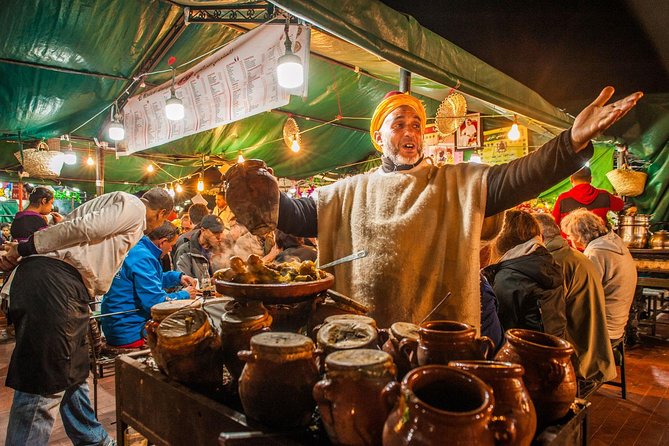
The tangia story is the standout detail: meat-pot dishes are cooked in the ashes of coals from a local bathhouse. That’s not just a trivia fact. It’s part of why the food tastes the way it does, smoky and deep. You’re also offered the juices pooled at the bottom of the bowl with local bread, which is one of those “don’t waste it” moments.
This stop can run about 1 hour 15 minutes, so build your appetite for it. If you strongly prefer lighter foods, go slow here and lean on the bread and smaller bites rather than trying to force a big tasting menu.
Souk Semmarine: the medina artery for shopping and shoeing history
You finish with Souk Semmarine, described as the main artery of the medina souks and accessible from Jemaa el-Fna through a derb with the same name. There’s a history note connected to farriers who once shoe animals for caravans, which is a reminder that these lanes were built for movement and commerce long before tourists arrived.
The market segment is about more than walking. It’s where you’ll see how people shop for spices, food, and daily goods, and it helps you understand how haggling fits into the flow. Souks like this can overwhelm you if you walk alone, so having a guide to translate the tempo and priorities is valuable.
Spices, haggling, and why the lessons help you eat better later
One reason people love this tour is that it doesn’t stop at taste. You get a guided spice market experience where saffron, anise, cumin, paprika, cardamom, and turmeric are highlighted. The guide connects them to tagines and other staples, so you start to see patterns in Moroccan flavor.
I also like how the tour folds in bargaining at a meat market. You watch locals barter for poultry and beef, which makes the shopping feel like culture, not theater. When you see deals happening in real time, you understand why food shops are loud, quick, and relationship-driven.
The spice part is particularly useful if you’re cooking later at home. Even if you never buy everything, you’ll remember what each aroma is supposed to do in a dish. That’s the difference between tasting something once and learning how to recognize it again.
Ghoulal and the more adventurous bites: how to decide in the moment
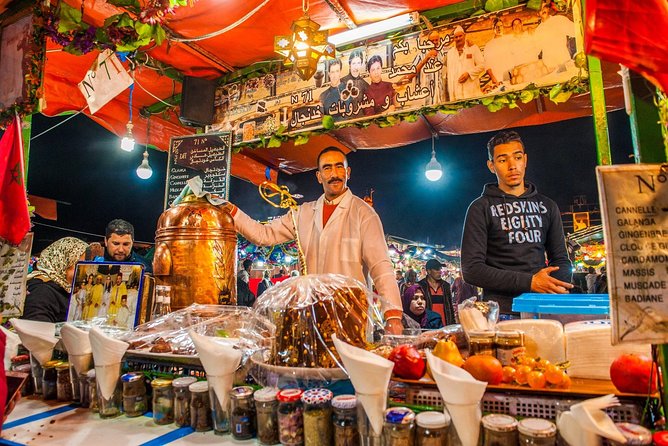
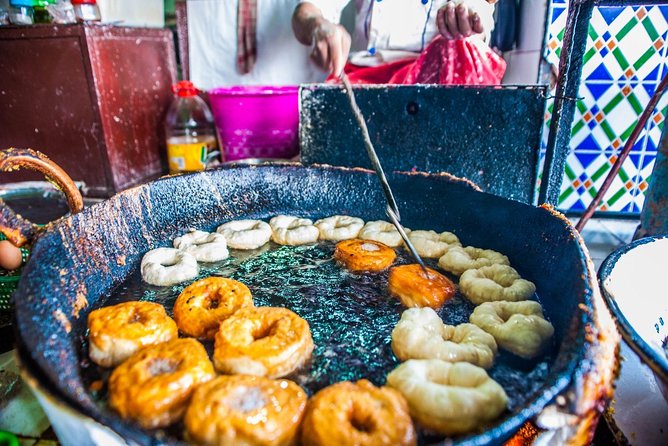
Ghoulal, Moroccan snail soup, is listed as a tasting option and one of the more memorable items. You may also see other challenging foods linked to the market scene, including sheep’s head and cow’s hoof. Whether you try these depends on your comfort level with texture and ingredients.
Here’s the practical way I’d handle it: if you’re curious, go for the ghoulal tasting, but take the smallest serving first and ask the guide what to expect. If you have a sensitive stomach or you prefer very hot food, pay attention to how quickly the dish is served and whether it’s piping at the start of your bite. One downside that shows up in past feedback is that in a few cases, soup was not served hot enough, and a couple people reported feeling unwell. You can’t control what everyone tastes on every day, but you can choose your pacing and what you accept.
Also, if you’re vegan or vegetarian, the tour says catering is possible. Gluten intolerance is the one dietary issue that the tour cannot accommodate, so if that matters to you, you’ll need to plan something else.
Dinner time in the square: what you’re really getting at the finish
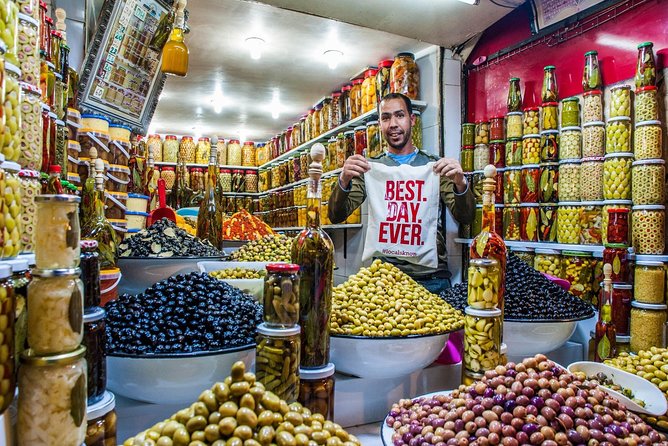
The tour ends with an authentic Moroccan meal inside Djemaa el-Fna while the square is at its height. This is where the whole evening clicks. You’ve learned the ingredient logic, watched markets and bargaining, and now you’re sitting down and eating in the exact environment the foods were built for.
I like that this is included as an actual dinner, not just snacks. You get a sense of how street food energy translates into a more sit-down meal style. It also helps first-time visitors feel less lost. When your last stop is the square, you’re surrounded by landmarks you already recognized earlier, so leaving doesn’t feel like defeat.
Meal satisfaction can vary with the guide and the restaurant chosen on that day. If you care about portion size or service speed, go in expecting a shared group dinner rather than a slow course-by-course experience.
Value, small group size, and the carbon neutral angle
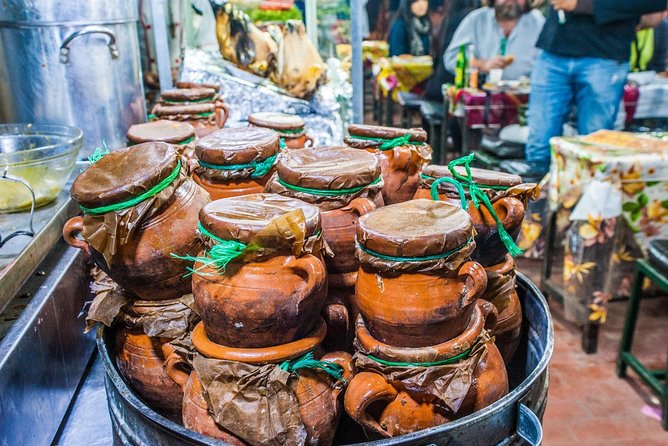
At $46.08 per person for about 3.5 hours, this is not the cheapest thing in Marrakech, but it’s often priced like a “guided eating plan.” You are paying for a guide who knows where to go, what to explain, and what to taste, plus a dinner that would cost time and money if you tried to DIY in the medina.
The maximum of 12 travelers is a real value factor. It means you’re more likely to get personal guidance, and you’re less likely to be stuck waiting while the group strings out. Many praised guides, including Jihad and Yousif in particular, were described as friendly and passionate about showing people around and helping them ask questions.
There’s also the eco note: the tour is described as carbon neutral and organized and led by an eco-certified operator. You shouldn’t expect that to change the food quality on your plate, but it does tell you the company is thinking about emissions and standards, not only profit.
The main drawback to weigh before you book
The big potential risk is inconsistency in how the evening flows. The tour is generally rated well, but some low ratings describe problems like the guide arriving late, leaving early, minimal narrative, and an overall feeling that the food experience was not well executed.
So here’s my advice if you’re risk-averse: treat this as a food-and-market evening with a guide, not a guaranteed gourmet tasting menu. If you want a strict, chef-run course sequence, look for a different style of tour. If you want local food context, markets, and you’re comfortable with a bit of chaos, this can be a strong fit.
Should you book this Marrakech evening food tour?
Book it if:
- You want a guided way to navigate the medina without guessing where the good stalls are
- You enjoy spice aromas, meat market culture, and learning what goes into Moroccan staples
- You like ending your night with dinner in Djemaa el-Fna when it’s really alive
- You value small-group attention, with max 12 people
Skip it or think twice if:
- You need strict timing and highly structured dining, every step perfectly managed
- You cannot eat snail soup or adventurous bites, since ghoulal is part of the tastings
- You have gluten intolerance, because the tour says it cannot cater for that
If you’re heading to Marrakech for the first time, this is also a smart “confidence builder.” You’ll get your bearings fast, and you’ll leave with real local eating sense, not just a handful of random snacks.
FAQ
Where does the tour start?
The tour starts at Hôtel Restaurant Café de France, located on Rue des Banques near Jamaâ el-Fna in Marrakech. The start time is 6:00 pm.
How long is the Evening Marrakech food and market tour?
It runs for about 3 hours 30 minutes.
What food is included?
You get 3 typical market tastings and an authentic Moroccan dinner. Ghoulal, Moroccan snail soup, is included as one of the options.
Is hotel pickup included?
No, there is no hotel pickup or drop-off. You meet at the Café de France location near Jamaâ el-Fna.
Can vegetarians or vegans join?
Yes, the tour can cater for vegetarians and vegans. Gluten intolerance is not catered for.
How large is the group?
The tour has a maximum of 12 travelers.
Is this tour suitable for children?
Yes, it is child-friendly. Children under 6 can join for free.
Is the tour carbon neutral?
Yes. The tour is described as carbon neutral and run by an eco-certified tour operator.
What’s the cancellation window?
You can cancel for a full refund up to 24 hours before the experience starts. If you cancel within 24 hours of the start time, the amount is not refunded.
More Shopping Tours in Marrakech
- Shopping in the Souks of Marrakech Private Tour
★ 5.0 · 620 reviews - Souks Shopping Tours
★ 5.0 · 395 reviews - Marrakech Shopping Tours : Private Souks Tour
★ 5.0 · 345 reviews - Marrakech: Exclusive Private Shopping Adventure in The souks
★ 4.9 · 77 reviews
More Markets in Marrakech
- Marrakech: Traditional Moroccan Cooking Class & Market Visit
★ 4.8 · 1,861 reviews - Moroccan Cooking Class & Marrakech Market Visit with Chef Khmisa
★ 5.0 · 1,504 reviews - Marrakech: Moroccan Cooking Class with Market Visit and Meal
★ 4.9 · 347 reviews - Edgy 8 Dish Private, Fusion Cooking Class, Menu Plan, Market
★ 4.9 · 31 reviews
Latest additions near Marrakech
- Three valleys, Atlas Mountain, waterfalls & Agafay Desert★ 5.0 · 13 reviews
- Essaouira: Surf Trip from Marrakech★ 4.9 · 31 reviews
- Marrakech: Tailor-Made City Tour With Your Own Private Guide★ 4.9 · 236 reviews
- Surf Training and Lunch on Essaouira Day Trip from Marrakech★ 4.9 · 51 reviews
- Marrakech palm grove: Sunset camel ride★ 4.8 · 194 reviews
- Marrakech: Cycling Tour in Palm Groove with Local Breakfast★ 4.7 · 73 reviews
- Marrakech: Sunrise Desert Tour with Camel Ride and Breakfast★ 4.4 · 36 reviews
- Marrakech : Agafay Desert Sunset Camel Ride & Luxury Dinner★ 4.3 · 39 reviews
Medina & Souk Walking Tours, compared.
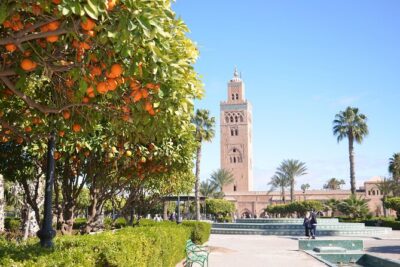
Bahia Palace, Saadian Tombs, Souk and Medina Tour
Read our review →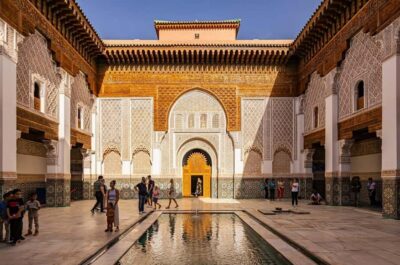
Ben Youssef, Secret Garden, & Souks Walking Tour
Read our review →
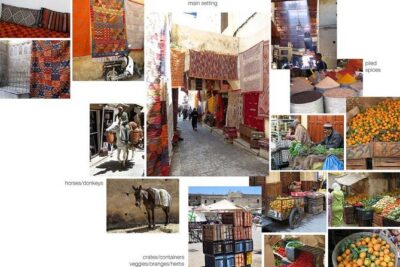
Saadian Tombs & Bahia Palace, Medina Guided Tour
Read our review →
Museum, Al Attarine Madrasa & Tannery and Medina Tour
Read our review →
Bahia Palace, Madrasa Ben Youssef and Medina Tour
Read our review →Browse the lists this tour appears in