
Reviewed · ATLAS MOUNTAINS DAY TRIPS
Toubkal Ascent Trek 4167m 2 days & 1 night
Mount Toubkal has a way of changing your pace. This trek is a two-day climb to North Africa’s highest peak, mixing mountain breathing room, Berber life in the Atlas, and a summit with views that go in all directions.
I love how simple on paper, serious in practice it feels. The walking is non-technical in the usual sense, but you still get easy scrambling and, in colder months, snow travel that needs real traction.
One thing to consider: altitude and footing can turn the day up to the summit into a grind, especially when you hit scree and snow slopes. If you go in undertrained, you will feel it.
In This Review
- Key Things To Know Before You Go
- First Steps from Marrakech: What the Start Sets Up
- Day 1: Mizane Valley, Aremd, and Sidi Chamarouch to Toubkal Refuge
- The Day 1 rhythm: why it feels right
- Day 2: From the South Circus to the 4167m Summit
- Reaching the summit: what changes when you get there
- Crampons and Ice Ax: The Seasonal Safety Piece (Nov to April)
- Gear and Fitness: What You Need to Bring Yourself
- How Food, Mule Support, and Refuge Nights Make It Work
- Price and Value: Is $210.62 Fair for This Climb?
- The Real Experience: Views, Pace, and Guide Flexibility
- Who This Trek Fits Best (and Who Might Struggle)
- Should You Book This Toubkal Ascent Trek?
- FAQ
- How long is the Toubkal ascent trek?
- What is included in the price?
- Is pickup from Marrakech included?
- Do I need to bring my own sleeping bag and shoes?
- When do crampons and an ice ax come into play?
- How many people are in a group?
Key Things To Know Before You Go
- All-year scheduling, seasonal gear: the trek runs year-round, with crampons and an ice ax used for security from Nov to April.
- A guided climb that is non-technical, not casual: you are walking higher and longer than a typical day hike, with some easy scrambling.
- Real mountain logistics: you get meals plus a mule and cook to help make the overnight work manageable.
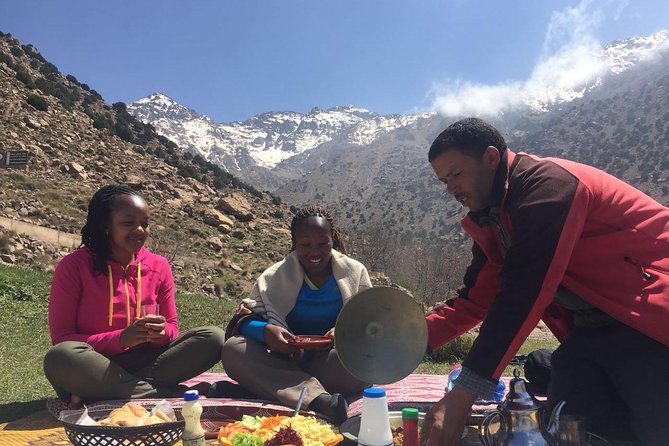
- Berber villages on the route: you pass places like Aremd and visit the shrine area of Sidi Chamarouch.
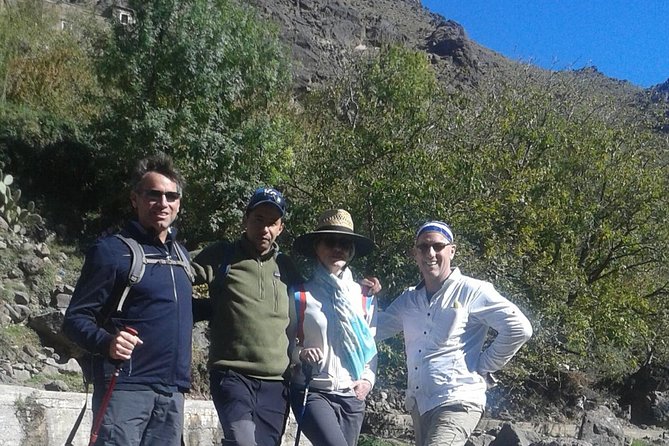
- Small group size: capped at 12 travelers, which usually means a more personal pace.
- Summit views that reach far: from the top you can see across the Marrakesh Plain, the High Atlas, and as far south as the Anti-Atlas and the Sahara.
First Steps from Marrakech: What the Start Sets Up
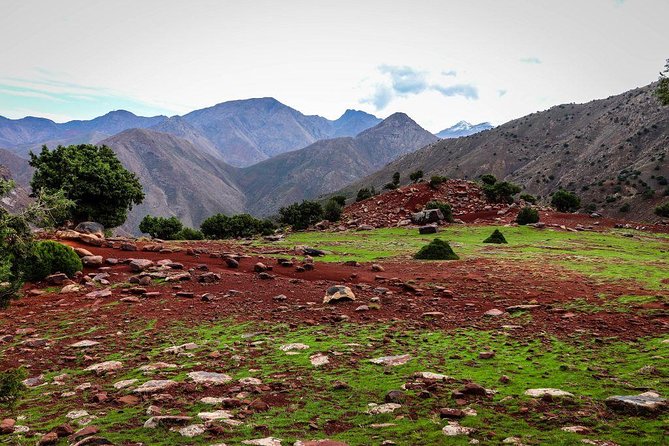
You start in Marrakech and head toward the Toubkal area by vehicle, then you shift into mountain time. The pickup is offered, and you should expect an early morning departure. In the details I saw, pickup is listed at 9:00 AM, and the listed start time at the meeting point shows 7:30 AM, so I recommend confirming the exact pickup clock with Morocco Mountain Guides when you get your confirmation.
The value of that handoff, from city to valley, is that it gives you a clean launch into the walking day. You are not trying to get lost in transit and then race daylight. You can just focus on layers, water, and breathing.
Also, pay attention to the fact that this is meant for keen walkers. This is not a short stroll with a couple photo stops. It is a structured ascent.
More Atlas mountain days:
- Marrakech: Atlas Mountains, Ourika Valley, Waterfall & Lunch
★ 4.8 · 15,834 reviews - Berber villages : Atlas Mountains Day Hike from Marrakech
★ 5.0 · 14,007 reviews - From Marrakech: Atlas Mountains Full-Day Hiking Trip w Lunch
★ 4.8 · 7,417 reviews
Day 1: Mizane Valley, Aremd, and Sidi Chamarouch to Toubkal Refuge
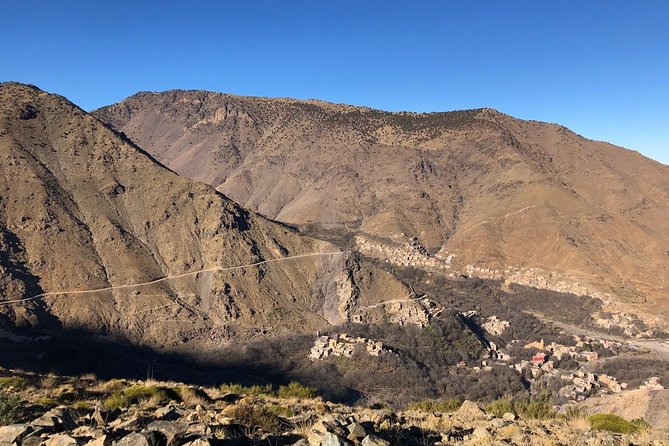
Day 1 begins with a road-to-trail rhythm that quickly turns into a real climb. You head along the Mizane Valley, passing the village of Aremd and then moving toward the shrine of Sidi Chamarouch.
This stretch matters because it puts you in the Atlas system before you start chasing altitude. You cross floodplains and follow the trail as it starts climbing steadily, snaking and zigzagging up toward the snowline. It is gradual enough to settle your legs, but the repeated turns do make you feel the slope.
Sidi Chamarouch is one of the cultural anchors on the route. You pass the shrine area that attracts both tourists and pilgrims. Even if you do not spend long in any single spot, it helps the day feel lived-in, not just scenic.
Then you reach the Toubkal Refuge, sitting at 3206 meters. This is where Day 1 becomes a turning point: you stop “walking for the day” and start thinking “walking tomorrow at higher altitude.” Expect the evening to be more about recovery than sightseeing.
The Day 1 rhythm: why it feels right
The trail’s steady climb helps you pace yourself. That is important for a summit trek because the worst mistake is going too fast early, then paying for it later.
Another small but smart detail: your night is supported with dinner and breakfast, plus mule and cook support. That means less stress about logistics and more energy to sleep and wake up ready.
Day 2: From the South Circus to the 4167m Summit
Day 2 is where Mount Toubkal does its job, turning a route into an achievement.
After travel from the refuge area to the walking start, you cross a stream above the refuge and enter the south circus. The walking is described as relatively straightforward, but two factors make it hard: scree and altitude.
Scree is the sneaky one. You can feel your footing slide under you, even when the slope is not steep. It rewards a steady stride and short, controlled steps. If you rush, your legs burn faster, and your ankle risk climbs.
Altitude is the other reality check. You might not feel “pain,” but you can feel your breathing get louder and your rhythm slower. This is also where a strong fitness base matters. The trek is non-technical, but your body still has to do real work.
Other Marrakech days to consider
- From Marrakech: Ouzoud Waterfalls Guided Hike and Boat Trip
★ 4.7 · 33,630 reviews - 3 Days Desert Tour From Marrakech To Merzouga Dunes & Camel Trek
★ 5.0 · 10,125 reviews - Marrakech: Ourika Valley Trip with Waterfall Hike
★ 4.6 · 6,792 reviews - Marrakech: ourika valley lunch & guided hike to waterfalls
★ 4.9 · 3,737 reviews
Reaching the summit: what changes when you get there
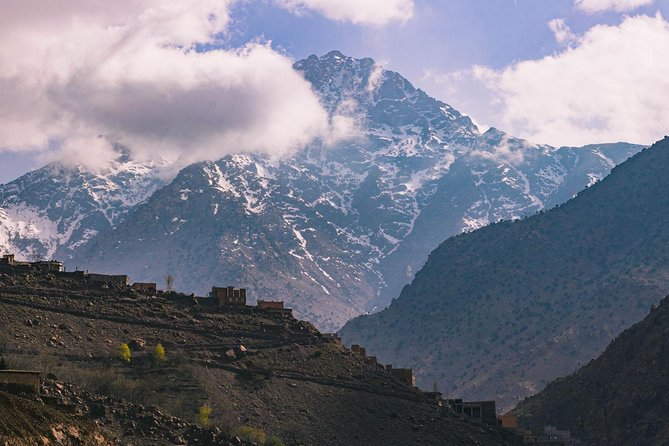
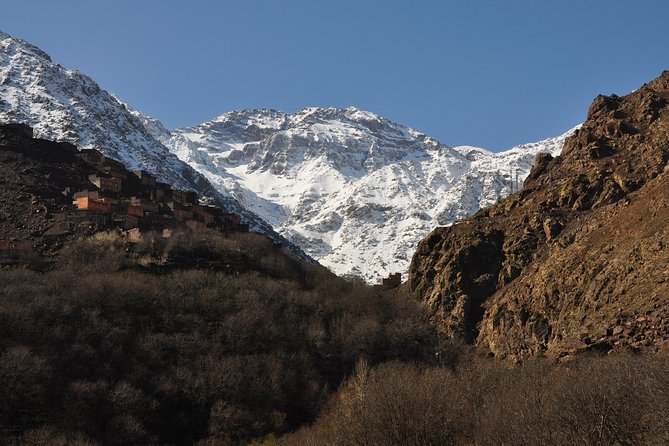
When you reach the top at 4167 meters (13600 feet), the payoff is immediate. The landscape opens, and the views are described as unrestricted in every direction.
From the summit, you can look across the Marrakesh Plain to the north and across the High Atlas. The view also extends south toward the Anti-Atlas and the Sahara. That is a lot of geography for two days of effort, and it is why this trek has such loyal fans.
Then you retrace your steps back down to the mountain and return toward Imlil, followed by transfer back to Marrakech. The descent is not just a cooldown, it is part of the challenge. Scree and snowy footing, if present, can make going down feel just as demanding as going up.
Crampons and Ice Ax: The Seasonal Safety Piece (Nov to April)
One of the most practical parts of this trek is how it handles the cold season. In the Nov to April window, the trek involves walking in crampons and holding an ice ax for security. That is a big deal for planning and comfort.
Even though the trek is “non-technical” in the general sense, winter conditions add friction and risk. Crampons change the way you walk, you need to keep your steps precise, and you will likely move slower than in warm months.
So if you are coming in winter, do not treat gear as optional. Treat it as the difference between feeling confident and feeling tense.
If you are going outside Nov to April, you might find conditions less snowy, but you can still expect altitude and rough footing. Either way, bring the mindset of a trek, not a casual hike.
Gear and Fitness: What You Need to Bring Yourself
Your personal gear is not included. The provider notes that sleeping bags and shoes are personal gear, and water during the trek is not included. I also suggest you plan for layers you can adjust.
Here is what I would focus on when preparing:
- Footwear built for traction (and for scree)
- Layering for changing temps near the snowline
- Gloves and a hat in colder months, since you may be walking at height
- Your own sleeping gear needs if the overnight setup expects you to supply a sleeping bag (the trek notes sleeping bags are personal gear)
Fitness-wise, the trek is for travelers with strong physical fitness. It is for keen walkers, and it includes easy scrambling and snow slopes (seasonal). “Easy scrambling” can still be tiring when your altitude is climbing.
If you have a history of doing moderate hikes and a solid baseline cardio habit, you are in a better place. If you are coming from a low-activity season, plan a ramp-up, and do some longer walks before you go.
How Food, Mule Support, and Refuge Nights Make It Work
The trek includes breakfast and dinner plus lunch twice. That is important because it keeps your energy stable on a high-altitude schedule. You are not guessing meal timing, and you are not paying for food every stop.
You also get air-conditioned vehicle transport, plus a mule and cook. That mule support is one of those behind-the-scenes details that makes summit trekking more humane. You can focus on your own pack weight and conserve energy for the uphill part.
On the itinerary, the overnight at Toubkal Refuge is where the structure shows. You start Day 2 from higher ground, so you are not burning energy doing a long approach. The trek is built to compress effort into two working days, with support to reduce friction.
One more practical detail: admission ticket entries are included for both day stops listed in the itinerary. That may not matter to your daily comfort, but it matters to the flow of the plan, fewer hold-ups.
Price and Value: Is $210.62 Fair for This Climb?
At $210.62 per person for a two-day, one-night guided trek, the big question is what you are actually getting. Here is the value picture I see from what is included.
You are paying for:
- Guided mountain walking with Morocco Mountain Guides
- Pickup and transport by vehicle
- Two lunches, dinner, and breakfast
- Mule and cook support
- An overnight at the Toubkal Refuge segment tied into the plan
- Admission tickets included for the two listed stops
What is not included:
- Travel insurance
- Flights
- Mineral bottle water during the trek
- Medical or accident insurance
- Personal gear (sleeping bag, shoes, and more)
- Tips and personal spending
For many people, this price feels fair because the included support reduces daily hassle. Paying extra for insurance and water is normal for the region, but the core of the trek is covered.
So the “value” depends on your readiness. If you already have proper shoes and a sleeping system, you are closer to the true cost of the adventure. If you need to buy everything locally, the total trip cost rises.
The Real Experience: Views, Pace, and Guide Flexibility
The summit is the obvious highlight, and it is easy to see why it gets people. The climb is difficult, but the payoff described is strong: blue skies, deep snow at times, and a surreal look from up top.
What I think is also valuable is the way the guides and organizers handle your group experience. If you want flexibility, the planning can adjust to let you link up with another compatible group. That can matter a lot on a trek like this, where shared pacing and shared stops make the day feel easier.
Small group size also helps here. With a maximum of 12 travelers, you are less likely to get stuck behind a huge crowd or feel like you are competing for attention.
You still have to do the work yourself, but you have a team around you. That is what keeps the day from turning into a solo survival effort.
Who This Trek Fits Best (and Who Might Struggle)
This is a strong fit if you:
- Are a keen walker looking for a structured climb
- Like the idea of non-technical trekking with real mountain conditions
- Want Berber village culture along the way, not just a peak-and-go plan
- Can handle altitude and changing footing without panic
You might struggle if you:
- Have limited hiking endurance right now
- Dislike cold conditions or are not ready for crampons and an ice ax in Nov to April
- Are not comfortable with scree, slipping gravel, or tired legs on descent
One honest way to think about it: it is not technical climbing, but it is still a mountain mission. Plan for effort, slow steps, and patience.
Should You Book This Toubkal Ascent Trek?
Book it if you want a real summit trek in just two days and you are ready to respect the altitude. This trek has strong practical support, good pacing structure, and a summit view that reaches far across the Atlas system.
Skip or reconsider if you want an easy hike, or if you are not willing to prepare for seasonal gear like crampons and an ice ax. Also, if you do not have the fitness base for steep walking and scree, you will likely find the experience frustrating rather than inspiring.
If you are the kind of traveler who likes a plan that is serious but organized, this is the type of trip that pays you back quickly, with sunrise mountain air on Day 1 and a huge horizon from the 4167m summit on Day 2.
FAQ
How long is the Toubkal ascent trek?
It lasts about 2 days, with 1 night.
What is included in the price?
The trek includes breakfast, dinner, and two lunches, plus air-conditioned vehicle transport, and mule and cook support.
Is pickup from Marrakech included?
Pickup from your hotel in Marrakech is offered, and the experience starts in the morning.
Do I need to bring my own sleeping bag and shoes?
Personal gear like sleeping bags and shoes is not included, so you should plan to bring your own.
When do crampons and an ice ax come into play?
From November to April, the trek includes walking with crampons and using an ice ax for security.
How many people are in a group?
The maximum group size is 12 travelers.
More Evening Experiences in Marrakech
- Marrakech: Agafay Desert Sunset, Camel Ride, and Dinner Show
★ 4.6 · 35,119 reviews - Marrakech: Agafay Desert Dinner Show with Sunset Camel Ride
★ 4.8 · 3,330 reviews - Marrakech: Street Food Tour by Night
★ 4.8 · 2,838 reviews - Agafay Desert: Dinner + Show with Quad Bike & Sunset Camel Ride
★ 4.5 · 2,669 reviews
Latest additions near Marrakech
- From Marrakech: 3-Day, 2-Night Merzouga Dunes Desert Trip★ 5.0 · 73 reviews
- Zagora M’hamid, 3 Days Tour to Erg Chigaga Desert from Marrakech★ 4.5 · 15 reviews
- From Marrakech: 3-Day Merzouga and Sahara Desert Tour★ 5.0 · 24 reviews
- Private Tour in Marrakech By Tuk Tuk★ 5.0 · 127 reviews
- Private Walking Tour in Marrakech★ 5.0 · 32 reviews
- Toubkal trek – 2 days★ 5.0 · 90 reviews
- Toubkal ascent in two days, private trip★ 5.0 · 16 reviews
- Toubkal Trekking 2 Days★ 5.0 · 98 reviews
Atlas Mountains Day Trips, compared.
Atlas Mountains, Ourika Valley, Waterfall & Lunch
Read our review →
Berber villages : Atlas Mountains Day Hike from Marrakech
Read our review →
Ourika Waterfalls, Atlas Mountains, Guide + Lunch
Read our review →
Ourika Valley Trip with Waterfall Hike & Lunch
Read our review →
Atlas Mountains & Agafay Desert Tour w Camel Ride
Read our review →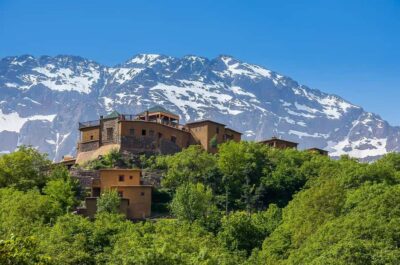
Atlas Mountains, Waterfalls, Ourika Valley +Lunch
Read our review →Browse the lists this tour appears in