
Reviewed · CHEFCHAOUEN DAY TRIPS
Moroccan Delights: Explore Chefchaouen and Rabat’s Culture
Three cities, one well-run Moroccan whirlwind. You’ll move through highlights like the Hassan II Mosque in Casablanca and the Chefchaouen Blue City streets, with an air-conditioned ride and guided stops that keep the day on track.
I especially love the Chefchaouen setup: you get time for the blue alleys and markets, then a second session in the Chefchaouen Medina area with a photographer focused on the early-morning look.
One thing to consider is the pace. In about three days, you cover a lot of ground, so if you like lingering for hours with no timetable, you may feel a bit pressed.
In This Review
- Key things to know before you go
- Casablanca, then the Blue Streets, then Rabat: how this route feels
- Hassan II Mosque in Casablanca: the kind of monument you remember
- Ain Diab lunch: the quick seaside reset you’ll be glad you planned
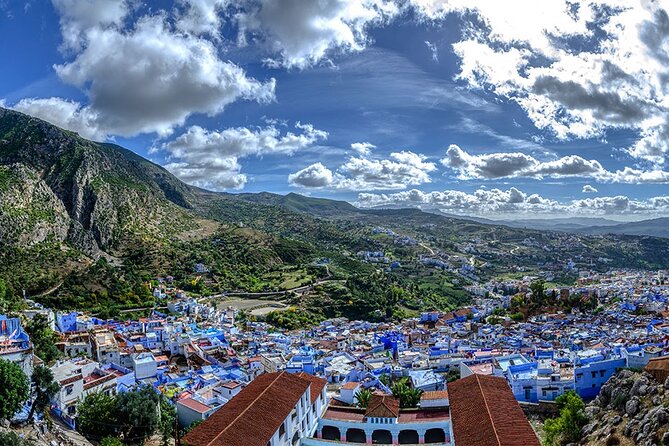
- Chefchaouen: why this Blue City section is the star
- A guided walk through the blue alleys and crafts
- The photographer session: early light, quieter streets, better shots
- Lunch by the Rass Lma River at Restaurant Triana
- The drive down from the mountains into Rabat
- Rabat in one day: Hassan Tower, Mohammed V, Chellah, and Oudaias tea
- Hassan Tower: the incomplete mosque’s loud quiet statement
- Mohammed V Mausoleum: ornate tilework and a central tomb
- Chellah: ruins in gardens and pools
- Kasbah des Oudaias: tea, pastries, and river-sea views
- Royal Palace exterior time, plus a realistic note
- Mellah de Rabat: the Jewish quarter and synagogue area
- Rabat Corniche: the coastal finishing loop
- Price and value: what you’re really paying for
- Who this trip suits, and who should think twice
- Final call: should you book Moroccan Delights?
- FAQ
- What is the tour duration?
- Where does the tour start and end?
- Is pickup included?
- What time does the tour start?
- What meals are included?
- Are any admission tickets included?
- Is this a private tour?
- Is there WiFi during transport?
- What about tipping and cancellation?
Key things to know before you go
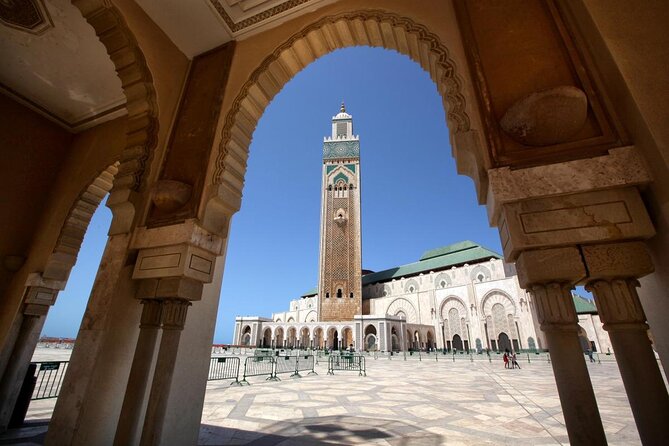
- Hassan II Mosque, with ocean views: a huge prayer space designed to feel connected to the sea
- Chefchaouen twice in different ways: classic sightseeing plus a more photo-driven walk
- Morning light matters: the photographer session starts when locals are just getting going
- Meals are built into the rhythm: breakfast each morning, plus lunches every day and two included dinners
- Rabat goes beyond the postcard: you’ll see multiple sites in one coastal day, plus Kasbah des Oudaias tea
- Private, with comfort extras: private group, WiFi onboard, and an air-conditioned vehicle
Casablanca, then the Blue Streets, then Rabat: how this route feels
This is a smart first-time Morocco route, because each city teaches you something different. Casablanca gives you the modern face of the country, Rabat shows the layers of politics and power, and Chefchaouen slows you down with color, texture, and mountain air.
You start from Jemaa el-Fna in Marrakech at 9:00 am, then you’re on the road in a private vehicle with WiFi onboard. The logistics matter here. When you’re moving across cities, it’s the small things that help, like not having to negotiate rides at every turn and having timed entries for major sights.
And if you get a driver like Zakaria, that tends to change the whole mood. People mention he stays professional and careful, and he keeps the road part smooth so you can focus on the sights.
More Chefchaouen day runs:
- 3-Days Trip from Marrakech to Chefchaouen via Imperial Cities
★ 5.0 · 352 reviews - 10-Day Chefchaouen to Sahara to Marrakech – Private Group
★ 5.0 · 51 reviews - 8 Days 7 Nights private tour Marrakech-Sahara Desert-Chefchaouen
★ 5.0 · 47 reviews
Hassan II Mosque in Casablanca: the kind of monument you remember
Your first major stop is the Hassan II Mosque, and it’s the main reason Casablanca works so well on this trip. Even before you enter, the minaret and the scale make you stop walking and just look up.
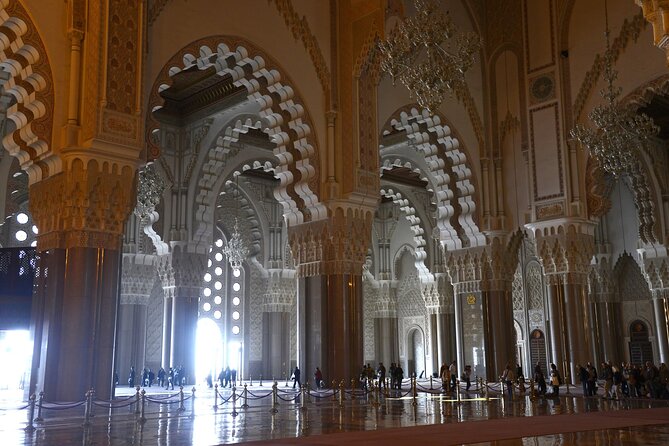
Once you’re inside, the feeling shifts fast. You step onto cool marble floors, then you’re surrounded by a massive prayer hall with intricate mosaics and chandelier light. A big part of the wow factor is how the building frames the ocean views through large openings. That connection to the sea is not just pretty, it makes the mosque feel alive, like it belongs to its setting.
The visit is timed at about one hour, and admission is included. That saves time and stress, and it also means you can spend your energy on understanding what you’re seeing rather than hunting for tickets while the day moves.
Practical tip: if you’re taking photos, keep your expectations realistic. Lighting can be tricky inside. You’ll do better with steady shots and fewer bursts than with constant changing angles.
Ain Diab lunch: the quick seaside reset you’ll be glad you planned
Right after the mosque, you head to Ain Diab, a seaside area in Casablanca, for lunch. This stop is about rhythm. After a monumental interior, you get salt air, sun, and a calmer pace that breaks up the city-feel.
Lunch is part of the planned time window (about one hour), and it’s included, along with the general ticketing for that stop. The table setup is described as colorful and detailed, and there’s even a nod to local ceramics. It’s not just food, it’s the small craft details that make the meal feel connected to Morocco instead of generic tourism.
If you’re sensitive to sun, this is also the moment to drink water and take shade breaks. The next day’s Chefchaouen walking can add up, especially when the alleys are narrow and the streets slope.
Chefchaouen: why this Blue City section is the star
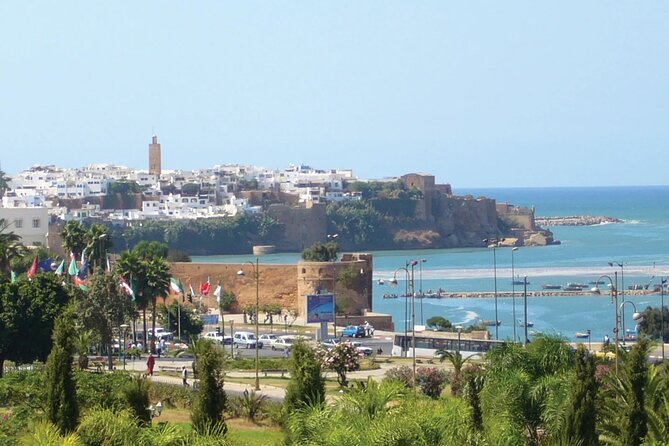
Chefchaouen is the emotional highlight of this whole route, and the way this tour handles it is a big part of why. You’re not just dropped into the blue streets and told to roam. You get structure, context, and then a focused photography session that helps you see more than the obvious views.
Other Marrakech days to consider
- Marrakech: Agafay Desert Sunset, Camel Ride, and Dinner Show
★ 4.6 · 35,119 reviews - From Marrakech: Ouzoud Waterfalls Guided Hike and Boat Trip
★ 4.7 · 33,630 reviews - Marrakech: Agafay Desert Quad & Camel Rides with Dinner Show
★ 4.8 · 27,382 reviews - Marrakech: Agafay Desert Quad Biking Tour with Dinner-Show
★ 4.8 · 16,569 reviews
A guided walk through the blue alleys and crafts
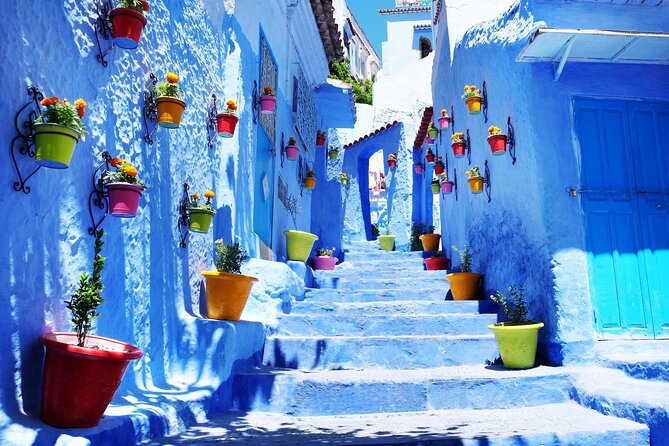
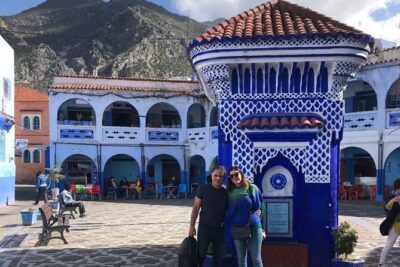
You’ll start with a guided tour of Chefchaouen that lasts about four hours. This is where you learn how the city’s look is built. You’ll notice patterns in tilework, colorful doors and windows, and geometric details that you’d miss if you were only hunting for big Instagram frames.
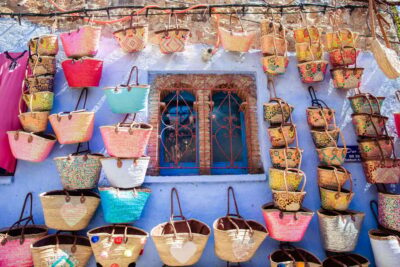
Markets are included in this segment too. You’ll have time to browse textiles and crafts, and you’ll see how locals move through the day, not just how tourists photograph the scenery.
A small but important note: Chefchaouen’s walking is charming, but it can be a bit uneven. Wear comfortable shoes and plan for some stairs and curbs, even if the route is not described as extreme.
The photographer session: early light, quieter streets, better shots
Then comes the second Chefchaouen layer, the one I think photography fans will love most. You meet your photographer in the heart of the town, and the session runs about 2 hours 40 minutes.
The best part is timing. This is early morning, when locals are setting up stalls and starting routines. That means your photos pick up real life instead of only crowds.
You start in a main square with sunlight catching the fountain tiles, then you follow quieter lanes where blue walls look deeper and more saturated. The photographer also helps you position yourself for angles that feel less forced.
If you’re not chasing photos, this still works. Walking with an eye for details makes you notice how the city is composed, where the best color contrasts happen, and which corners are calm enough to soak in for a few minutes.
Lunch by the Rass Lma River at Restaurant Triana
After a morning of blue streets and photo practice, you head to Restaurant Triana on the banks of the Rass Lma River for lunch. The location is described as scenic, with clear water and surrounding hills nearby, and the meal comes with that relaxed, natural soundtrack of water moving.
The food focus fits Moroccan comfort: chicken tagine and grilled lamb are specifically called out. Service is described as impeccable, and you’ll also get traditional Moroccan mint tea, which is one of those simple comforts that always feels right after walking.
This lunch is a nice example of value. Many tours rush you through food with something quick and forgettable. Here, the plan gives you a proper sit-down, and it also uses the setting to make the day feel less like checklists.
The drive down from the mountains into Rabat
Chefchaouen to Rabat is not just a straight transfer. The route includes a well-maintained road that takes you through changing scenery as you descend from the mountains into more urban areas.
As the elevation drops, you’ll see small towns and villages along the way, and you’ll have chances to notice roadside markets with colorful produce and cafes serving fragrant Moroccan dishes. You also get a sense of how different life looks between hillside towns and capital city rhythms.
Then you arrive in Rabat with the city’s landmarks in view, including the Hassan Tower area. On a short trip, having that mental breadcrumb trail helps. You don’t land in Rabat cold, you’re already orienting yourself while you travel.
Rabat in one day: Hassan Tower, Mohammed V, Chellah, and Oudaias tea
Rabat day is packed, but it’s organized around variety. You get architecture, a major mausoleum, ancient ruins, and then a calm break with tea and pastries in a seaside Kasbah area.
Hassan Tower: the incomplete mosque’s loud quiet statement
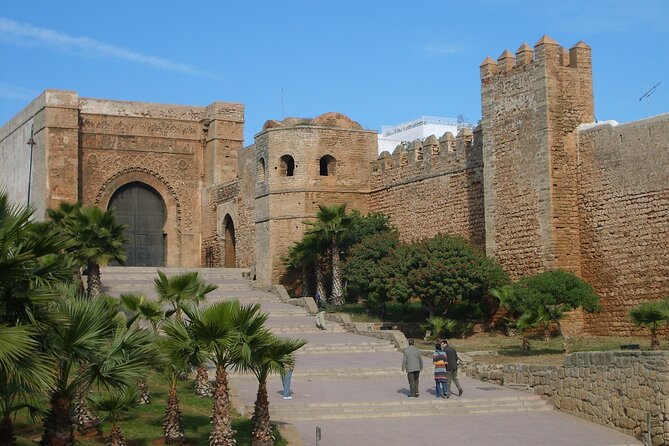
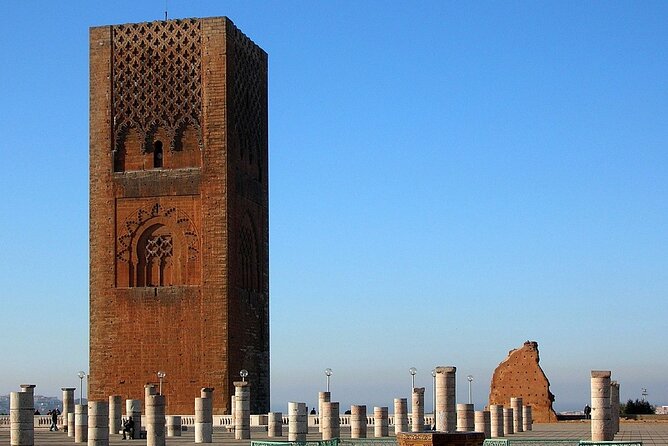
You start at the Hassan Tower, a 44-meter minaret originally constructed in the 12th century and known for Almohad architecture. The tower is made of red sandstone, with carved designs that you can appreciate even before you climb.
You can also visit the top for city and Atlantic Ocean views, and there’s a small museum inside with artifacts and exhibits. Admission is listed as free, so it’s a great stop to anchor your Rabat day without eating into your budget.
Even if you’re not into architecture, the tower’s story is easy to feel. It was meant to belong to a much larger mosque plan that never finished, and that unfinished reality gives the monument a different kind of character.
Mohammed V Mausoleum: ornate tilework and a central tomb
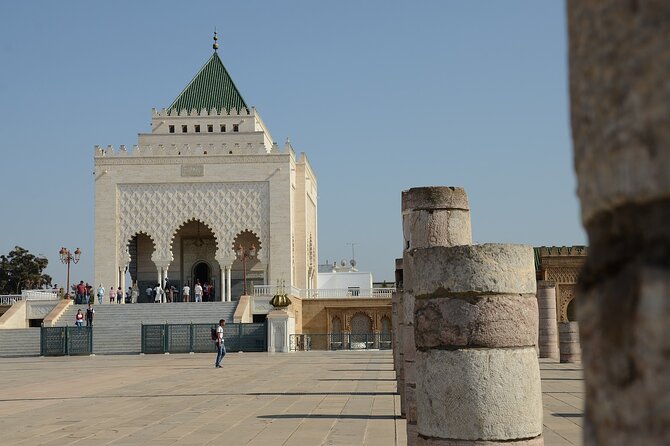
Next is the Mausoleum of Mohammed V. This is a major national landmark with tall white walls and a green-tiled roof. Inside, you’ll see intricate tilework, delicate carvings, and chandeliers lighting up a large interior space.
At the center is the tomb of King Mohammed V, with the tombs of his sons, King Hassan II and Prince Abdallah, also included in the structure. The visit is about 30 minutes, and admission is included.
If you’ve only seen Moroccan landmarks from the outside, this is the moment where interior detail takes over. It’s one of those places where spending your time looking slowly beats trying to rush.
Chellah: ruins in gardens and pools
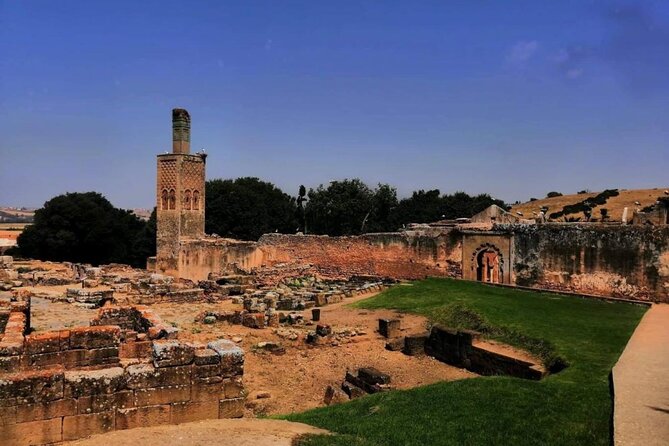
After the mausoleum, you visit Chellah, described as an oasis-like site with ruins surrounded by gardens and tranquil pools. It feels quieter than the other Rabat stops, and that matters because it gives your mind a break from big ceremonial spaces.
Chellah’s highlight is the ancient ruins, including the tomb of Sultan Abu al-Hasan, with ornate tilework and carvings. The stop runs about 30 minutes and admission is included.
Practical tip: if you like photography, Chellah can offer nice texture shots. You just need to keep an eye on your footing among older stone paths.
Kasbah des Oudaias: tea, pastries, and river-sea views
Then you head to Kasbah des Oudaias for a guided tour plus tea and Moroccan pastries. The Kasbah is a maze of narrow streets and alleyways with bright blue and white buildings.
This is where Rabat gets its softer side. You’ll pass hidden courtyards and ornate fountains, and you’ll get views over the river and the sea. The sound of waves adds to the sense that you’re somewhere coastal, not stuck far inland.
The tea stop is about 30 minutes and included, which is a nice change from constant walking. This is also a good moment to sit down, regroup, and review what you want to see next.
Royal Palace exterior time, plus a realistic note
You also stop at the Royal Palace of Rabat. You’re not going inside, because the palace is still the official residence of King Mohammed VI. But you can admire the palace complex from outside during a short visit window.
In a time-limited itinerary, this is a fair compromise. You get the architectural impression without expecting access that isn’t part of the plan.
Mellah de Rabat: the Jewish quarter and synagogue area
Another thoughtful stop is Mellah de Rabat, the Jewish quarter. It’s described as a historic neighborhood with narrow streets, traditional markets, and centuries-old synagogues.
One specific synagogue mentioned is Synagogue Beth-El, which is still in use today. There’s also the Museum of Moroccan Judaism in the area, and you can see that this neighborhood carries a different kind of cultural weight than the bigger landmarks.
This stop is about 30 minutes, and there’s no admission charge listed for it. It’s a good contrast to the mosque and mausoleum visits earlier in the day.
Rabat Corniche: the coastal finishing loop
To end the day, you drive along the Rabat Corniche, a coastal drive that mixes ocean views with city scenes. This portion is described as having opportunities for quick stops at scenic overlooks or cafes.
It’s a great way to close the loop. You’ve seen monuments and old ruins, then you get open air and a sense of space before you head back.
Price and value: what you’re really paying for
At $1,044.15 per person for about three days, this tour is not a budget impulse buy. The value comes from how much is already built in.
You’re paying for private transportation with air-conditioned comfort and WiFi onboard, plus a route that links three major cities with guided visits. You’re also getting multiple included meals, including breakfast (3), lunch (3), and dinner (2).
On top of that, the most expensive-feeling items are covered: admission for the Hassan II Mosque and other named site entries like the Kasbah in Chefchaouen and Kasbah des Oudaias. That helps you avoid the common problem where a tour price feels good until you start adding ticket after ticket on your own.
The only thing not included is tipping for guides and drivers, which is left to your discretion. In Morocco, that matters because it’s a practical part of how service works.
Is it worth it for you? If you want a guided plan with meals, transport, and timed entry windows, it’s strong value. If you’d rather spend half your trip wandering without structure, you might feel the price expects you to follow the schedule.
Who this trip suits, and who should think twice
This tour suits you if you:
- want a first Morocco taste with three contrasting cities
- like guided context, not just photo stops
- appreciate included meals and the reduction in daily planning
- care about comfort during driving segments, especially on a family trip
It might not be ideal if you:
- want long, slow afternoons with no plan
- dislike back-to-back sights and prefer one city per day
- need lots of free time for shopping, since medina walking is built into the schedule and timed visits keep you moving
Final call: should you book Moroccan Delights?
If you’re trying to pack Morocco’s big ideas into a short visit, I’d seriously consider this one. The combination of Hassan II Mosque, the double Chefchaouen experience with a photographer session, and a full Rabat day with tea and history gives you a lot for your money without making you do all the hard work.
The best sign you should book is simple: you like a guide-led plan that still leaves room to wander. The only reason not to book is if you want a slow, unstructured trip. Here, the trip is designed to move, and that’s a feature, not a flaw.
FAQ
What is the tour duration?
It runs for about 3 days.
Where does the tour start and end?
It starts at Jemaa el-Fna in Marrakech and ends back at the same meeting point.
Is pickup included?
Pickup is offered.
What time does the tour start?
The start time is 9:00 am.
What meals are included?
The tour includes breakfast (3), lunch (3), and dinner (2).
Are any admission tickets included?
Yes. Hassan II Mosque tickets are included, and there are included site admissions such as Kasbah areas in Chefchaouen and Rabat, plus entries for other named attractions during the day.
Is this a private tour?
Yes, it is a private activity, so only your group participates.
Is there WiFi during transport?
Yes, WiFi is available onboard.
What about tipping and cancellation?
Tipping for guides and drivers is left to your discretion. You can cancel for a full refund up to 24 hours in advance of the experience start time.
Latest additions near Marrakech
- Morocco 11 Days Tour From Marrakech★ 5.0 · 18 reviews
- Hammam Massage Transfers Included★ 4.5 · 84 reviews
- Moroccan Food Tasting Tour and Dinner★ 5.0 · 52 reviews
- 3 Days Multi-day Tour at Marrakech Desert★ 5.0 · 12 reviews
- 3 Hour Moroccan Cooking Class in Marrakech★ 5.0 · 41 reviews
- Moroccan Dinner and Show at Fantasia Restaurant in Marrakech★ 3.5 · 47 reviews
- Merzouga Overnight Stay in Berber Tent and Camel Ride★ 5.0 · 34 reviews
- Moroccan Cooking Classes★ 5.0 · 46 reviews
Chefchaouen Day Trips, compared.

Chefchaouen Day Trip from Fez (Shared Group Tour)
Read our review →
Blue City magic: Affordable Day Trip from Fez to Chefchaouen
Read our review →

Browse the lists this tour appears in