
Reviewed · MOROCCAN COOKING CLASSES
Moroccan Cooking Classes
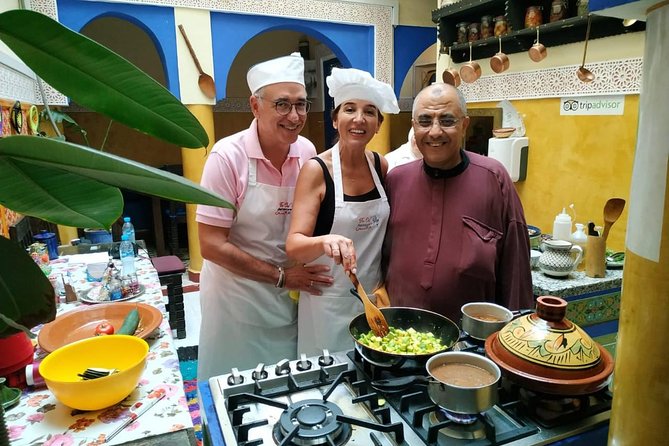
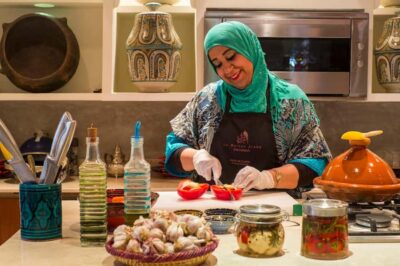
Cooking in Marrakech beats guessing at menus. This 3-hour class at Dar Chef pairs Old City market shopping with hands-on cooking, so you leave with skills, not just a full stomach. I love the small-group setup, and I also like that you work with a local family for real flavor lessons.
The second thing I really like is the people side. Cooking with Moroccan women feels more like learning a home routine than following a script, and you even get guidance from Abdel (and the chef, plus Mme la responsable, who show up in the feedback with real warmth). One possible drawback to note is timing, it runs in the morning window, so if you hate early starts, you’ll want to plan the rest of your day around it.
In This Review
- Key highlights I’d plan around
- Why Marrakech cooking feels different when you start with ingredients
- Meeting at Rue Kennaria, and what that means for your time
- Old City market shopping: how you learn to choose spices for real cooking
- Cooking with Moroccan women at Dar Chef: the part that turns skills into confidence
- What your 3-hour flow feels like, from start to meal
- How the flavors and spices lesson actually helps you later
- The value of $57.27 for a small, hands-on morning
- Who should book this Marrakech cooking class, and who might skip it
- Tips to get the most from your market-to-kitchen morning
- Should you book Moroccan Cooking Classes at Dar Chef?
- FAQ
- Where is the meeting point, and where does the class end?
- How long is the Moroccan cooking class?
- How much does the class cost?
- What group size should I expect?
- What will I do during the class?
- When does it run?
- Do I get a mobile ticket?
- How far in advance is it usually booked?
- What is the cancellation policy?
Key highlights I’d plan around
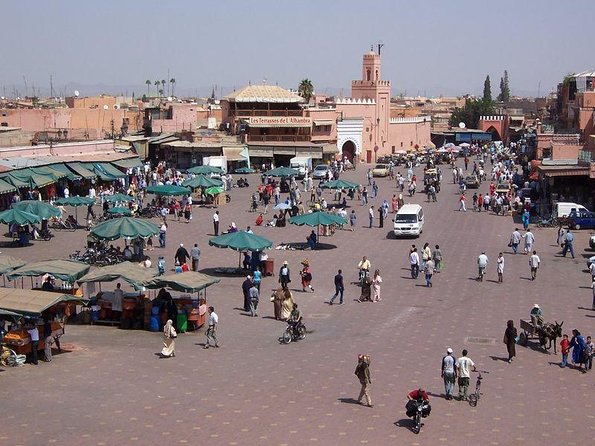
- Old City market shopping: choose ingredients with the people who actually cook
- Traditional Moroccan herbs and spices: learn what goes where, not just what tastes good
- Small group size: maximum 10 travelers, so you get more attention
- Cooking with Moroccan women: practical, lively instruction while you work
- Meal made with your own purchases: your shopping choices turn into the food you eat
Why Marrakech cooking feels different when you start with ingredients
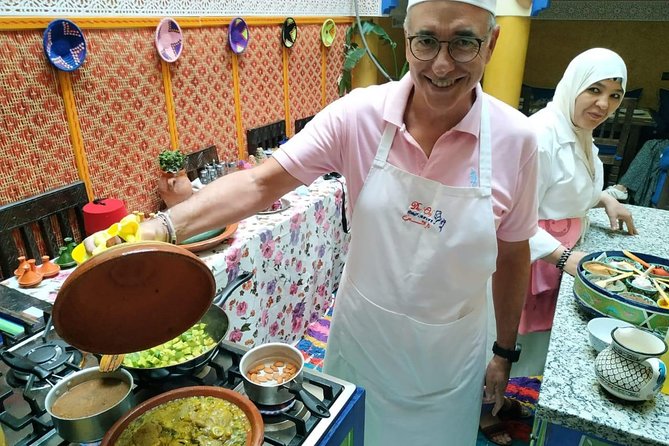
A Moroccan cooking class can be fun. This one is more useful because you begin with the raw stuff: spices, produce, and the small decisions that make dishes taste right.
When you shop with locals, you learn what to look for beyond color and smell. You also pick up the logic behind Moroccan flavors. That matters because once you understand the roles of common herbs and spices, you can recreate the results later, even if your spice shelf looks nothing like someone else’s.
I also appreciate the value of doing this as a team activity. A market is loud, busy, and easy to rush through on your own. Here, you have purpose. You’re not just sightseeing Old City storefronts, you’re buying what you’ll cook.
More Cooking Classes in Marrakech
- Marrakech: Moroccan Cooking Class with Pickup
★ 4.6 · 1,862 reviews - Marrakech: Traditional Moroccan Cooking Class & Market Visit
★ 4.8 · 1,861 reviews - Marrakesh: Moroccan Dishes Cooking Class with a Local Chef
★ 5.0 · 1,615 reviews
Meeting at Rue Kennaria, and what that means for your time
The class meets at Rue Kennaria, Marrakesh 40000, and it ends back at the same meeting point. That round-trip detail sounds small, but it’s practical. You don’t have to build extra time for transfers or worry about getting stranded somewhere unfamiliar after class.
It’s also near public transportation, so you can usually get there without a complicated plan. You’ll receive confirmation at booking, and you’ll have a mobile ticket, which is handy in Marrakech where paperwork can quickly feel like a time tax.
One more timing note that matters for your day: the activity runs Monday through Sunday, in the 9:30 AM to 12:30 PM window, for about 3 hours. If your plan includes a big afternoon itinerary, treat this class like the anchor you schedule first, then build the rest around it.
Old City market shopping: how you learn to choose spices for real cooking
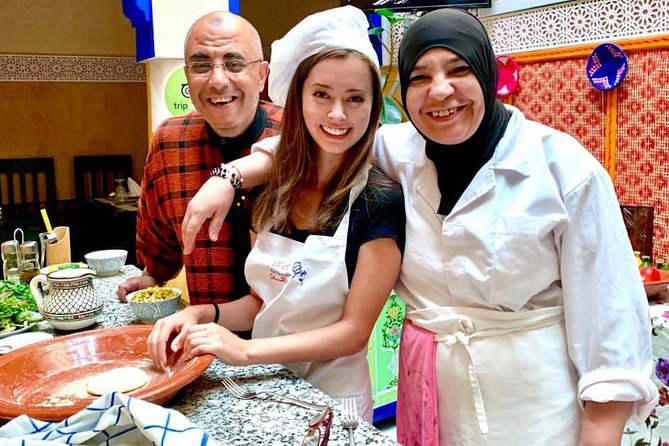
A lot of cooking classes skip the hardest part. They hand you ingredients and hope you notice the differences.
Here, you shop in traditional markets in the Old City before you cook. That’s the moment you start learning the difference between spices that smell good and spices that behave well in Moroccan dishes. You’ll also get a better feel for herbs and flavors that show up again and again in Moroccan food.
What I’d watch for as you shop is attitude, not just ingredients. Your goal is to ask questions like:
- What does this smell like when it’s fresh?
- Which spice is best for warmth, and which one is best for aroma?
- What’s the easiest way to use what you’re buying today?
Even if you only catch part of the explanation, the act of choosing is what sticks. You’re tying flavor names to actual ingredients in your hands. That makes the cooking stage smoother because you already understand what you brought back.
Cooking with Moroccan women at Dar Chef: the part that turns skills into confidence
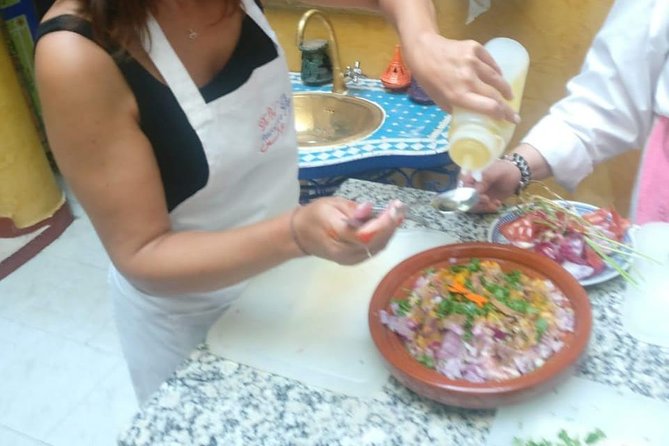
Once you move from shopping to cooking, the experience shifts from shopping mode to working mode. You’ll cook typical Moroccan dishes using the ingredients you gathered.
The most praised aspect of this class is the people running it. The feedback highlights Moroccan women doing the teaching, and that’s exactly what you should look for in a class like this. You’re not just watching someone cook. You’re learning alongside the kind of instructors who can explain in plain language what changes when you add a pinch more spice or adjust timing.
Cooking with a local family also adds context. Moroccan food is built around balance, layering flavor, and using herbs and spices in consistent patterns. When your instructors are cooking from home routines, they tend to emphasize method: how to handle ingredients, how to taste as you go, and how to stay focused during busy steps.
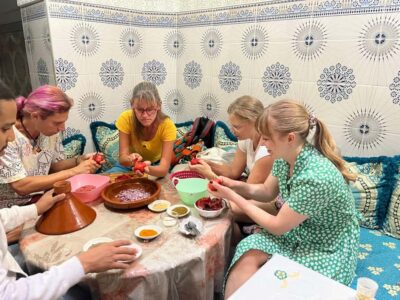
Dar Chef is the provider, and this is structured for a group of up to 10 travelers, which keeps the teaching practical. In a large class, you can end up standing and waiting. Here, the smaller size makes it more likely you’ll actually do the steps, not just photograph them.
Within striking distance:
- Marrakech: Agafay Desert Sunset, Camel Ride, and Dinner Show
★ 4.6 · 35,119 reviews - From Marrakech: Ouzoud Waterfalls Guided Hike and Boat Trip
★ 4.7 · 33,630 reviews - Marrakech: Agafay Desert Quad & Camel Rides with Dinner Show
★ 4.8 · 27,382 reviews - Marrakech: Agafay Desert Quad Biking Tour with Dinner-Show
★ 4.8 · 16,569 reviews
What your 3-hour flow feels like, from start to meal
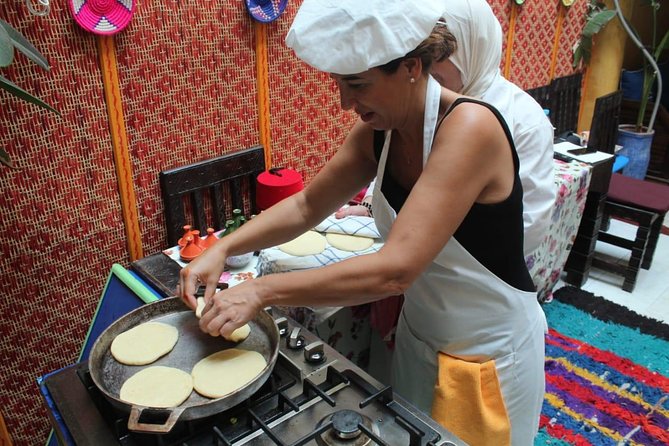
Because the class is about 3 hours, you should expect a tight rhythm. In practice, it tends to look like this:
First, you meet at Rue Kennaria and get oriented. Then you head out to shop for ingredients in traditional markets in the Old City. That shopping time is where you learn what to buy and why.
After that, you return and start cooking together with a local family and Moroccan women at the kitchen. This is the hands-on core, where you make typical Moroccan dishes using your purchases. You’ll be tasting, adjusting, and working through steps rather than just observing.
Finally, you enjoy the meal. The key detail is that the food is connected to the ingredients you chose earlier. That makes the end of the class feel like closure, not just a free lunch.
The practical takeaway for your planning: treat it like a half-morning commitment. Wear comfortable clothes, and give yourself time to be a little slower than usual. When you’re learning a new cuisine, speed is not the goal. Getting it right is.
How the flavors and spices lesson actually helps you later
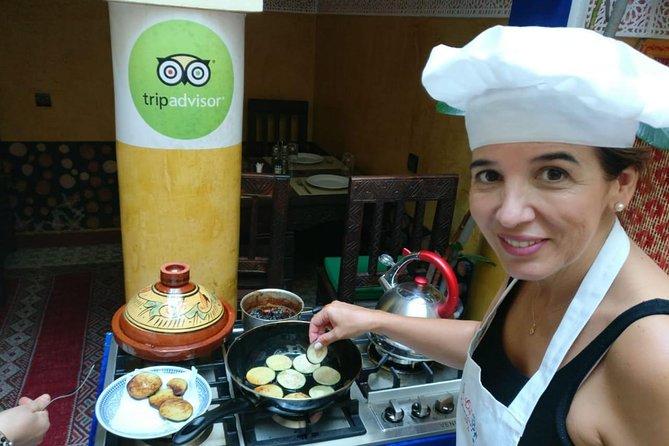
It’s easy to think a cooking class teaches recipes. This one teaches patterns.
Typical Moroccan herbs, spices, and flavors show up repeatedly across many dishes. If you learn the role each one plays, you’ll understand why dishes taste the way they do. You also learn what makes them feel Moroccan, not generic.
I like that the class doesn’t just teach you to follow steps. You’re learning along the way, with explanations and guidance as you work. That means you can walk away with a mental map like:
- which flavor feels warm and which feels aromatic
- when to add certain spices for the best effect
- how fresh ingredients change the taste compared with what you might have back home
Then, when you cook later, you’re not starting from zero. You’re translating what you learned into your own kitchen.
The value of $57.27 for a small, hands-on morning
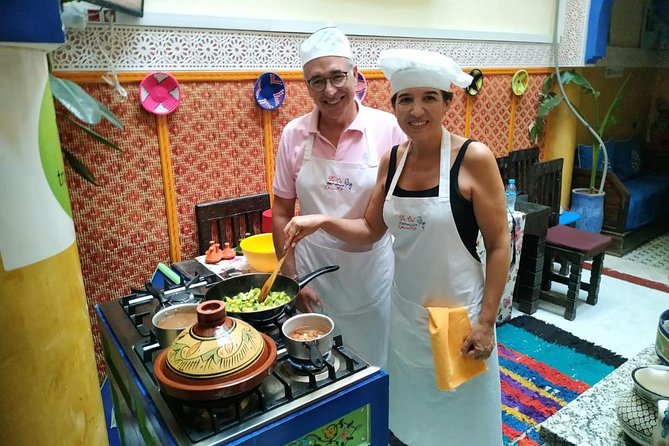
At $57.27 per person for about 3 hours, the main question is whether you’re paying for food or for skills.
In my view, the value comes from three things you don’t always get:
1) You shop for ingredients in the Old City market as part of the experience
2) You cook with a local family and Moroccan women, not just a single instructor running a demo
3) The group stays small, maximum 10 travelers, which supports real involvement
If you’ve ever done a food tour where you eat a little and move on, this is different. You’re spending your money on the part that builds competence. You leave knowing how to select and use ingredients, which is what makes the class useful after you leave Marrakech.
Also, the “enjoy” part matters. You’re not rushing through cooking without getting to eat what you made. That’s part of why this style of class is worth it.
Who should book this Marrakech cooking class, and who might skip it
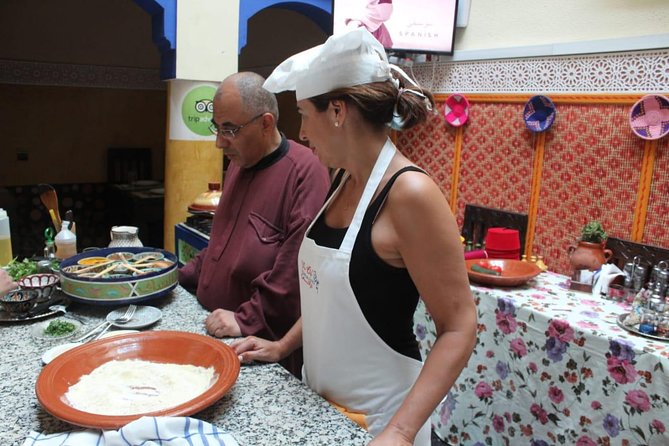
This class fits best if you want authentic, hands-on learning and you like meeting the people behind the food.
You’ll likely enjoy it if:
- you’re curious about Moroccan herbs, spices, and how flavors are built
- you like practical instruction where you do the work
- you want to shop in the Old City with purpose, not just wander
- you enjoy a small-group vibe
You might want to skip it if:
- you can’t do a morning schedule, since it runs in the 9:30 AM to 12:30 PM window
- you expect a long, slow, leisurely meal experience. This is a compact 3-hour class, so it stays focused.
Tips to get the most from your market-to-kitchen morning
To make this class smoother, I recommend keeping these points in mind:
- Arrive ready to walk and participate. Market time means movement and decision-making.
- Come hungry, but don’t expect endless snacks. You’re cooking and then eating at the end.
- Ask simple questions as you shop. Even basic prompts help you connect ingredients to the cooking steps later.
- Take a moment before you start cooking to notice what you bought. That attention pays off when you cook with your ingredients.
One more small tip: the class is only about 3 hours, and it’s designed for a maximum of 10 people. If you want extra conversation, look for moments when the kitchen is between steps. That’s usually when instructors can explain more clearly.
Should you book Moroccan Cooking Classes at Dar Chef?
If you’re in Marrakech and you want something more useful than another meal, I’d book this.
Start with the big reason: you learn by shopping in the Old City market, then you cook with Moroccan women and a local family. That pairing turns the class into real skill building. Add the small group size and the warm, person-centered teaching that shows up in feedback tied to Abdel, the chef, and Mme la responsable, and it becomes the kind of experience you’ll remember when you cook later.
Go for it if you like morning plans and you want hands-on Moroccan cooking. Skip it only if early timing is a deal breaker for you.
FAQ
Where is the meeting point, and where does the class end?
The meeting point is Rue Kennaria, Marrakesh 40000, Morocco. The activity ends back at the meeting point.
How long is the Moroccan cooking class?
The duration is about 3 hours.
How much does the class cost?
The price is $57.27 per person.
What group size should I expect?
This activity has a maximum of 10 travelers.
What will I do during the class?
You learn how to prepare authentic Moroccan food with a local family. You also shop for fresh ingredients from traditional markets in the Old City, then cook typical dishes with Moroccan women using the ingredients you bought and enjoy the meal.
When does it run?
Monday through Sunday, the opening hours are 9:30 AM to 12:30 PM (within 09/26/2019 to 06/16/2026).
Do I get a mobile ticket?
Yes, the tour includes a mobile ticket.
How far in advance is it usually booked?
On average, it is booked 7 days in advance.
What is the cancellation policy?
Cancellation is free. You can cancel up to 24 hours in advance for a full refund. If you cancel less than 24 hours before the start time, the amount you paid will not be refunded.
Cooking Classes in Marrakech
- Moroccan Cooking Class & Marrakech Market Visit with Chef Khmisa
★ 5.0 · 1,504 reviews - Half-Day Cooking Class with Local Chef Laila in Marrakech
★ 5.0 · 952 reviews - Marrakech: Moroccan Cooking Class with a Local Family
★ 4.9 · 668 reviews - Marrakech: Moroccan Cuisine Cooking Class in Local Home
★ 4.8 · 508 reviews
Latest additions near Marrakech
- Morocco 11 Days Tour From Marrakech★ 5.0 · 18 reviews
- Hammam Massage Transfers Included★ 4.5 · 84 reviews
- Moroccan Food Tasting Tour and Dinner★ 5.0 · 52 reviews
- 3 Days Multi-day Tour at Marrakech Desert★ 5.0 · 12 reviews
- Moroccan Dinner and Show at Fantasia Restaurant in Marrakech★ 3.5 · 47 reviews
- 3 Hour Moroccan Cooking Class in Marrakech★ 5.0 · 41 reviews
- Moroccan Delights: Explore Chefchaouen and Rabat’s Culture★ 5.0 · 16 reviews
- Merzouga Overnight Stay in Berber Tent and Camel Ride★ 5.0 · 34 reviews
Moroccan Cooking Classes, compared.
Traditional Moroccan Cooking Class & Market Visit
Read our review →
Moroccan Dishes Cooking Class with a Local Chef
Read our review →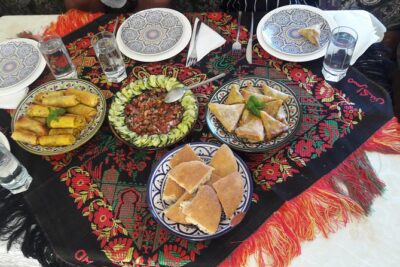
Moroccan Cooking Class & Marrakech Market Visit with Chef Khmisa
Read our review →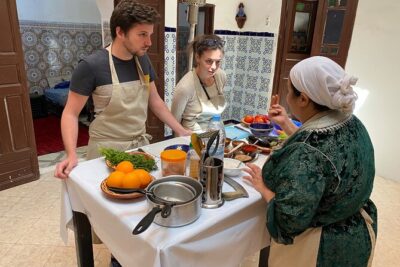
Half-Day Cooking Class with Local Chef Laila in Marrakech
Read our review →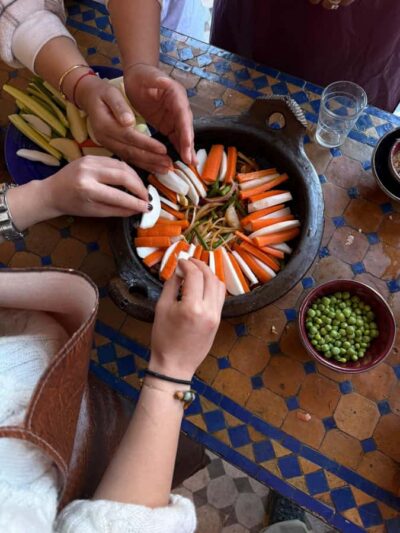
Browse the lists this tour appears in