
Reviewed · FOOD
Moroccan Food Tasting Tour and Dinner
A good food tour starts before you even eat. In Marrakech, this one hits Jemaa el-Fnaa at 6:00 pm and stacks tastings with a proper dinner, led by a guide like Hassan who knows the stories behind the bites. I love the mix of market stops and sit-down food, and I also like that you get to try both everyday staples like olive oil and olives and more special dishes like pastilla. One thing to plan for: you walk a lot and there can be stairs, so wear shoes you trust.
What makes this experience feel worth the money is the pace. You’re not just sampling random stalls. Each stop has a theme, then you move on, so you leave with real understanding of how Moroccan ingredients connect to what you taste. It’s also set up for convenience, with a central meeting point near public transport and a private group setup.
In This Review
- Key highlights worth your attention
- Why 6:00 pm in Marrakech makes this tour work
- Meeting at Café de France, then straight into the action
- Stop 1: Jemaa el-Fnaa at night, first tastings in the main square
- Stop 2: Medina time, olives souk and hidden corners of everyday life
- Stop 3: The spice store tasting, argan oil, amlou, and mint tea
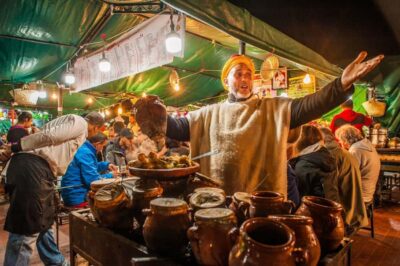
- Stop 4: Back to Jemaa el-Fnaa for evening food stalls
- Stop 5: Souk Semmarine, pastries and olives in a focused mini-sprint
- The dinner spread: Moroccan salad, Tanjia or Tajine, and dessert
- The tastings you can expect, from pastilla to pancakes
- Cost and value: what $174.47 buys you in real terms
- What makes the guiding experience feel special
- Pacing tips so you don’t regret eating too much
- Who this is best for, and who should think twice
- Should you book this Moroccan food tasting tour?
- FAQ
- What time does the tour start in Marrakech?
- How long is the Moroccan food tasting tour and dinner?
- Where do we meet for the tour?
- What’s included in the dinner?
- What foods are included in the tasting?
- Is tea or coffee included?
- Is this tour private?
- Is cancellation free, and what if the weather is bad?
Key highlights worth your attention
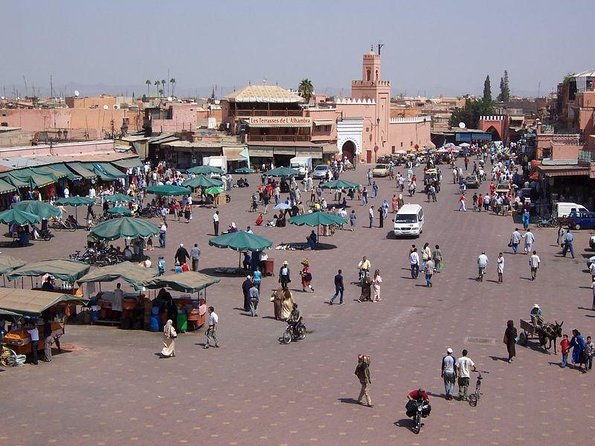
- Jemaa el-Fnaa at dusk gives you both the food scene and the square’s street-performer energy
- The Medina olives and spice shopping stops turn shopping into a lesson, not just wandering
- A guided tasting of argan oil, amlou, and mint tea at an authentic spice store
- A long dinner at the end with Moroccan salad, Tanjia or Tajine, and dessert
- Skip-the-line style access that helps you avoid some crowd friction in popular areas
Why 6:00 pm in Marrakech makes this tour work
Timing matters in Marrakech. Starting at 6:00 pm puts you right in the window where the city’s food culture ramps up, especially around Jemaa el-Fnaa. That means you get street atmosphere while you’re still awake and alert enough to enjoy it, instead of losing the experience to late-night fatigue.
The tour is about 3 hours total, so it’s short enough to fit your first night plans. If you’re trying to hit major sights in the daytime, this evening slot is a smart “food first” choice. You’re also near the main square and central streets, so you don’t waste the evening on long taxi time.
Finally, it’s built around a private group. That usually translates to fewer pauses, quicker questions, and less waiting around than you’d get on a bigger shared tour.
Other Marrakech days to consider
- From Marrakech: Merzouga 3-Day Desert Safari with Food
★ 4.7 · 12,232 reviews - Marrakech: Street Food Tour by Night
★ 4.8 · 2,838 reviews - 3-Day Tour to Merzouga Erg Chebbi with Food & Camel Trek
★ 5.0 · 1,770 reviews
Meeting at Café de France, then straight into the action
You meet at Hôtel Restaurant Café de France, on Rue des Banques, right near Jemaa el-Fnaa. The location is practical if you plan to use local transport, because you’re not trekking across town for a tasting.
From there, your guide takes you where people actually eat and shop. You’re not standing at a far-off viewpoint watching food from a distance. You move through the area in a tight loop, which helps you keep the evening momentum.
If you’ve got dietary needs, bring them up early. The menu choices listed for the tasting and dinner are specific, but your guide can often help you understand what’s in each dish so you can decide confidently.
Stop 1: Jemaa el-Fnaa at night, first tastings in the main square
Your first stop is Jemaa el-Fnaa, and you spend about 50 minutes here. This is the big square where the evening scene comes alive with eating stalls and entertainment. You’ll see performers like acrobats, story tellers, magicians, dancers, and the Gnawa musicians people associate with ritual and music traditions.
The value of this stop is not just the spectacle. It’s the context. You start the night with food culture right where it happens, so later, when you visit souks and a spice shop, the whole system makes more sense.
What I like about starting here is the sensory reset. You’ll taste and smell things immediately, then you get guided interpretation. It’s much easier to remember what a spice is doing in a soup or pastry when you’ve already been introduced to the ingredients around you.
Stop 2: Medina time, olives souk and hidden corners of everyday life
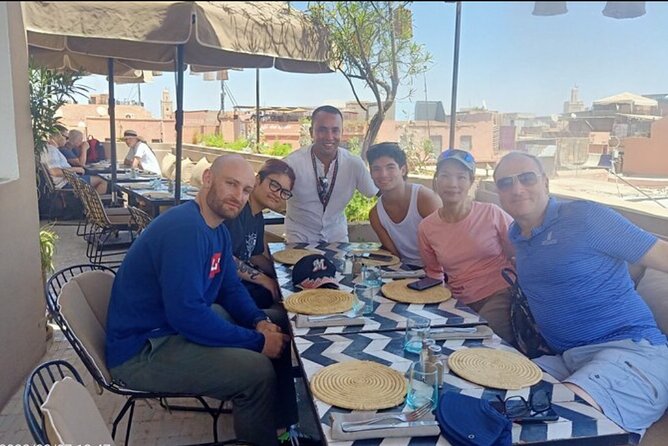
Next you head into the Medina of Marrakech for about 1 hour. This segment focuses on how local families live and shop, with time around the colorful Olives Souk and other food shops.
A key detail: different parts of the Medina specialize in different things. That’s why it feels more useful than a generic walk. The alleys you pass aren’t random. You’re moving through areas that connect to how people actually make Moroccan food at home.
You’ll also see the way olives show up in multiple forms, not just as a menu item. Expect marinated options and lots of olive-related products, plus the visual drama that makes the Medina feel like a working pantry.
Practical note: the Medina walking can mean uneven ground and turns you don’t anticipate. Go slow, and keep water handy if it’s warm.
Within striking distance:
- Marrakech: Agafay Desert Sunset, Camel Ride, and Dinner Show
★ 4.6 · 35,119 reviews - From Marrakech: Ouzoud Waterfalls Guided Hike and Boat Trip
★ 4.7 · 33,630 reviews - Marrakech: Agafay Desert Quad & Camel Rides with Dinner Show
★ 4.8 · 27,382 reviews - Marrakech: Agafay Desert Quad Biking Tour with Dinner-Show
★ 4.8 · 16,569 reviews
Stop 3: The spice store tasting, argan oil, amlou, and mint tea
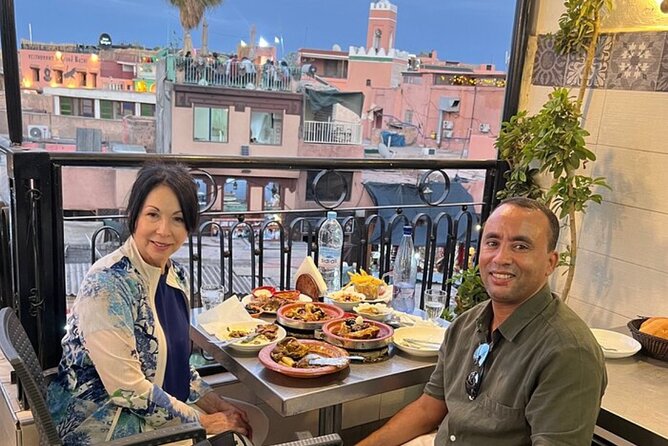
This stop is about 30 minutes in another part of the Medina, and it’s one of the most useful moments of the entire tour. You visit an authentic spice store where locals would select fresh spices, then you do tastings of pure edible argan oil, amlou, and Moroccan mint tea.
Why I think this is a standout: it’s where flavor stops being a mystery. Once you taste argan oil and amlou in context, you’ll recognize their roles later, even in desserts and savory pastries.
Amlou is especially memorable because it’s built from multiple ingredients. It helps you understand why Moroccan food can feel both comforting and complex at the same time. Mint tea, meanwhile, is a quick way to reset your palate between salty bites and pastry sweetness.
If you like food writing, take mental notes here. The store stop gives you vocabulary to talk about flavor beyond just delicious.
Stop 4: Back to Jemaa el-Fnaa for evening food stalls
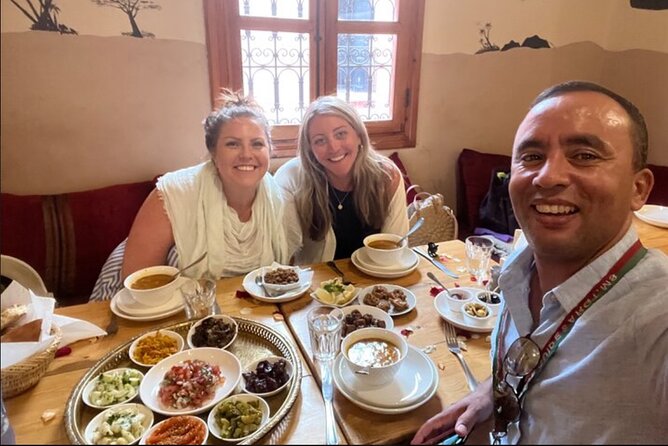
You return to Jemaa el-Fnaa for about 20 minutes, aimed at the evening food stalls favored by local families. This is where you eat more and ask questions while everything is happening around you.
This portion works well because it’s flexible in feel. You can use the guide’s explanations to learn what you’re actually tasting, and you’re not stuck in one rigid presentation format.
This is also a nice contrast to the Medina segment. In the square, it’s open, loud, and social. In the Medina, it’s tighter and more specialized. You get both sides of the same food culture in a short time.
Stop 5: Souk Semmarine, pastries and olives in a focused mini-sprint
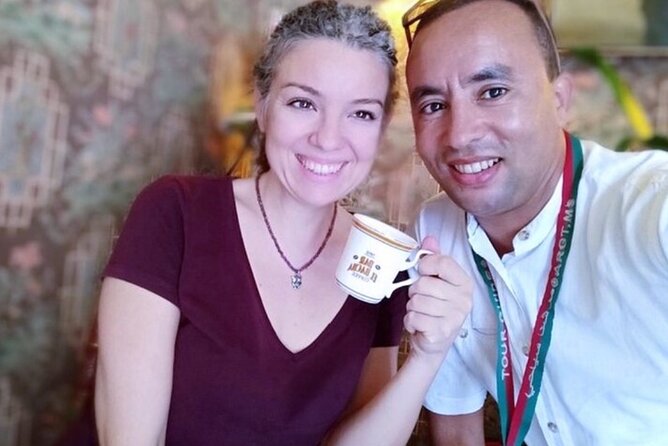
Your final market stop is Souk Semmarine, about 20 minutes. Here the emphasis is on Moroccan pastries and olives, and you get to browse in olives-related stalls tucked inside the hidden souks.
The practical value is focus. You’re not trying to find pastries on your own while also trying to navigate crowd flow. With a guide, you get pointed toward strong options and then you move on.
This stop also makes a good bridge into the dinner. After tasting pastries, you’re primed for the richer, plated dishes later.
The dinner spread: Moroccan salad, Tanjia or Tajine, and dessert
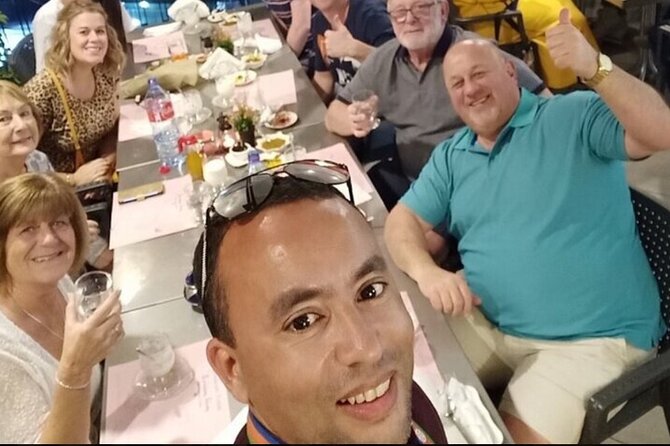
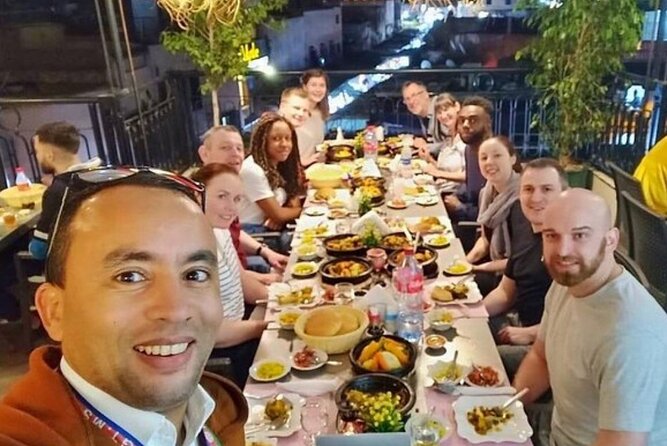
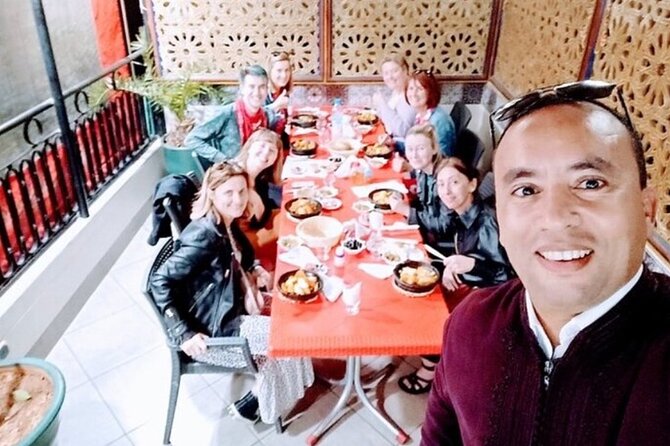
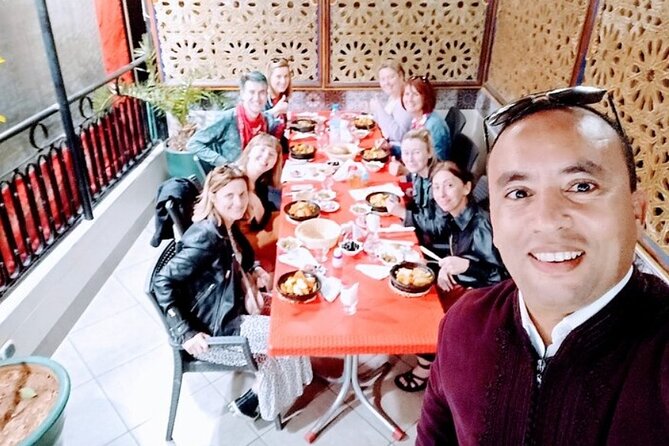
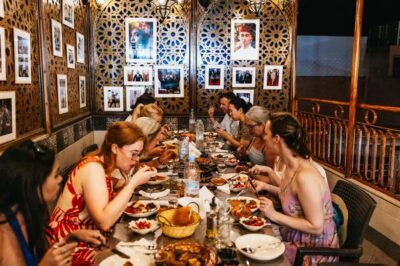
The tour includes dinner, which is what takes this experience from a snack crawl to a full evening meal. Dinner includes Moroccan salad, then Tanjia or Tajine, plus dessert.
You also get coffee and/or tea, including Moroccan tea and sparkling water. That’s a nice touch because you’re not scrambling to find a drink after all the tastings.
Even if you’re not a huge eater, dinner is where you get the full Moroccan meal format. It’s also a chance to slow down and let your guide answer questions without yelling over the square.
One more practical point: if you’re prone to getting full quickly, pace yourself during the tastings. Reviews and guides strongly suggest going in with an appetite, because you’ll be eating more than you think.
The tastings you can expect, from pastilla to pancakes
Across the tour, the tasting list is the real engine. You’ll try a long set of Moroccan bites such as:
- Pastilla of chicken and almonds
- Moroccan pastries and macaroons
- Moroccan soups with dates and chebbakia
- Barbouch (snails) with spices
- Moroccan pancakes, with options like honey and cheese or onion and spices
- Marinated olives with olive oil and spices
- Organic dried fruits
- Selected Moroccan pastries
- Coffee and/or tea, including Moroccan tea
I like this mix because it covers multiple categories. You get savory pastries, sweet pastries, soups, something warm like pancakes, salty starters like olives, and a proper dinner at the end. It’s not just dessert, and it’s not just bread-and-spice.
One consideration: barbouch (snails) is included, and that’s a taste choice some people love and some people skip. If you’re not a seafood or offal person, you should still go, but mentally plan to focus on the dishes that match your comfort zone.
Cost and value: what $174.47 buys you in real terms
At $174.47 per person, this isn’t a budget snack. But the value comes from the structure. You’re paying for:
- a guided route through major food zones,
- multiple tasting stops with a specific set of dishes,
- and a dinner with main course and dessert.
For many people, the biggest surprise is that the tour gives you both variety and depth. You taste things you’d have trouble ordering confidently on your own, like pastilla and spiced preparations beyond the usual tourist favorites. You also get explanation along the way, which makes the food more memorable later.
Another value factor is that it’s private, meaning only your group participates. That can be a big deal if you’re traveling with family or friends and want less negotiation over what to eat next.
If you hate paying for guided experiences, this might feel steep. If you love food and want to learn while you eat, the price starts looking fair.
What makes the guiding experience feel special
The guiding seems to be a core reason for the high scores. Guides like Hassan are repeatedly described as friendly and very able to answer questions in excellent English. Other guides mentioned include Ali, Mohammed, Souf, and Hussain, and the pattern stays the same: local guidance, lots of facts, and a tour that feels tailored rather than scripted.
That tailoring matters because Moroccan food can be personal. Spices, sweetness, and texture all vary. A good guide helps you understand what you’re tasting and why it works.
If you want the best experience, ask questions early. Simple ones like what ingredient is doing the heavy lifting in this dish, or how people typically eat it at home, tend to unlock the most useful explanations.
Pacing tips so you don’t regret eating too much
This tour is built around a lot of bites. A repeated piece of advice is clear: don’t eat too much before the tour. Start hungry, not starving.
During the tasting stops:
- take small bites first,
- sip tea or water in between,
- and save your biggest appetite for dinner.
Also, wear comfortable shoes. Even without counting distance, you’re moving through the Medina and squares, and there can be stairs. One review specifically flagged stairs as a limitation, so if you have mobility issues, consider that before you book.
Who this is best for, and who should think twice
This is a great fit for you if:
- you like food-focused walking tours,
- you want a guided way to explore souks without getting lost,
- you want both tastings and a full dinner,
- you’re okay with trying a range of dishes, including things like snails.
It might not be the best fit if:
- you dislike walking on uneven ground or up stairs,
- you’re very sensitive to strong spice flavors,
- you only want one or two bites and no heavy meal at the end.
If you’re visiting for a short time, this works as an early stop because it helps you understand how Moroccan ingredients show up everywhere else you’ll see.
Should you book this Moroccan food tasting tour?
I think this tour is a strong booking choice if you’re coming to Marrakech specifically for food and you want structure. The big reasons to say yes are the number of tastings, the spice store learning moment, and the fact that it includes a real dinner rather than ending after a handful of samples.
I’d hesitate only if stairs and walking are a problem for you, or if the idea of trying dishes like barbouch (snails) feels like a hard no. Otherwise, for the price, you’re getting a packed, guided food evening centered on Marrakech’s most famous night food zone.
If you want one evening activity that feeds you and teaches you at the same time, book it and plan to show up hungry.
FAQ
What time does the tour start in Marrakech?
The tour starts at 6:00 pm.
How long is the Moroccan food tasting tour and dinner?
It runs for about 3 hours.
Where do we meet for the tour?
The meeting point is Hôtel Restaurant Café de France, J2G7+G2G jamaa el-fnna, Rue des Banques, Marrakech 40000, Morocco.
What’s included in the dinner?
Dinner includes Moroccan salad, Tanjia or Tajine, and dessert.
What foods are included in the tasting?
The tasting includes items such as pastilla of chicken and almonds, Moroccan pastries and macaroons, Moroccan soups with dates and chebbakia, barbouch with spices, Moroccan pancakes, marinated olives, organic dried fruits, and selected pastries.
Is tea or coffee included?
Yes. The tour includes coffee and/or tea, including Moroccan tea and sparkling water.
Is this tour private?
Yes. Only your group participates.
Is cancellation free, and what if the weather is bad?
Free cancellation is offered up to 24 hours in advance for a full refund. The experience requires good weather, and if it’s canceled due to poor weather, you’ll be offered a different date or a full refund.
More Dining Experiences in Marrakech
- Marrakech: Agafay Desert Quad & Camel Rides with Dinner Show
★ 4.9 · 10,771 reviews - Marrakech: Agafay Desert Quad, Camel Ride & Dinner Show
★ 4.7 · 10,209 reviews - Marrakech: Agafay Desert Retreat, Tent, Dinner, Show & Pool
★ 4.8 · 5,616 reviews - Marrakech: Agafay Desert Dinner Show with Quad Bike & Camel
★ 4.9 · 5,058 reviews
More Food & Drink in Marrakech
- Authentic Moroccan Food Tour in Marrakech with Dinner
★ 5.0 · 1,423 reviews - From Marrakech: Zagora 2-Day Desert Safari with Food & Camp
★ 4.5 · 1,137 reviews - Marrakech: Jemma El Fnaa Food Tour with Dinner
★ 4.7 · 394 reviews - Marrakech: Authentic Moroccan Food Walking Tour & Dinner
★ 4.8 · 261 reviews
Latest additions near Marrakech
- Morocco 11 Days Tour From Marrakech★ 5.0 · 18 reviews
- Hammam Massage Transfers Included★ 4.5 · 84 reviews
- 3 Days Multi-day Tour at Marrakech Desert★ 5.0 · 12 reviews
- 3 Hour Moroccan Cooking Class in Marrakech★ 5.0 · 41 reviews
- Moroccan Delights: Explore Chefchaouen and Rabat’s Culture★ 5.0 · 16 reviews
- Moroccan Dinner and Show at Fantasia Restaurant in Marrakech★ 3.5 · 47 reviews
- Merzouga Overnight Stay in Berber Tent and Camel Ride★ 5.0 · 34 reviews
- Moroccan Cooking Classes★ 5.0 · 46 reviews
Food, compared.
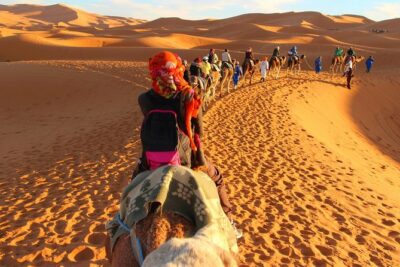
3-Day Tour to Merzouga Erg Chebbi with Food & Camel Trek
Read our review →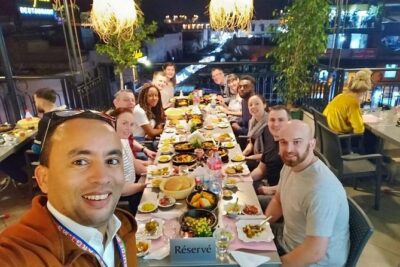
Authentic Moroccan Food Tour in Marrakech with Dinner
Read our review →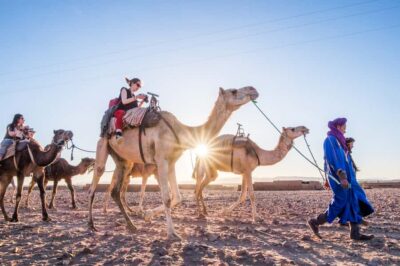
Browse the lists this tour appears in