
Reviewed · WORKSHOPS
Arabic Calligraphy Workshop Marrakech
A pen can feel like magic. In Marrakech, this Arabic Calligraphy Workshop turns a few strokes into something personal, with hands-on practice and a teacher who guides your grip from start to finish. I love that you leave with your own name calligraphed and with extra bookmarks featuring expressions you choose, not just a worksheet to keep. The main drawback is simple: 2 hours is short, so you will learn the basics, not become a master calligrapher overnight.
You meet at the Marrakech Museum at Place Ben Youssef and the class starts at 3:00 pm, right in the middle of the action but close to public transport. The group stays small, up to 10 travelers, and the vibe is family-friendly, with sessions that work for both adults and kids.
In This Review
- Key Highlights You Should Know
- Pen and Paper Therapy at Marrakech Museum
- The 2-Hour Structure, What You Can Expect to Do
- Tools of the Trade, Bamboo Qalam and Practical Pen Control
- From Circles and Curves to Letters That Make Sense
- Composition and Styles, Then Your Own Piece Comes Together
- Your Bookmarks, Expressions You Can Choose
- Tea, Pace, and What Makes the Class Feel Welcoming
- Price and Value Check for $63.88 per Person
- Best Time to Go, and How the 3 pm Start Fits Marrakech
- Who This Workshop Is Best For
- Small-Group Expectations, Maximum 10 Travelers
- Practical Tips That Make the Workshop Easier
- Should You Book Arabic Calligraphy in Marrakech?
Key Highlights You Should Know
- Small group, more attention: up to 10 people, so you can actually get corrections on your pen technique.
- Your name calligraphed: you get a personalized result as the workshop’s centerpiece.
- Bamboo Qalam practice: you learn how to hold and use the traditional pen style for letter shapes.
- You choose bookmark phrases: happiness, love, life is beautiful, wisdom, and more options are offered.
- A clear step-by-step path: tools, basic forms, letters, then composition and styles.
- Often a relaxed, welcoming setting: tea and small treats show up in the experience flow.
Pen and Paper Therapy at Marrakech Museum
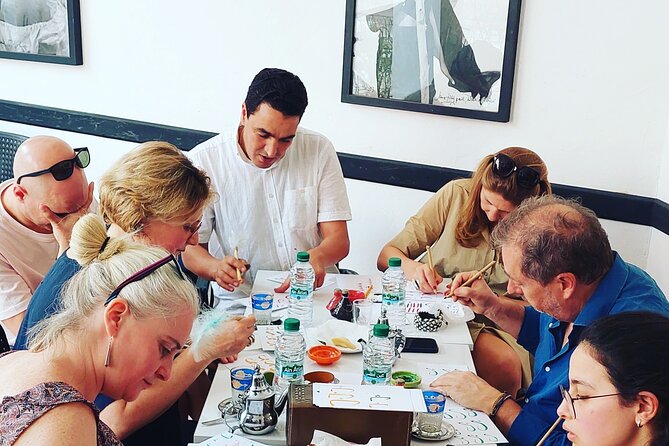
This workshop is a great fit if you want more than photos while you are in Marrakech. Instead of chasing another viewpoint, you get a focused, calming creative session where your hand learns a new language. Arabic calligraphy can look complicated from a distance, but the way this workshop is structured makes it feel doable, step by step.
The location also helps. The meeting point is the Marrakech Museum at Place Ben Youssef, and that part matters when you are planning your day. It is central, easy to reach, and it makes the class feel like an “on-the-way” activity rather than a big logistics project. The workshop ends back at the meeting point, so you do not need to plan an extra transfer afterward.
Also, the teacher and team are consistently described as friendly and patient, with names like ZIZI ESSAID (listed provider), plus Houcine, Essaid, Said, and Hussein showing up in instructor descriptions. That variety is a good sign. It suggests you are working with artists who teach well, even when the group composition changes.
Other Marrakech days to consider
- Marrakech: Agafay Desert Sunset, Camel Ride, and Dinner Show
★ 4.6 · 35,119 reviews - From Marrakech: Ouzoud Waterfalls Guided Hike and Boat Trip
★ 4.7 · 33,630 reviews - Marrakech: Agafay Desert Quad & Camel Rides with Dinner Show
★ 4.8 · 27,382 reviews
The 2-Hour Structure, What You Can Expect to Do
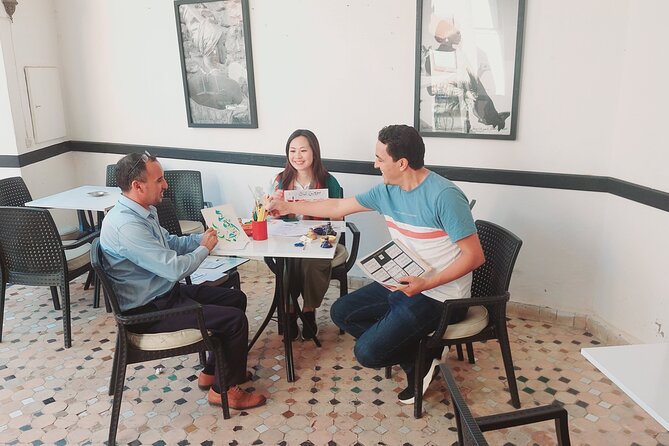
The workshop runs about 2 hours, and that time is used intentionally. You are not just hearing about Arabic calligraphy. You are actively doing it, with practice that dominates the class. Here is the typical flow you can expect.
First comes an introduction to Arabic calligraphy’s history and meaning. This is not meant to be a lecture marathon. It sets the tone for why calligraphy matters in Arabic culture, and it helps your letters feel intentional, not random.
Next you get tool orientation. You learn what you will use, including pens and ink. In the reviews, people specifically call out learning with a bamboo Qalam pen, which is the kind of detail that often separates a real craft lesson from a casual demo.
Then the lesson moves through fundamentals: basic forms like circles, straight lines, and curves. This part is important. Arabic script is built on control, and control begins with simple shapes. If you can shape a curve consistently, your letters will look cleaner fast.
After that you learn how to form Arabic letters using the appropriate techniques. Some participants even mention that they had studied Arabic before, but only realized proper pen holding during the workshop. That is a big clue about how hands-on this experience is.
Finally, you spend time on composition and styles, then practice again. This is where your learning stops being abstract. Your page begins to look like a real calligraphy piece.
The class ends where it started. So if you want to pair it with dinner, it is easy to keep the rest of your evening simple.
Tools of the Trade, Bamboo Qalam and Practical Pen Control
Calligraphy is a craft of tension, angle, and pressure. If you have never used a traditional pen style, the early minutes can feel like a new sport. That is exactly why this workshop’s tool focus is a win.
You are introduced to the basic tools, including pens and ink, and you learn how to use them correctly. One standout theme in feedback is that the instruction helps you hold the pen properly. Even people who had studied Arabic for years said they picked up a crucial technique right here.
You should also expect the lesson to make your tools feel less mysterious. Bamboo Qalam practice is not just about drawing letters. It is about learning how to guide the pen so letter forms come out with the right character. The teacher does not treat this as a one-size-fits-all thing. Corrections matter, especially when you are new.
From Circles and Curves to Letters That Make Sense
A lot of calligraphy workshops skip the foundation. They jump to letters and hope you catch on. This one does the opposite. It starts with circles, straight lines, and curves so your hand learns the movements that letters are made from.
Then you transition into forming Arabic letters, with technique guiding your stroke order and shapes. Some participants note they also learned the letters’ sounds. If you care about both script and meaning, that adds extra value, because it connects the visual art to the language.
What I like about this approach for your planning is that it reduces frustration. When you know the building blocks, your mistakes become part of the process instead of signs you are bad at this. For adults, that means you feel productive quickly. For kids, it usually means they stay engaged because they can see progress in small steps.
Within striking distance:
- Marrakech: Agafay Desert Quad Biking Tour with Dinner-Show
★ 4.8 · 16,569 reviews - Marrakech: Atlas Mountains, Ourika Valley, Waterfall & Lunch
★ 4.8 · 15,834 reviews - From Marrakech: 3-Day Merzouga and Sahara Desert Tour
★ 4.9 · 15,308 reviews - Berber villages : Atlas Mountains Day Hike from Marrakech
★ 5.0 · 14,007 reviews
Composition and Styles, Then Your Own Piece Comes Together
Once you understand basic strokes and letter forms, you move into composition and styles. That is where calligraphy stops being copywork and becomes design.
Composition is basically how letters are arranged, spaced, and balanced on the page. Styles are the different looks the script can take, depending on how the strokes are treated. Even if you are new, seeing multiple styles helps you understand that Arabic calligraphy is not one single font-like thing. It is a flexible art.
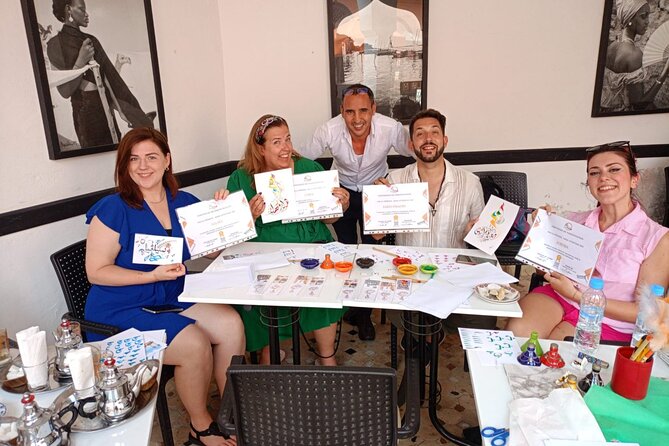
Then the workshop turns practical in a meaningful way: your name is beautifully calligraphed by the master. This is the centerpiece you can take home and actually use as a keepsake.
If you are the kind of person who loves souvenirs but hates generic ones, this is a better category. It is not just something printed or mass-made. It is personalized and tied to your learning during the class.
Your Bookmarks, Expressions You Can Choose
There is a second take-home that makes this feel more like a creative experience than a craft session you rush through. You leave with bookmarks featuring expressions you choose, such as happiness, life is beautiful, live your life, wisdom, fidelity, love, dream, or other options.
That matters more than it sounds. Bookmarks are the kind of item you use at home, not just a decoration. They also let you choose the message. If you want the workshop to feel personal in a gentle, emotional way, this is a simple but thoughtful touch.
It also gives you something to do during the creative process besides just copying. You think about what you want to represent, and that makes your final piece feel more meaningful.
Tea, Pace, and What Makes the Class Feel Welcoming
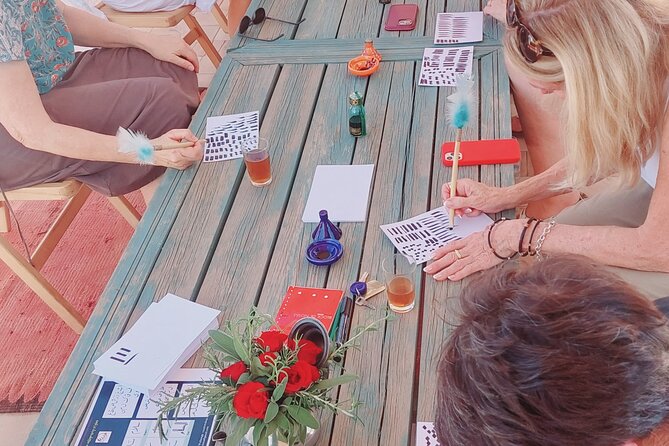
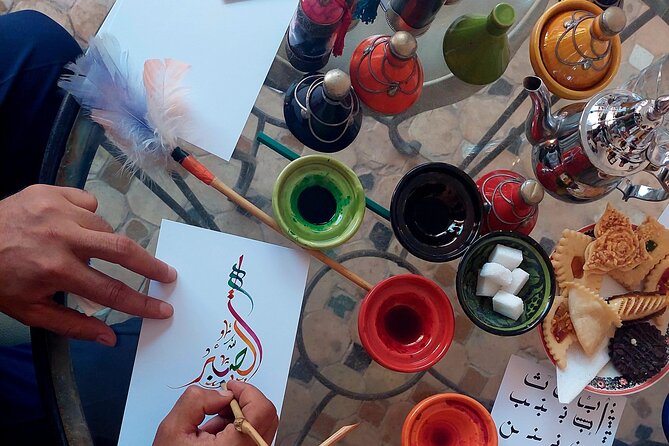
In at least one review, the workshop setting is described as cozy and includes mint tea and pastelitos. That is not just hospitality for hospitality’s sake. A shared drink helps you slow down, settle in, and focus your attention on the strokes.
The pace also matters. The experience is led by an artist-teacher team, with consistent notes about being enthusiastic, encouraging, and patient. That is especially important for people who feel self-conscious about drawing or writing. You will likely get feedback on technique, not judgment on your artistic talent.
Another practical plus: the workshop can be very personalized when the group is small. One review mentions the class being just two people, which enabled extensive practice and personalized attention. With a max of 10 travelers, you can expect at least a decent chance of help if you ask.
Price and Value Check for $63.88 per Person
At $63.88 per person, this workshop is priced like a quality small-group cultural activity, not like a free add-on. Is it worth it? In my view, it is a solid value if you care about learning technique and taking something home that feels personal.
Here is why the value holds up:
- You get hands-on instruction through multiple stages: tools, forms, letters, and composition.
- You leave with a personal calligraphy result: your name written by the master.
- You also leave with bookmark keepsakes in phrases you choose.
- The group is small, up to 10 travelers, which increases your odds of getting individual guidance.
- The class runs about 2 hours, which is long enough to actually practice, but short enough to fit into a Marrakech schedule.
If you are mainly looking for a passive cultural show, you might feel like you spent money to sit and watch. But if you enjoy learning a skill, even a basic version of it, the pricing makes sense.
Also, this activity is booked fairly ahead on average, at about 38 days. That is a hint it is popular, so you should not wait until the last minute if your calendar is tight.
Best Time to Go, and How the 3 pm Start Fits Marrakech
Starting at 3:00 pm is a smart choice for a lot of Marrakech days. Late afternoon is often when the city’s energy shifts, and you can slip a creative activity between sightseeing blocks.
Because you meet at the museum and the class returns you there, you can build your day around it:
- Morning and early afternoon for medina wandering and shopping
- Late day for this workshop
- Evening for dinner or a stroll afterward
If you prefer to keep your mornings free, the 3 pm timing is a practical win.
Who This Workshop Is Best For
This is not a one-type activity. It works for different travelers because the teaching is structured and the output is personal.
You will likely enjoy it if you:
- Want a hands-on cultural experience, not just observation
- Like taking home something created by you, not bought off a shelf
- Enjoy calligraphy as an art, even if you know nothing about Arabic script
- Travel with kids, since the experience is described as working well for both adults and children
- Have studied Arabic before and want to fix technique like proper pen holding
It might not be the best match if:
- You only want a quick photo stop
- You hate slower, skill-based activities
- You are looking for a full multi-session course that turns into long-term practice (this is still about basics in two hours)
Small-Group Expectations, Maximum 10 Travelers
The workshop is capped at 10 travelers, which is a big deal for a calligraphy class. In a larger group, you often spend your time watching while the teacher moves on to the next person. Here, the small size improves the odds that your questions get answered and your hand gets corrected.
You also might appreciate that most travelers can participate. The experience is described as suitable for different ages, and service animals are allowed, so the basic comfort level is there for more people.
If you have a mobility or accessibility concern, the data you have here does not list details. In that case, it is worth checking with the provider before booking, especially if you need any specific accommodations at the meeting point.
Practical Tips That Make the Workshop Easier
A calligraphy workshop goes best when you are ready to focus for a short stretch of time. You do not need special experience, but you can show up with the mindset that you are learning a physical skill.
A few practical pointers based on how this class is taught:
- Choose your bookmark phrase thoughtfully. If you care about meaning, this small decision becomes part of the result.
- Expect a pen-control learning curve. That is normal. The early strokes matter more than how fancy your final page looks.
- Ask questions when you get technique correction. People praise the patience of the teacher, which suggests questions are welcome.
- Use comfortable clothing. Ink and paper crafts can be messy in general, even if the workshop itself does not say anything specific about cleanup.
Should You Book Arabic Calligraphy in Marrakech?
I think you should book this workshop if you want a Marrakech activity that is creative, personal, and not dependent on luck or weather. The combination of small-group teaching, hands-on practice, and a real take-home result like your name calligraphed makes it feel worth your time.
You might skip it only if you want something purely scenic or you are expecting a long course. Two hours is enough to learn the basics, enough to feel proud of what you make, but it will not replace ongoing practice.
If you are on the fence, treat it like a high-quality souvenir plus a skill lesson. For many people, that mix is exactly what they want from a culture trip.
Latest additions near Marrakech
- ATV Marrakech Quad Bike Tour Adventure★ 4.5 · 16 reviews
- AGAFAY Desert: Quad biking, Camel Ride, Dinner and Show.★ 5.0 · 72 reviews
- Agafay Desert Package: Quad Bike, Camel Ride, Dinner show★ 5.0 · 115 reviews
- Sunset Camel Ride in the AGAFAY DESERT trip from Marrakech★ 5.0 · 24 reviews
- Atlas Mountains Day Trek★ 4.5 · 13 reviews
- A wonderful day in Essaouira from Marrakech★ 5.0 · 11 reviews
- Best Marrakech to Merzouga 3 D 2N Sahara Desert Tour Adventure★ 5.0 · 17 reviews
- Marrakech Highlights : Palaces, Medina & Souks with Local Expert★ 5.0 · 31 reviews
Workshops, compared.
Traditional Moroccan Cooking Class & Market Visit
Read our review →
Moroccan Dishes Cooking Class with a Local Chef
Read our review →
Moroccan Cooking Class & Marrakech Market Visit with Chef Khmisa
Read our review →
Half-Day Cooking Class with Local Chef Laila in Marrakech
Read our review →
Browse the lists this tour appears in