
Reviewed · ESSAOUIRA COAST DAY TRIPS
Essaouira: Traditional Family Style Moroccan Cooking Class
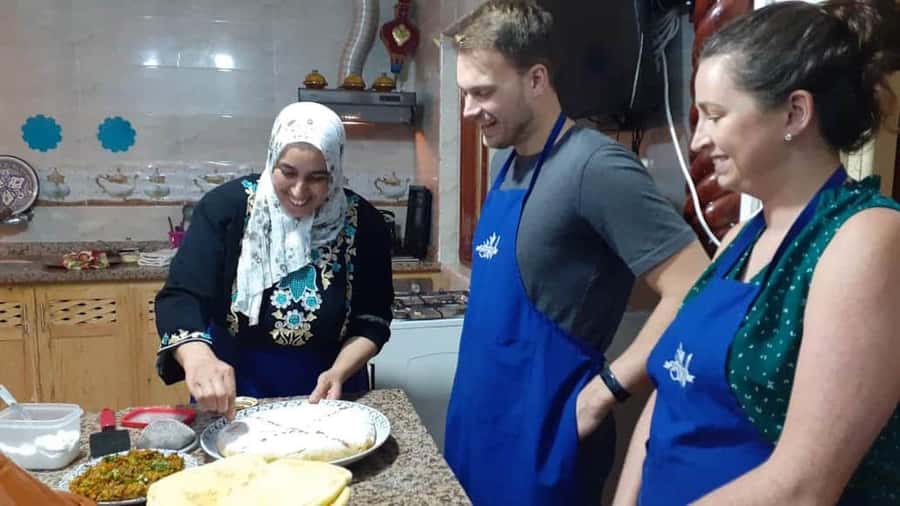
Tagine time in a real Essaouira household. This 4-hour class pairs a guided market shopping walk with cooking in a family kitchen run by Hussein and his wife Khadija. I like how you choose the menu with their help, and you get real technique, not just plate assembly.
The best part is the home-cooked hospitality angle. You are welcomed in, you cook together, and then you sit down to a full meal made from ingredients you helped pick. One drawback to consider, based on how these sessions can run, is that hands-on cooking time can vary, especially if the menu needs more prep than you expect.
In This Review
- Key things to know before you go
- A cooking class that feels like you are part of the evening
- How the 6 PM market start turns shopping into part of the class
- Choosing your menu, then shopping with a purpose
- Inside the family home with Hussein and Khadija
- The cooking workshop: hands-on lessons that actually matter
- The 3-course meal, Moroccan tea, and the full dinner payoff
- Vegetarian-friendly planning, and the simple food rules
- English instruction, what the group experience feels like, and how to get the most out of it
- Price and value: what $72 is buying you in the real world
- Who should book this cooking class
- Practical tips before you go to Pharmacie Bouhaira
- Should you book this Essaouira family cooking class?
- FAQ
- What is included in the cooking class?
- How long is the experience?
- Where do I meet the group?
- Is the class taught in English?
- Is the cooking class vegetarian friendly?
- Can I bring alcohol?
- Are starting times fixed?
- Is the experience wheelchair accessible?
- What is the cancellation policy?
- Can I reserve now and pay later?
Key things to know before you go
- Market visit and ingredient shopping: You stroll a local produce market and buy fresh items for your menu.
- A family kitchen setup: Cooking happens in a Moroccan home, with the host and chef working alongside you.
- English instruction: The instructor speaks English, and the pace is friendly for non-Arabic speakers.
- Full 3-course menu: You will cook appetizers and main dishes, then finish with dessert, plus Moroccan tea.
- Tagine skills: Many people come for the chance to learn a proper tagine approach.
- Dietary fit: It is vegetarian friendly, and you can share preferences during planning.
A cooking class that feels like you are part of the evening
Essaouira has a way of slowing things down. This class uses that mood. Instead of a staged restaurant lesson, you go through the real steps of Moroccan cooking, from ingredient picking to serving a meal in a family home.
You start with guidance on what to buy and why it matters. Then you get into the kitchen where Moroccan cooks work with rhythm, not timers. You are learning technique, but you are also learning how a Moroccan dinner actually happens, with conversation and a kitchen flow that does not stop because you are taking notes.
Two names matter here: Hussein and Khadija. If you want the experience to feel personal, this is built for that. They tend to welcome you like family, explain what you are doing as you do it, and keep the atmosphere warm and human.
Possible downside, again: if you expect every minute to be knife work and stirring, you might feel a little more observer than you planned. The tradeoff is that you get to eat an enormous, carefully made 3-course meal afterward, and you are less likely to end up with a half-baked lesson that never quite turns into dinner.
More Cooking Classes in Essaouira
- l’Atelier – Moroccan Cooking Workshop in Essaouira
★ 5.0 · 110 reviews - Traditional Moroccan Cooking Class
★ 5.0 · 81 reviews - Traditional Moroccan and Berber cooking classes
★ 5.0 · 40 reviews
How the 6 PM market start turns shopping into part of the class
You meet at Pharmacie Bouhaira with a 6 PM departure, and you should arrive about 15 minutes early. Once you are with the group, the first big phase is the market walk.
This is not just a photo stop. You go into a local neighborhood market where you learn to think about ingredients like a cook. The host asks about your preferences, then helps steer you toward dishes that fit what you like and what the kitchen can make well that evening.
What you will notice quickly:
- The ingredients feel fresh in a way store shelves rarely do.
- You start asking smarter questions, because you are buying for a specific menu, not browsing for curiosity.
- The buying process gives you context for seasoning, textures, and cooking times.
The practical value is huge. When you know what you selected and why, the cooking afterward makes more sense. When you taste at the end, it also feels connected to your choices, not like you just followed steps from memory.
Also, since this is an English-led experience, you can ask questions without feeling stuck. If you care about vegetarian options, this is the moment to bring it up. The class is vegetarian friendly, and the host will plan accordingly.
Choosing your menu, then shopping with a purpose
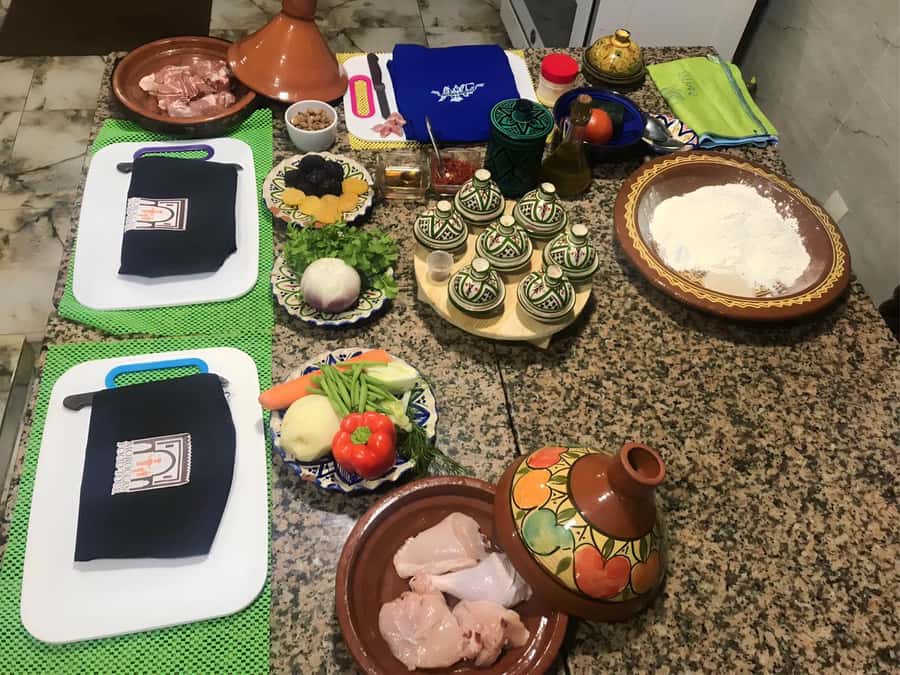
Before you cook, you are guided through the menu decision. The structure is simple but effective: the host asks what you want to eat, then recommends a menu. You decide what you will cook, and then the group shops for the ingredients.
That decision step is why this feels different from classes where everyone cooks the same set dish. Here, you have a say. If you love the idea of a tagine, you can lean into it. If you want something gentler or more vegetable-forward, you can steer the plan that way.
A smart tip: when you are asked about preferences, answer honestly. If you know you dislike certain spices or textures, say so early. The kitchen will be more efficient when you choose a menu that matches your palate.
And because you are shopping, you learn the shopping logic too. Moroccan cooking often depends on balance, not just heat. Buying fresh ingredients helps your final flavors taste more alive, even if your spice skills are new.
Inside the family home with Hussein and Khadija
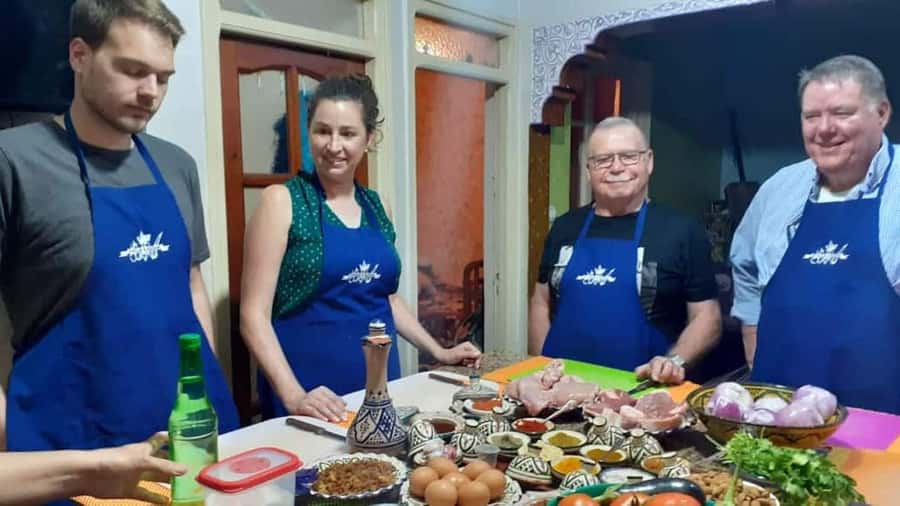
After market shopping, you head to the family house. This is where the evening becomes social. You get a warm welcome, you settle in, and the kitchen team starts working with you.
The experience is interactive. You join the chef’s brigade, which means you are not just watching from the doorway. You will learn techniques and help prepare components for your 3-course menu. Expect a lively rhythm. Kitchens like this move faster than you think, then slow down for the steps that matter most, like sauces, simmering, and finishing.
One of the most praised parts is the personal attention. Hussein and Khadija are not distant instructors. They explain what they are doing, and they talk with you. You might swap stories about Moroccan life and how food fits into daily routines, and you might even connect over music and evening conversation if that is how the night goes.
This is also where the class can surprise you. Even if you think you will only cook one main dish, the meal you eat afterward can end up being bigger than expected because the 3-course format has enough variety to keep you busy and satisfied.
More Essaouira coast days:
- From Marrakech: Essaouira & Atlantic Coast Full-Day Trip
★ 4.4 · 1,100 reviews - Essaouira: Surf Lessons
★ 4.9 · 412 reviews - Essaouira Sand Dunes: Half Day Quad Bike Tour
★ 5.0 · 313 reviews - Essaouira Activities: Discover Essaouira by Quad
★ 5.0 · 274 reviews
The cooking workshop: hands-on lessons that actually matter
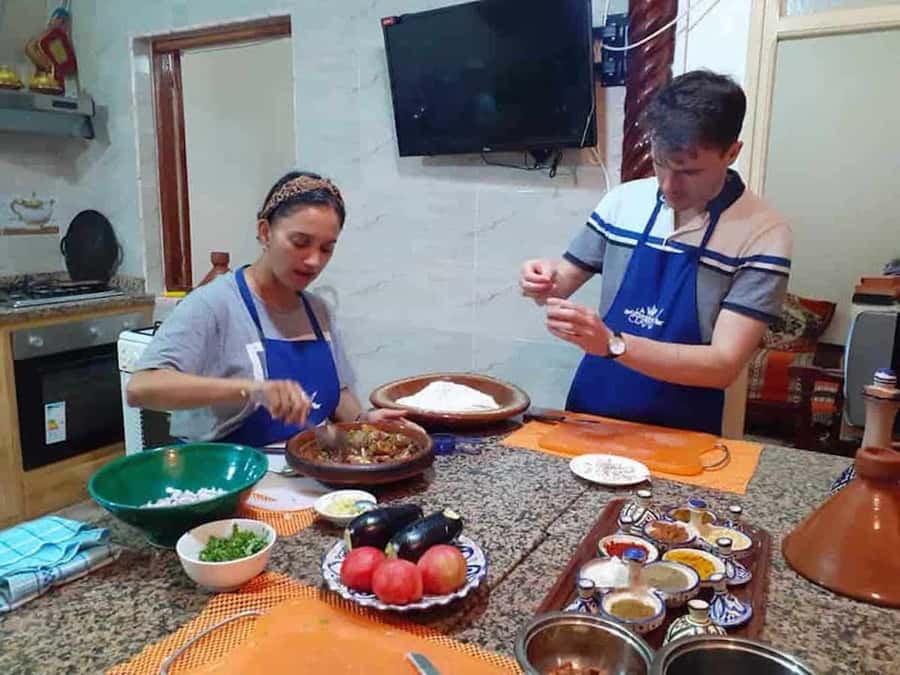
The cooking portion is the heart of the evening. You are creating a full 3 course menu, and the class is designed so you leave with skills you can reproduce at home, not just memories of good food.
From the information you are given, you can expect a structure like this:
- You prep ingredients for the dishes you picked.
- You learn key techniques used in Moroccan home cooking.
- You cook together in the family kitchen while the chef supervises.
- You finish by serving and eating what you helped make.
Tagine cooking is a big highlight. Even if the class adapts the exact menu each night, the tagine focus comes up often. The value is not just learning to name the dish. It is learning how the flavors build, how the pot works, and how patience changes the outcome.
One small expectation check: some guests want more nonstop hands-on action. If you fall into that camp, you may feel the pace includes steps where the chef leads while you assist. The upside is that the end result is very complete, and you are not stuck eating a meal that tastes rushed.
The 3-course meal, Moroccan tea, and the full dinner payoff
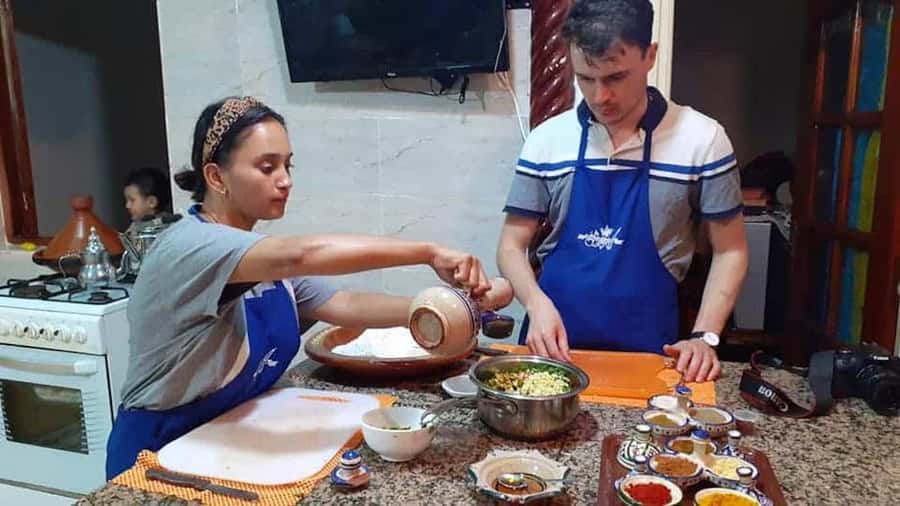
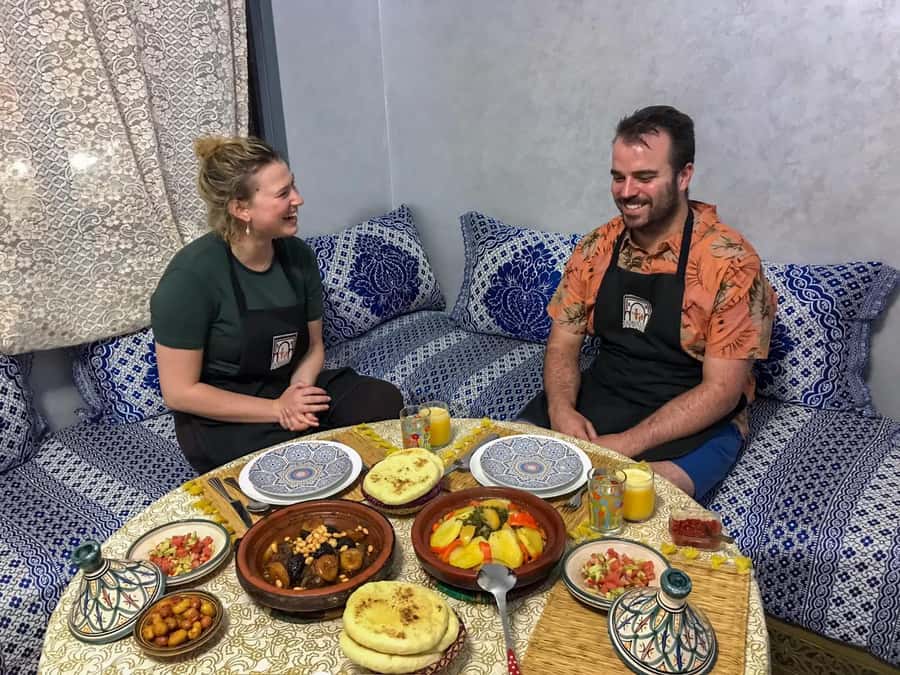
After cooking, you sit down to the menu you created, served with Moroccan hospitality. The class includes moroccan tea, and the meal is built as a proper dinner, with multiple courses instead of a quick sampler.
This is where value shows up. A lot of cooking classes stop at the cooking. This one keeps the story going until you eat the work you did. You get to taste what the market shopping and kitchen choices created, and you get that satisfaction that is hard to fake.
You will also have time to enjoy the family atmosphere. That matters because Moroccan cooking is social. The evening is not only about food mechanics. It is about the human side of how people host, share, and talk while cooking.
If you like to take something home, keep an eye out for recipe sharing. The hosts are known for helping guests with recipes and tips afterward, especially when someone finds a dish they really love.
Vegetarian-friendly planning, and the simple food rules
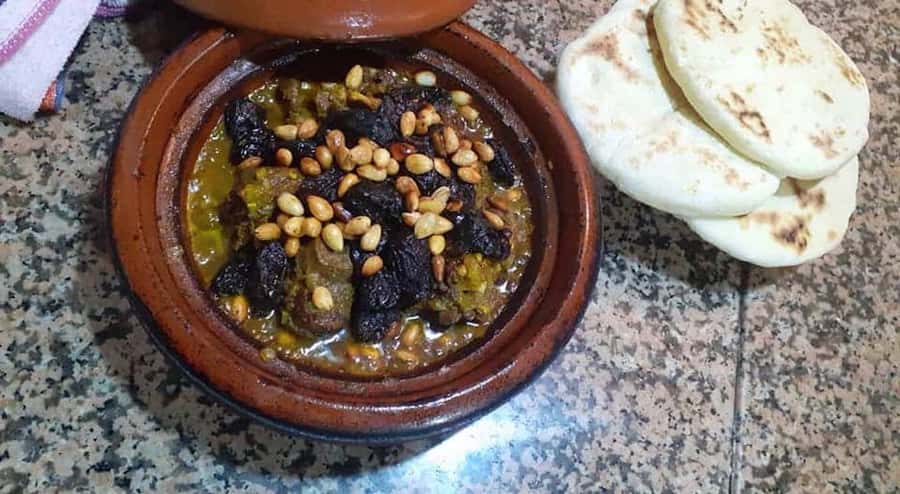
This class is vegetarian friendly, which is a big deal if you travel with dietary limits. The menu planning happens early, when the host asks about preferences and recommends options.
Practical advice:
- Tell them your vegetarian needs clearly at the start.
- Ask about how vegetarian dishes are flavored, so you know what to expect.
- If you avoid any specific ingredients, say that too. The class is built around choosing and shopping ingredients that fit the menu.
One other rule is straightforward: alcohol and drugs are not allowed. That keeps the focus on food and the home setting. If you are used to pairing food with wine, plan to enjoy the flavors on their own and let Moroccan tea handle the finale.
English instruction, what the group experience feels like, and how to get the most out of it
The instructor is English-speaking, which helps you connect the dots. You are not just copying hand movements. You can ask why something works, and you can understand what the chef wants you to do next.
How to get the most from the group format:
- When you arrive, pay attention to the menu choices and ask questions early.
- During the market phase, ask about ingredients you can identify and those you cannot.
- In the kitchen, volunteer for the steps that match your comfort level. It is your chance to turn watching into doing.
Since the class is also about conversation, be ready to talk. Food people love food talk. If you enjoy culture through everyday life, this will land well. If you want a quiet, strictly instructional vibe, you might need a bit more patience with the social flow.
Price and value: what $72 is buying you in the real world
The price is $72 per person for a 4-hour experience. For cooking classes, the key question is what you get at the end, not what the lesson claims on paper.
Here, the cost comes with several value anchors:
- You get a guided market tour and ingredient shopping as part of the experience.
- You cook a full 3-course menu in a home kitchen.
- You get Moroccan tea as part of the evening.
- You work with a real family setup under an English-speaking instructor.
Also, you are not paying just for food samples. You are paying for instruction, guidance on ingredients, and the chance to eat what you made. That is why this can feel like good value compared with classes that end with a small tasting portion and no real dinner.
Is it overpriced for everyone? Possibly, if you measure value only by how much cooking time you personally get. But if you measure value by the full package, the warm welcome, and the dinner payoff, it tends to make more sense.
Who should book this cooking class
This experience fits best if you want:
- A hands-on Moroccan dinner in a real home setting.
- A market-based start where you learn about ingredients.
- A friendly, conversational atmosphere with Hussein and Khadija.
- A vegetarian-friendly meal planning option.
It is also a nice choice for people who like souvenirs that are actually useful. If you love cooking, this can push you to buy a tagine after you return home, because the lesson sticks when you have cooked something in the pot yourself.
If you are traveling with kids, it can work well too. One of the strengths is that the meal feels abundant and the hosts can make the process approachable for younger guests.
Practical tips before you go to Pharmacie Bouhaira
A few small things will make this smoother:
- Arrive about 15 minutes early at Pharmacie Bouhaira for the 6 PM departure.
- Wear something you can cook in. Moroccan kitchens can get warm, and you will be working with ingredients.
- Bring curiosity, not just appetite. The market walk and menu planning part rewards questions.
- Plan for a full meal afterward. The 3-course format is not a light snack.
If you have mobility needs, the experience is wheelchair accessible, which is a relief. If you want extra clarity on how movements inside the home kitchen work, ask ahead of time through the provider.
Should you book this Essaouira family cooking class?
I think you should book it if your priority is to eat the way locals do, with ingredients you select and techniques you learn in a real home. The combination of market shopping, cooking guidance, and a full dinner with Moroccan tea is what makes it satisfying. The names Hussein and Khadija also matter because the hosts drive the warmth of the night.
I would think twice if you mainly want a strict, nonstop cooking drill where you do every step from start to finish. This class is interactive, but it can include lead-and-assist moments depending on the menu and the kitchen flow.
If you want an evening that connects Essaouira flavors to everyday Moroccan hospitality, this one is a strong bet.
FAQ
What is included in the cooking class?
You get Moroccan tea and a full 3-course menu made from what you cook during the session.
How long is the experience?
The class lasts 4 hours.
Where do I meet the group?
You meet at Pharmacie Bouhaira, with a departure at 6 PM. Arrive about 15 minutes early.
Is the class taught in English?
Yes. The instructor is English-speaking.
Is the cooking class vegetarian friendly?
Yes. It is listed as vegetarian friendly.
Can I bring alcohol?
No. Alcohol is not allowed.
Are starting times fixed?
You meet at 6 PM for the departure, and the schedule depends on availability. You are told to check availability for starting times.
Is the experience wheelchair accessible?
Yes. It is wheelchair accessible.
What is the cancellation policy?
You can cancel up to 24 hours in advance for a full refund.
Can I reserve now and pay later?
Yes. It offers reserve now and pay later, so you can book your spot without paying today.
Cooking Classes in Essaouira
- Essaouira Cooking Class
★ 5.0 · 26 reviews - Berber Cooking Class at a Farm in the Countryside & shopping at a rural Souk.
★ 5.0 · 18 reviews - Essaouira : Moroccan Cooking Workshop
★ 4.9 · 10 reviews - Marrakech: Moroccan Cooking Class with Pickup
★ 4.6 · 1,862 reviews
Latest additions near Essaouira
- Group Kitesurfing lesson with a Local in Essaouira Morocco★ 5.0 · 175 reviews
- Private Kitesurf Lesson in Essaouira Morocco★ 5.0 · 38 reviews
- Your Own Morocco Essaouira Walking Tour★ 5.0 · 13 reviews
- Essaouira Beach Horse Rides &Treks for All Levels★ 5.0 · 13 reviews
- Individual Lessons of Kite Surf in Essaouira★ 5.0 · 113 reviews
- How To Be A Real Moroccan Chef★ 5.0 · 101 reviews
- Essaouira Surf Lesson: Energize Your Ride★ 5.0 · 11 reviews
- Surf Rental★ 5.0 · 31 reviews
Essaouira Coast Day Trips, compared.




From Marrakech To Essaouira Mogador Full Day Trip | Small-group
Read our review →


Browse the lists this tour appears in