
Reviewed · WORKSHOPS
Marrakech: Pottery Workshop
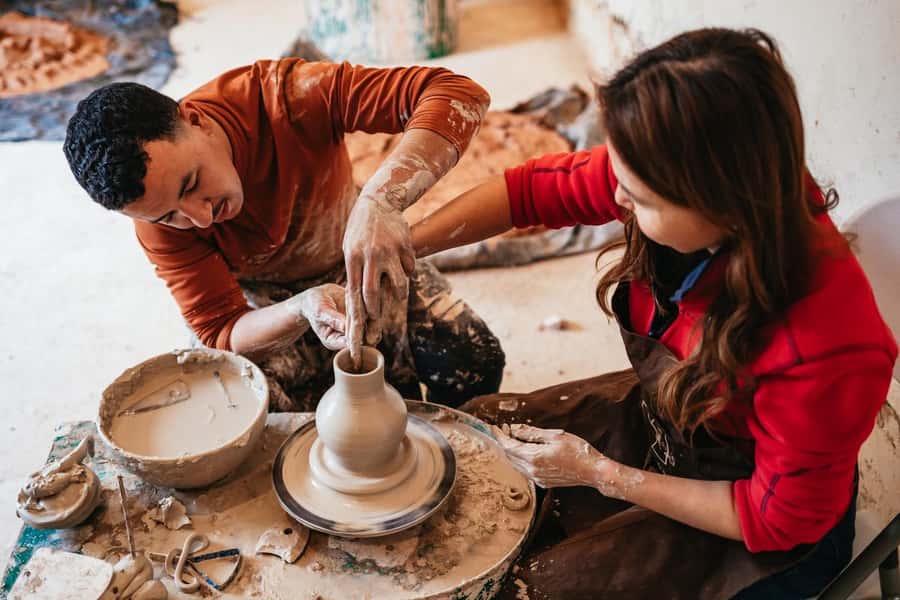
Clay has a way of calming Marrakech. In this hands-on pottery workshop near Jamaa el-Fna, you learn how Moroccan artisans prepare clay and shape pieces using the potter’s wheel and molding, plus you’ll see firing and glazing up close. I also love the midway herbal tea break and the Moroccan cakes that keep the momentum going.
The main consideration is the $93 price, which can feel a bit high if you expected a longer session or a bigger set of finished pieces for the time.
In This Review
- Key highlights to look for
- Why This Marrakech Pottery Workshop Feels Like Real Craft
- Meeting at Jamaa el-Fna Medina: Start Point and First-10-Minute Plan
- The Clay Lesson: Wheel Turning and Molding, Step by Step
- Wheel turning on the potter’s wheel
- Molding technique
- What to pay attention to while you work
- From Shaping to Firing and Glazing: Seeing the Workflow
- Tea, Moroccan Pastries, and Photo Time That Makes It Social
- Instructors, Translation, and the Feel of a Private Group
- Price and Value: Is $93 Worth It?
- What You’ll Walk Away With (Besides a Nice Memory)
- Who Should Book This Workshop, and Who Might Skip It
- FAQ
- FAQ
- How long is the Marrakech pottery workshop?
- What price should I expect per person?
- What techniques will I learn during the class?
- Will there be a break and what is included?
- Where do I meet for the activity?
- What languages is instruction available in?
- What should I wear?
- Should You Book the Marrakech Pottery Workshop?
Key highlights to look for
- Wheel turning and molding, two core shaping techniques used in Moroccan pottery
- Watch the process end-to-end, from clay preparation to firing and glazing
- Small, private-group feel, with an experienced craftsman guiding you
- Tea break with herbal tea and Moroccan pastries, right in the middle of class
- Photographing included, so you can capture your workshop moment
Why This Marrakech Pottery Workshop Feels Like Real Craft
Marrakech has plenty of markets and made-for-tourist crafts. This is different because it focuses on the actual work: how clay is prepared, how it’s shaped, and how it’s finished through firing and glazing. You are not just buying something beautiful, you are learning why it becomes beautiful.
I like that the class is built around two techniques that matter in Morocco: turning on the potter’s wheel and molding. That gives you more than one way to understand form, thickness, and symmetry. And because you spend real time observing the workshop’s setup from start to finish, you get the “how it’s organized” part, not only the hands-on moment.
The best part, in my view, is that it stays practical. You’ll work the clay, get guidance from an experienced craftsman, and take a break for tea and pastries while everything is still fresh in your hands.
Other Marrakech days to consider
- Marrakech: Agafay Desert Sunset, Camel Ride, and Dinner Show
★ 4.6 · 35,119 reviews - From Marrakech: Ouzoud Waterfalls Guided Hike and Boat Trip
★ 4.7 · 33,630 reviews - Marrakech: Agafay Desert Quad & Camel Rides with Dinner Show
★ 4.8 · 27,382 reviews
Meeting at Jamaa el-Fna Medina: Start Point and First-10-Minute Plan
Your meeting point is simple, and that matters in the Medina maze. You meet front of the post office in Medina Jamaa el-Fna Square. Plan to arrive a few minutes early, because getting your bearings around the square is half the battle on a first visit.
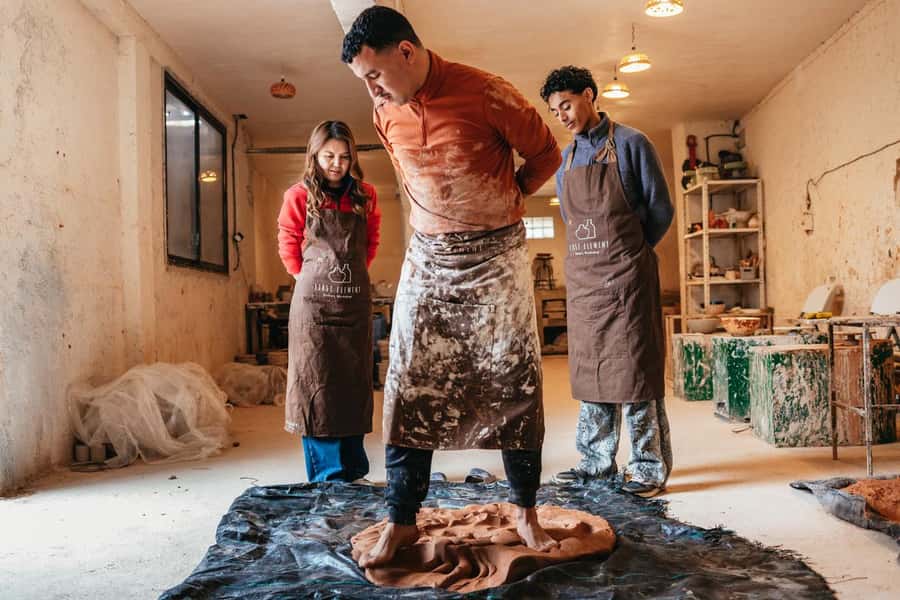
Because the duration is 4 hours, you’ll want to treat this like a proper half-day activity. Before you go, wear comfortable clothes and shoes. The workshop is hands-on, and you should assume you’ll get messy. If your outfit is your “I want to look perfect” outfit, this is not the activity to wear it.
This experience is also listed as a private group, which typically means you spend less time waiting around and more time working directly with the instructor and craftsman. And since the instructor can work in English, French, or Arabic, you won’t feel stuck if you want explanations in your comfort language.
The Clay Lesson: Wheel Turning and Molding, Step by Step
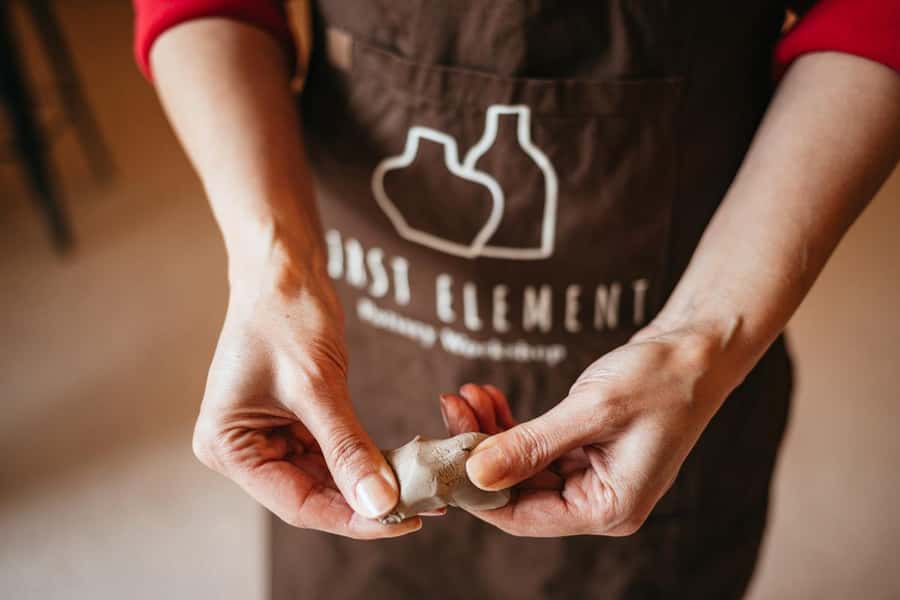
The course is designed to show you the two shaping techniques most practiced in Morocco, and it does not treat them as trivia. It treats them as tools. You’ll begin with the basics of the clay and how it’s prepared so it’s workable on a wheel and moldable by hand.
Wheel turning on the potter’s wheel
The wheel is where you learn the logic of control. The motion is continuous, but your hands are the brakes and steering wheel. With guidance, you’ll learn how the turning technique helps you shape the clay while it stays centered and even.
What I find useful here is that wheel work teaches you about rhythm and pressure. Even if your first try looks rough, the instructor’s corrections help you understand what changes the final shape. You’ll also pick up the idea that thickness matters, not just the final silhouette.
Within striking distance:
- Marrakech: Agafay Desert Quad Biking Tour with Dinner-Show
★ 4.8 · 16,569 reviews - Marrakech: Atlas Mountains, Ourika Valley, Waterfall & Lunch
★ 4.8 · 15,834 reviews - From Marrakech: 3-Day Merzouga and Sahara Desert Tour
★ 4.9 · 15,308 reviews - From Marrakech: Merzouga 3-Day Desert Safari with Food
★ 4.7 · 12,232 reviews
Molding technique
Then you shift to molding, which is a different kind of precision. Where the wheel encourages constant adjustment, molding is about forming the piece with technique and consistency. It’s often a practical method for certain shapes, and understanding it makes the whole process feel more complete.
You’ll be helped throughout, so you are not expected to figure it out alone. The point is to understand what artisans do and why it works.
What to pay attention to while you work
If you want the most out of your time, focus on three things:
- How the clay feels when it is prepared well
- How your hands correct shape in real time
- How the instructor’s method changes your outcome
That attention will make the rest of the workshop, firing and glazing, feel more meaningful.
From Shaping to Firing and Glazing: Seeing the Workflow
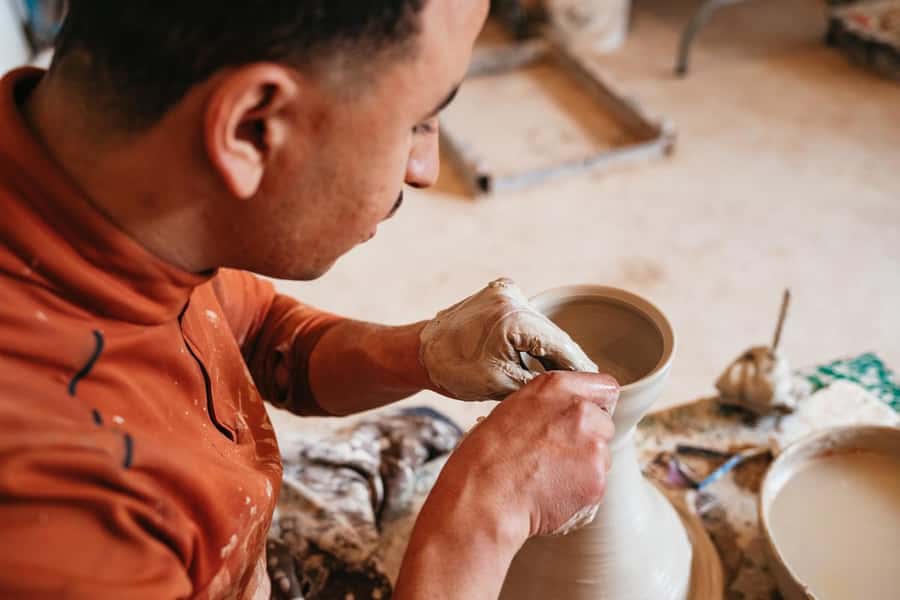
A lot of “craft experiences” stop at the moment your hands touch something. This one keeps going, so you see how the workshop actually functions from start to finish. You’ll observe the process moving through stages, including firing and glazing.
That part is valuable because clay is not like painting where you can always repaint. Firing changes the material, and glazing changes the finish, color, and surface. When you watch those steps in context, you understand why artisans are careful with thickness, drying time, and surface preparation.
It also helps you connect what you did at the shaping stage to what happens later. If your wheel piece was a little uneven, you start to understand how that can affect the final result after firing. If your mold work was consistent, you can see how that consistency might show up once glaze hits the surface.
This end-to-end view is part of why the experience is rated so highly. People seem to appreciate that it’s not just a fun workshop, it is a real look at the production mindset of a pottery shop.
Tea, Moroccan Pastries, and Photo Time That Makes It Social
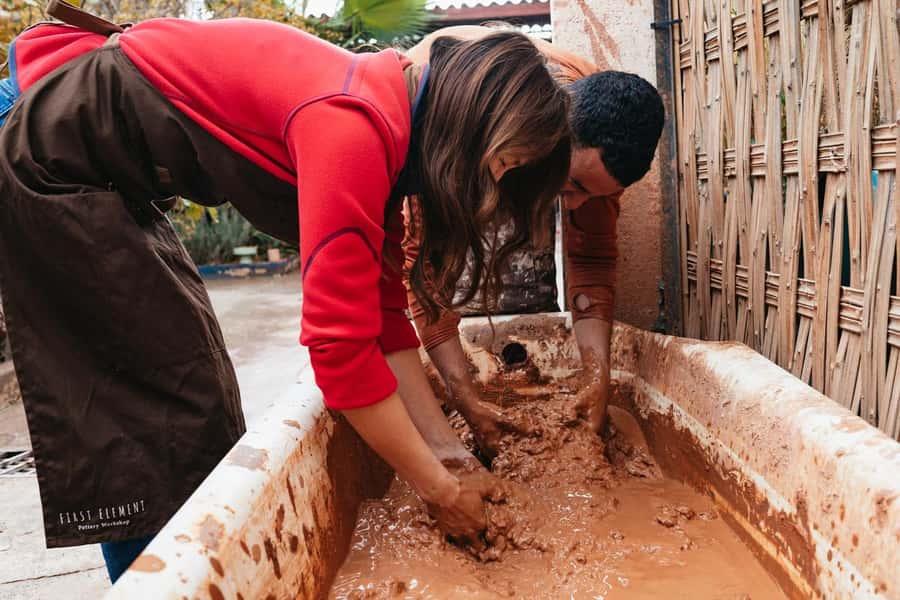
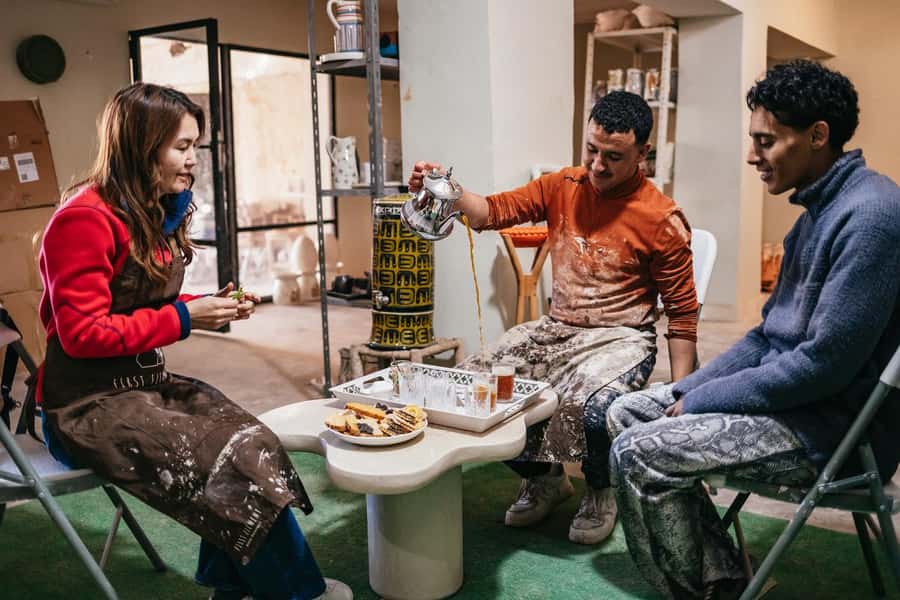
Midway through, you get a tea break. It’s not just a pause, it’s a chance to reset your hands and your attention. You’ll have local herbal tea and Moroccan cakes, which are a great way to experience the workshop environment as it actually happens.
This break also adds something underrated: you can ask questions while you drink, especially if you want to know more about materials or why certain steps come in a particular order. Having an experienced craftsman and instructor in the room makes that conversation practical, not generic.
And yes, photographing is included. In a workshop setting, that means you can capture the process, your workspace moment, and the finished look you see during the session. Just be ready for hands and tools to be everywhere, so take photos in a way that doesn’t slow down the class.
Instructors, Translation, and the Feel of a Private Group
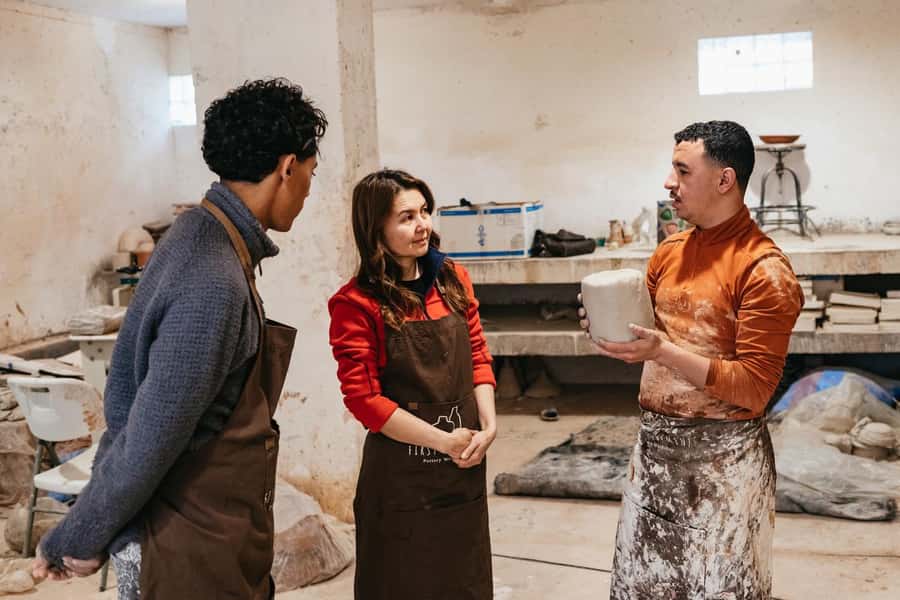
The class is taught with an instructor who works in English, French, and Arabic. That flexibility matters because pottery is tactile and visual, but you still want clarity on what your hands should do next.
In the experience, guides and tutors may include people like Wiam, who is noted for translating into smooth English, and Tariq, who has been praised as both an instructor and an artist. When instruction is clear, you waste less time guessing and more time learning the technique.
Because it’s described as a private group, the atmosphere often feels less rushed than a big bus-group workshop. You are more likely to get corrections tailored to your piece rather than generic advice.
If you are traveling with friends, this is also a good format because you can compare attempts at wheel turning versus molding and see how different approaches look under guidance.
Price and Value: Is $93 Worth It?
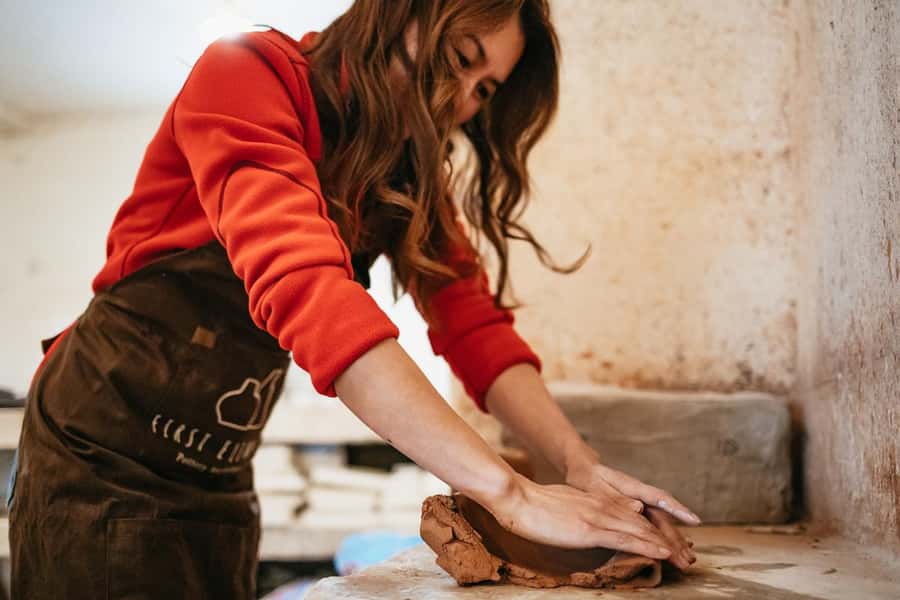
Let’s talk value honestly. The price is $93 per person for a 4-hour experience. Some people feel it is a little pricey for what they receive, and that’s a fair question.
What supports the cost, though, is the structure. You are not just learning one technique. You’re getting two shaping methods, plus you observe clay preparation, firing, and glazing, with a tea break included, along with water, Moroccan pastries, and photo time. The class also includes an experienced craftsman who helps during the work, and the session runs as a private group.
If you compare it to entry-level pottery classes that only cover basic wheel work, this is broader. If your main goal is a quick souvenir photo, it might feel like too much. If your goal is to actually understand the craft process, it tends to feel more worth it.
My practical take: if you care about hands-on skill and process, this price is easier to justify. If you only want a finished product and minimal instruction, shop around for shorter experiences.
What You’ll Walk Away With (Besides a Nice Memory)
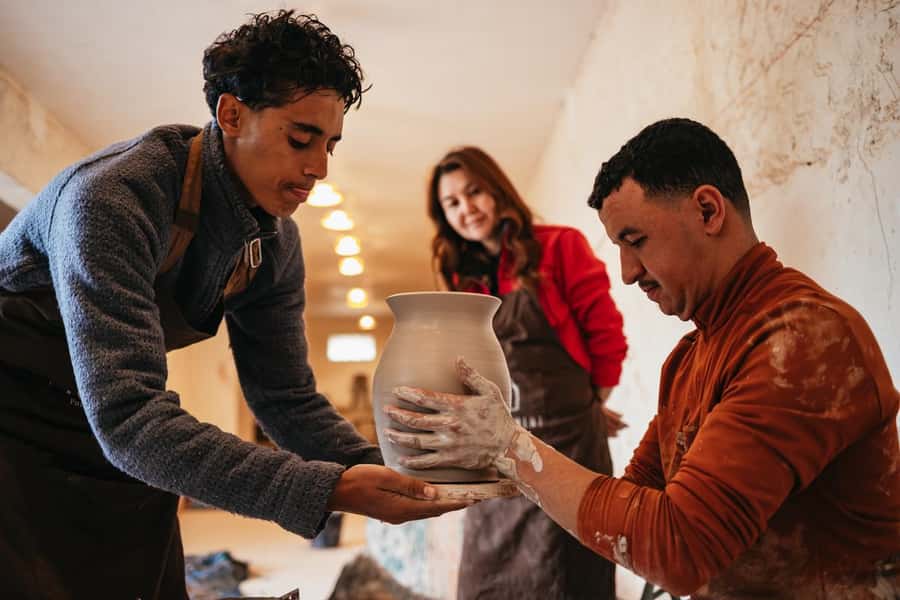
You’ll leave with more than a story about Marrakech. You’ll understand the logic of two techniques artisans use in Morocco, and you’ll know what changes when you shape with a wheel versus molding.
I like that the workshop teaches through the whole workflow. Seeing firing and glazing after you shape gives your brain a complete picture, so your memory sticks. You are also likely to gain confidence talking about pottery as a process, not just as a product.
Also, you’ll know what to look for if you later visit ceramic stalls around the Medina. You can start noticing how certain forms likely began on the wheel, and how others might be easier to produce through molding. That kind of pattern recognition makes your next shopping stop feel smarter.
Who Should Book This Workshop, and Who Might Skip It
This is a great fit if you:
- Want a hands-on activity that’s more about skill than shopping
- Enjoy seeing how something is made, including the firing and glazing stages
- Prefer learning with an instructor in English, French, or Arabic
- Like the idea of a private group with an experienced craftsman
You might consider skipping if:
- You want a longer full-day pottery immersion
- You only care about taking home a highly polished finished item and less about technique
- You are very sensitive to getting messy, since comfortable clothing and shoes are recommended
If you are the type of traveler who likes workshops, this one can be a satisfying change of pace from the usual Medina routine.
FAQ
FAQ
How long is the Marrakech pottery workshop?
The workshop lasts 4 hours.
What price should I expect per person?
The price is listed as $93 per person.
What techniques will I learn during the class?
You’ll learn two shaping techniques used in Morocco: turning on the traditional potter’s wheel and a molding technique.
Will there be a break and what is included?
Yes. A tea break is included, along with Moroccan pastries. Water and photographing are also included.
Where do I meet for the activity?
You meet in front of the post office in Medina Jamaa el-Fna Square.
What languages is instruction available in?
Instruction is available in English, French, and Arabic.
What should I wear?
Wear comfortable clothes and shoes, since this is a hands-on pottery session.
Should You Book the Marrakech Pottery Workshop?
I’d book it if you want a practical, skills-based Marrakech moment. The strongest reasons are the two technique focus (wheel and molding), the end-to-end workflow you see including firing and glazing, and the included tea break with pastries that makes the session feel human, not rushed.
If price is your top concern and you mainly want a quick souvenir, you might feel it’s slightly steep for what you personally end up with. But if you like learning how craft is actually made, this workshop gives you the kind of understanding that follows you after Marrakech.
Latest additions near Marrakech
- Marrakech: Horse-Drawn Carriage Tour★ 4.2 · 59 reviews
- Marrakech Private Medina Tour: Bahia Palace & Ben Youssef★ 4.8 · 48 reviews
- From Marrakech: Private Full-Day Essaouira Tour★ 3.3 · 21 reviews
- Marrakech: Historical Discovery Tour★ 4.1 · 87 reviews
- Palmeraie Marrakech Camel Ride & Quad Bike Package Exprience★ 4.5 · 51 reviews
- Marrakech: Palm Grove Horseback Riding Tour★ 4.6 · 163 reviews
- Day trip to Ourika valley lunch + guid + activité included★ 5.0 · 11 reviews
- Day trip from Marrakech to Ouzoud Waterfalls★ 4.0 · 23 reviews
Workshops, compared.
Traditional Moroccan Cooking Class & Market Visit
Read our review →
Moroccan Dishes Cooking Class with a Local Chef
Read our review →
Moroccan Cooking Class & Marrakech Market Visit with Chef Khmisa
Read our review →
Half-Day Cooking Class with Local Chef Laila in Marrakech
Read our review →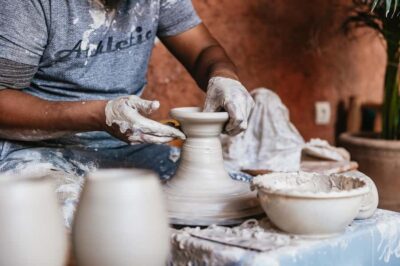
Browse the lists this tour appears in