
Reviewed · MOROCCAN COOKING CLASSES
Marrakesh cooking class with chef Hassan – Local dishes
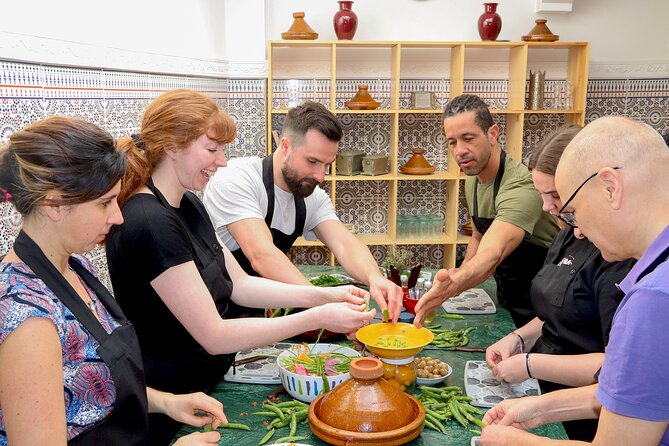
Tagine happens fast once you start with the market. This small-group class with Chef Hassan and Ahmed turns Moroccan cooking into a team activity, starting with a market tour for fresh ingredients and ending with the meal you cooked. I especially love how hands-on it is, and how seriously they teach Moroccan mint tea. One thing to plan for: if you want couscous, you should specify that before the class, because it’s noted as better when requested in advance.
For value, I like the capped group size (maximum 9, sometimes 10), the air-conditioned cooking setup, and the fact that you get recipes shared at the end. A possible drawback is simply scheduling, since it runs about 4 hours and you’ll be cooking during that block, not just watching.
In This Review
- Key things to know before you go
- Market Tour With Ahmed: Where the flavor starts
- Moroccan Mint Tea 101: The social skill you can eat
- The Cooking Rhythm: Why they start with the longest dish
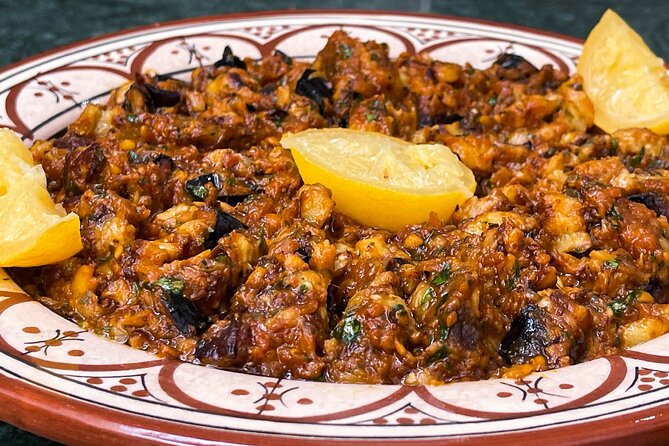
- Four Tagines and Side Dishes: Hands-on Moroccan technique
- Couscous and salads: How to get exactly what you want
- Dietary needs: Flexibility without making you feel like a project
- Group size and participation: Designed for real involvement
- Lunch or dinner: Choose the meal timing that fits your day
- Air-conditioned kitchen, small details that matter
- Eating the results, then taking recipes home
- Spice and tagine shopping at the end: Better value in the right place
- Price and value: Is $34.76 worth it?
- Who should book this class, and who might pass
- Should you book Chef Hassan’s Marrakech cooking class?
- FAQ
- How long is the cooking class?
- Is the class offered for lunch and dinner?
- What is included in the price?
- Do I need private transportation?
- How big is the group?
- Can the class accommodate vegan, vegetarian, or gluten-free diets?
- Are kids allowed?
- Is couscous included?
- Do I get recipes after the class?
- Is there a cancellation deadline for a refund?
Key things to know before you go
Market tour with fresh ingredients: you shop nearby before heading to the cooking space
Mint tea instruction, not guesswork: you learn the steps and the culture behind the drink
Small-group teamwork: max 9 travelers, designed for real participation
Tagines plus sides, with variety: you typically make multiple tagines and side dishes together
Dietary flexibility: vegan, vegetarian, gluten-free options are supported if you ask ahead
Recipe sharing after class: you leave with recipes, not just full stomachs
Market Tour With Ahmed: Where the flavor starts
The class begins at a pharmacy meeting point in Marrakech, and the team texts you once your booking is received so you do not have to hunt around. From there, you take a short walk to a local market near their home. This is not a tourist stop with souvenir food. It’s practical ingredient shopping: vegetables, herbs, and the other pieces that make Moroccan cooking taste like Moroccan cooking.
What I like about this part is that it teaches you how to shop like a cook. You’ll see what goes into tagines beyond the headline dish. In some cases, you even help with hands-on choices like picking vegetables and having ingredients weighed. That turns into real skill later, because when you cook at home, you stop thinking in vague terms and start thinking in quantities, freshness, and what spices are actually doing.
There’s also a quiet logic to this market-first structure. Cooking at home often fails because people buy ingredients that are the wrong size, too old, or not suited to slow cooking. Here, you start by matching the ingredients to the dish style you’re about to cook.
One small practical note: since the market is part of the program, wear shoes you trust. You’ll be walking short distances with a purposeful pace.
More Cooking Classes in Marrakech
- Marrakech: Moroccan Cooking Class with Pickup
★ 4.6 · 1,862 reviews - Marrakech: Traditional Moroccan Cooking Class & Market Visit
★ 4.8 · 1,861 reviews - Marrakesh: Moroccan Dishes Cooking Class with a Local Chef
★ 5.0 · 1,615 reviews
Moroccan Mint Tea 101: The social skill you can eat
Before the stove gets busy, you learn to make fresh mint tea and share it together while getting acquainted. Mint tea is Morocco’s hospitality drink, but in this class it is taught as a method. You get the steps for making it properly, and you come away understanding that tea is not just mint plus water. The technique matters.
I found this portion useful even if you never plan to cook tagines again. Tea is a skill you can repeat for friends back home with ingredients that are easy to source. Plus, the tea break gives you mental downtime before the cooking rush, which helps when you’re chopping, mixing, and tracking time for dishes that cook at different speeds.
If you have questions, this is the moment to ask. The hosts Ahmed and Hassan can explain how the drink fits into Moroccan culture and why it shows up alongside meals.
The Cooking Rhythm: Why they start with the longest dish
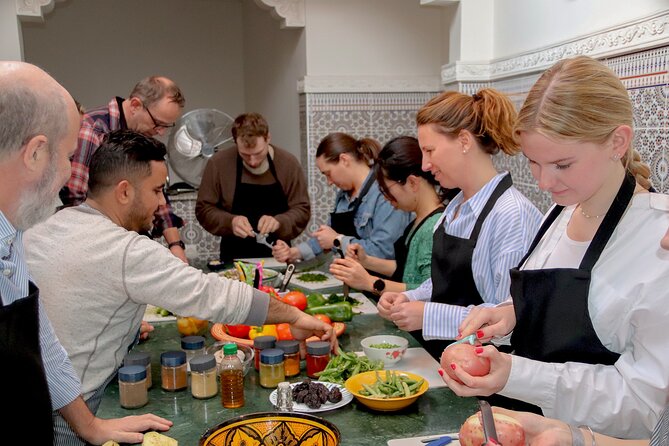
Once you’re in the kitchen, the class gets structured. The team starts with the dish that takes the most time to cook because it needs to be on the fire while you handle other tasks. That single detail changes the whole experience. You are not waiting around, and you’re not scrambling at the end.
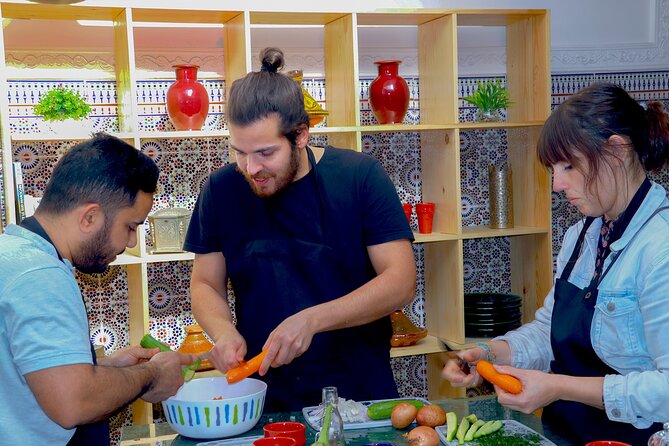
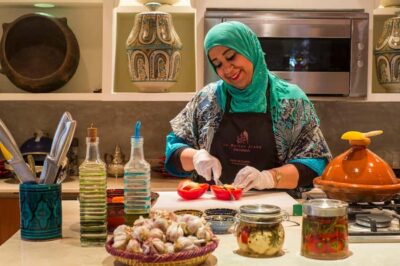
You cook as a group, almost like a relay team. Different people help with different dishes, which means you learn the flow across more than one recipe, not just one finished plate. It also keeps the class moving in a way that works well for mixed skill levels. If you’re a confident cook, you’ll handle more. If you’re new, you still get meaningful tasks, from prep to assembling.
The kitchen area is air-conditioned, which is a real comfort in Marrakech. Clean workspace matters too. Multiple participants commented on the cleanliness, and it showed in how comfortable people felt jumping in.
Four Tagines and Side Dishes: Hands-on Moroccan technique
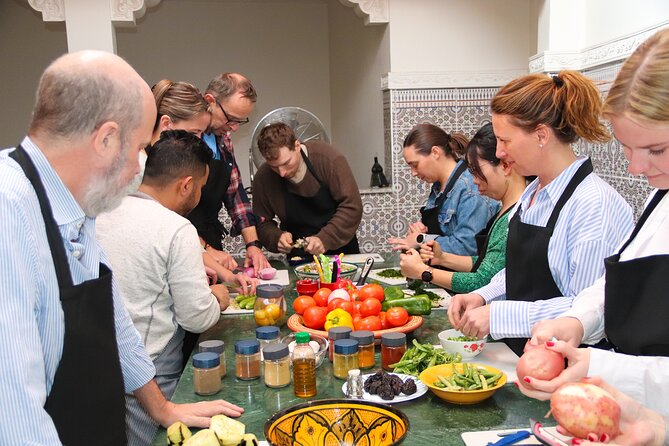
In a typical session, you’ll work through multiple tagines. The class is flexible with what you cook, and it can include options like tagines with vegetables, chicken, beef, or meat balls. You also make couscous in the workshop, but the guidance is clear: if couscous is a must for you, request it before the class.
What you learn is bigger than recipes. You learn how tagines behave. In Moroccan cooking, the point of a tagine is slow development of flavor, layering, and the way spices bloom while the dish cooks gently. In class, Hassan and Ahmed explain steps and the background behind ingredients as you go, so you’re not stuck memorizing a list.
Here’s how the experience tends to feel in practice:
- You prep ingredients for one dish while another simmers
- You rotate into another tagine and build understanding across dishes
- You coordinate cooking steps like timing, seasoning, and assembly
- You end up with multiple finished plates you can taste together
That group method is part of why so many people love it. You do not leave with one small bowl. You leave with a table worth of food.
Side dishes matter too. They balance the tagines and show you how Moroccan meals are built as a set, not isolated dishes. If you love eating, this is one of the best ways to learn, because you taste how each component supports the others.
Within striking distance:
- Marrakech: Agafay Desert Sunset, Camel Ride, and Dinner Show
★ 4.6 · 35,119 reviews - From Marrakech: Ouzoud Waterfalls Guided Hike and Boat Trip
★ 4.7 · 33,630 reviews - Marrakech: Agafay Desert Quad & Camel Rides with Dinner Show
★ 4.8 · 27,382 reviews - Marrakech: Agafay Desert Quad Biking Tour with Dinner-Show
★ 4.8 · 16,569 reviews
Couscous and salads: How to get exactly what you want
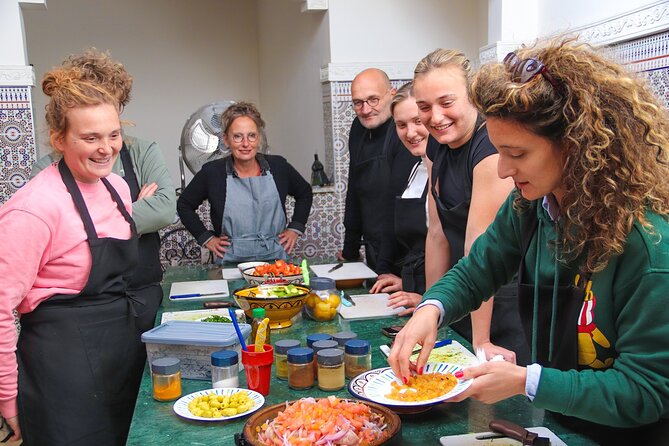
The class focuses on classic Moroccan staples, and the summary specifically calls out tagine and couscous along with Moroccan salads. The practical guidance is that couscous is part of the workshop, but it’s better if you specify ahead of time.
So, if couscous and salads are your top priorities, do not assume. Message or ask when booking so the team can plan your menu. This matters because instructors are cooking for the whole group, and they need to coordinate the dishes while the longest-cook item is on the fire.
If couscous is not requested, you might still get a full Moroccan meal, just with a different emphasis. In other words, you will eat well either way, but planning helps you match the menu to your cravings.
Dietary needs: Flexibility without making you feel like a project
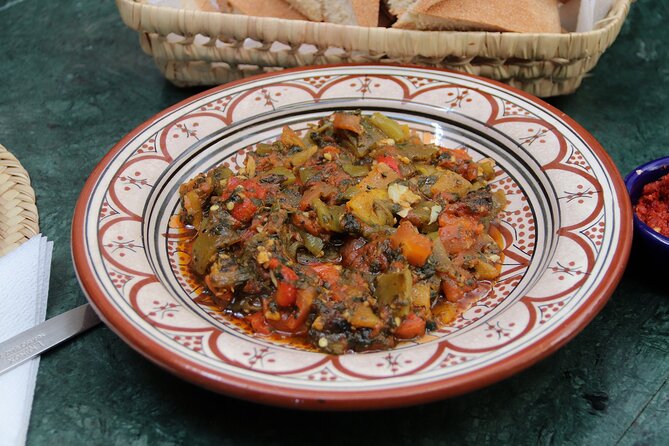
One of the best things about this class is how clearly it supports dietary modifications. You can ask in advance for vegan, vegetarian, or gluten-free options, and the program notes that they cook vegan and vegetarian.
In a hands-on class, dietary restrictions can go two ways. Either the kitchen changes almost nothing and you end up with a sad version, or the cooking team takes your needs seriously and helps you understand how to adapt. Here, the flexibility is part of the offering. That means you can focus on learning techniques rather than negotiating what you can eat.
If you have a gluten-free need, ask ahead and confirm how it will be handled. The class can be adaptable, but you’ll get the best outcome when the instructors can plan ingredients before shopping.
Group size and participation: Designed for real involvement
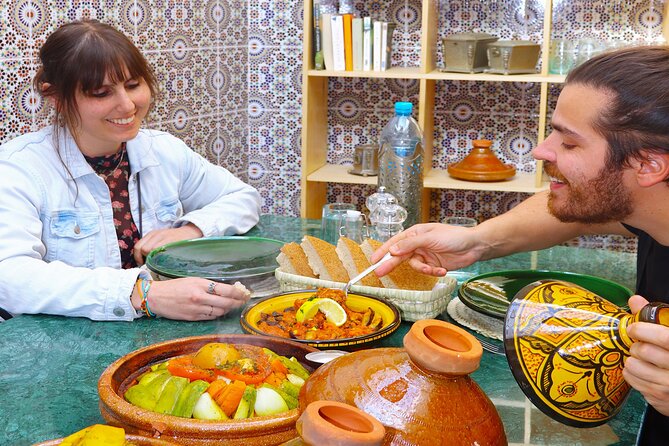
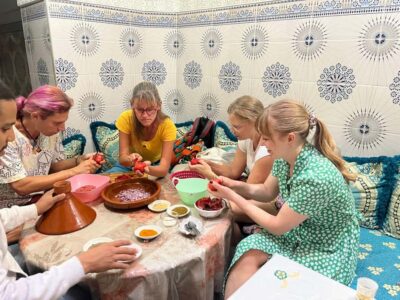
You’ll be in a small group. The maximum is 9 travelers, and it might be 10 only if there’s overbooking or for private groups. That size matters because it keeps the cooking pace comfortable and gives you time with the instructors.
Many people highlighted that Hassan and Ahmed are patient, encouraging, and interactive. In a class like this, interaction is everything. You want explanations, yes, but you also want the chance to chop, mix, assemble, and taste, rather than standing on the sidelines.
Also, the class allows kids, but with a clear guideline: children under 7, including babies, are asked not to attend. That’s worth noting if you’re traveling with young children. The program is structured like a cooking workshop, and younger kids can find it hard to stay within the rhythm of cooking and tasting.
For women with long hair, bring a hairband. It’s a practical request that makes chopping and cooking easier and keeps you comfortable in the kitchen.
Lunch or dinner: Choose the meal timing that fits your day
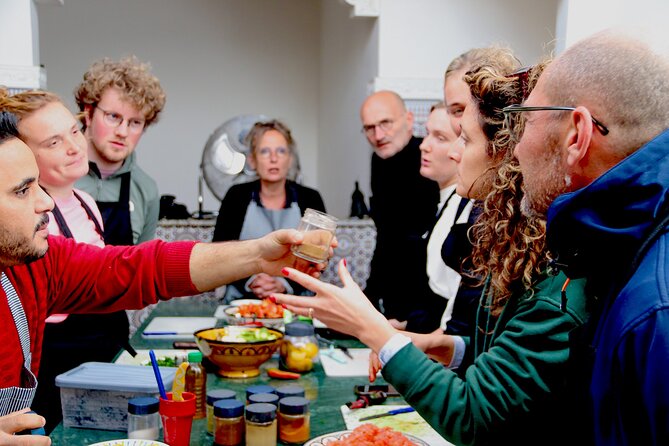
This class is offered at both lunch and dinner. That matters in Marrakech, where afternoons can get hot and evenings are when riads feel most alive.
If you love a longer morning and a calm evening, dinner makes sense. If you prefer to eat earlier and keep your night free for the medina, lunch is often easier. Either way, the core experience is the same: market shopping, mint tea, cooking several tagines and sides, then eating together.
Because it’s about 4 hours, you should plan a buffer afterward. The meal at the end is part of the experience, and you’ll likely be full and a little slower getting back out into the city.
Air-conditioned kitchen, small details that matter
A Marrakech cooking class can be anything from cozy to chaotic. Here, the kitchen setup includes an air-conditioned cooking area. That makes a noticeable difference for comfort, especially if you’re cooking while temperatures climb.
Clean workspace also comes up repeatedly in positive feedback. When a kitchen is well-kept, you can focus on learning instead of worrying about hygiene. It also helps the group relax and participate more.
There’s also a friendly, organized vibe. Hassan and Ahmed guide you through steps, and they explain Moroccan tea and the cooking process, including history and culture as you cook and taste. The goal is that you understand what you’re doing.
Eating the results, then taking recipes home
At the end, you eat what you cooked, and you get time to enjoy the meal together. That’s a big part of why this works as a travel experience. You don’t just cook, you taste, and you can connect the flavors to the steps you just learned.
After the class, recipes are shared. The program states that recipes are shared at the end, and feedback notes Ahmed sent a link to recipes after the session. Either way, you leave with a path to repeat at home. That makes it more than a one-day event.
You can treat this like a mini cookbook lesson. You cook in class, then you recreate later with guidance from the recipes they provide.
Spice and tagine shopping at the end: Better value in the right place
After cooking and eating, there’s time to shop. The class mentions they sell spices and tagines cheaper than tourist shops at the end of the experience.
I like this approach because it’s a sales moment tied to learning. You’ll already know what the spices do in your dish, so you can buy with purpose. And you’ll understand the kind of tagine that matches the cooking style you just practiced.
If you are spice-curious, this is the moment to ask questions. The hosts can point you toward what you need for the flavors you made.
Price and value: Is $34.76 worth it?
At $34.76 per person, this class is priced like a budget-friendly cooking workshop, not a premium culinary tour. Where the value really shows up is in the amount of instruction and the amount of food.
You’re paying for:
- A market tour for fresh ingredients
- Mint tea instruction
- Multiple tagines and side dishes cooked together
- A shared meal at the end
- Recipes provided afterward
- A small group size capped at 9
When you compare that to stand-alone meals or tastings, the cost starts to look more reasonable. You’re not just buying food, you’re buying skills, context, and repeatable recipes. And because the cooking is hands-on, you get more than observation.
One reason people seem happy with the value is that the class also supports dietary restrictions. That prevents the common downside of cooking classes, where people with restrictions either miss out or receive a token substitute.
Who should book this class, and who might pass
Book this if you want:
- A hands-on Marrakech experience with real participation
- Mint tea skills you can repeat at home
- Tagine-focused learning with multiple dishes
- A small group that is capped at 9 or 10
- Dietary flexibility with vegan, vegetarian, or gluten-free options
This might not be your best match if:
- You want a quick show-and-taste experience with minimal cooking
- You’re traveling with very young kids under 7
- You specifically want couscous but you plan to decide last minute without asking ahead
If you’re the kind of traveler who likes doing instead of just watching, you’ll likely love it.
Should you book Chef Hassan’s Marrakech cooking class?
Yes, I think you should book it if you want Moroccan cooking with structure. The combination of market shopping, mint tea instruction, group teamwork, and multiple tagines is exactly what turns a cooking class into a memory you can recreate.
If couscous is a priority, message ahead so the menu can match your preferences. Bring a hairband if needed, wear comfortable shoes, and go in ready to help chop, stir, taste, and learn. For $34.76, this is the kind of experience that feeds you now and equips you later.
FAQ
How long is the cooking class?
The class runs about 4 hours.
Is the class offered for lunch and dinner?
Yes, you can choose either lunch or dinner.
What is included in the price?
It includes bottled water, bread, welcome tea, lunch or dinner (depending on your option), and a meal of what you cook.
Do I need private transportation?
No. Private transportation is not included, but the activity is near public transportation.
How big is the group?
The group size is capped at 9 travelers, with 10 only in some cases.
Can the class accommodate vegan, vegetarian, or gluten-free diets?
Yes. The class notes it can adapt for vegan, vegetarian, and gluten-free options.
Are kids allowed?
Kids are allowed, but children under 7 (including babies) are asked not to attend.
Is couscous included?
Couscous is mentioned as part of the workshop, and it’s recommended to specify in advance if you want it.
Do I get recipes after the class?
Yes. Recipes are shared at the end of the class.
Is there a cancellation deadline for a refund?
You can cancel for a full refund up to 24 hours in advance.
Latest additions near Marrakech
- Three valleys, Atlas Mountain, waterfalls & Agafay Desert★ 5.0 · 13 reviews
- Essaouira: Surf Trip from Marrakech★ 4.9 · 31 reviews
- Marrakech: Tailor-Made City Tour With Your Own Private Guide★ 4.9 · 236 reviews
- Surf Training and Lunch on Essaouira Day Trip from Marrakech★ 4.9 · 51 reviews
- Marrakech palm grove: Sunset camel ride★ 4.8 · 194 reviews
- Marrakech: Cycling Tour in Palm Groove with Local Breakfast★ 4.7 · 73 reviews
- Marrakech: Sunrise Desert Tour with Camel Ride and Breakfast★ 4.4 · 36 reviews
- Marrakech : Agafay Desert Sunset Camel Ride & Luxury Dinner★ 4.3 · 39 reviews
Moroccan Cooking Classes, compared.
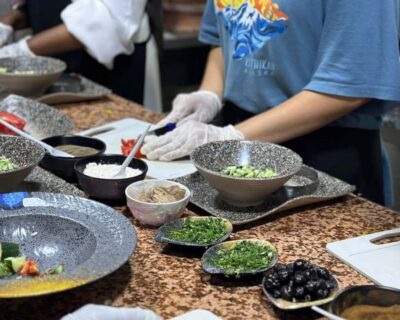
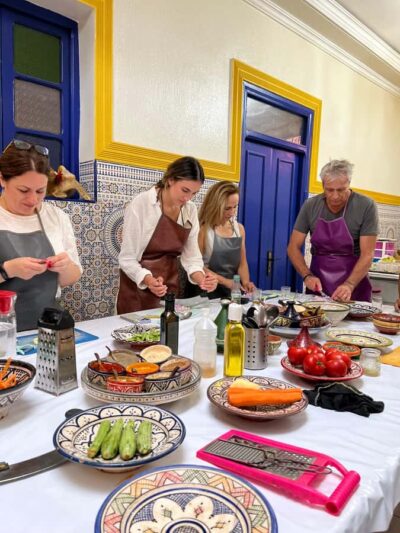
Traditional Moroccan Cooking Class & Market Visit
Read our review →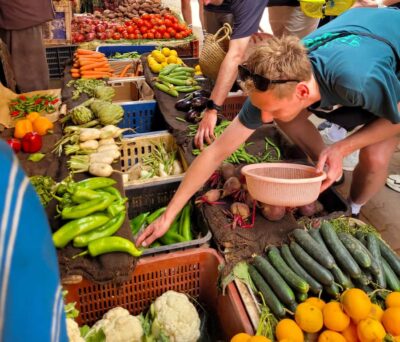
Moroccan Dishes Cooking Class with a Local Chef
Read our review →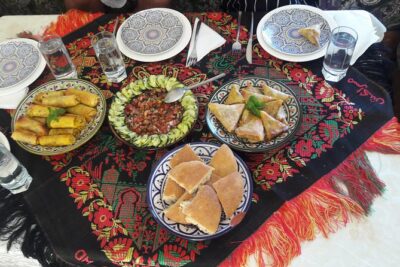
Moroccan Cooking Class & Marrakech Market Visit with Chef Khmisa
Read our review →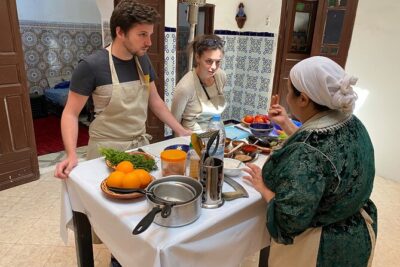
Half-Day Cooking Class with Local Chef Laila in Marrakech
Read our review →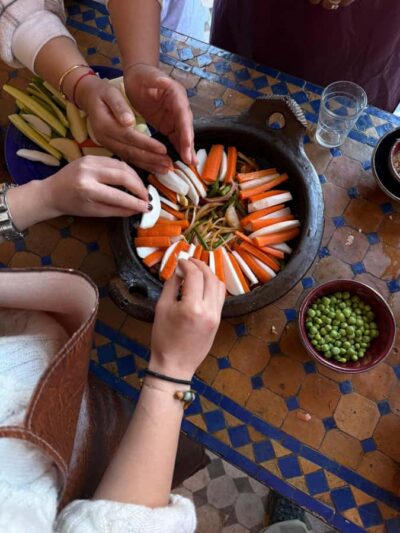
Browse the lists this tour appears in