
Reviewed · MOROCCAN COOKING CLASSES
Moroccan Cooking Workshop in Marrakech
Your tajine starts with mint tea in Marrakech. What I love most is the hands-on workstation feel and the fact that the class ends with a tasting of what you made. One drawback to plan for: transportation to and from the experience is not included.
This is not just eating at a Moroccan restaurant. You follow a Moroccan cook’s steps using fresh local ingredients, starting with the Moroccan tea ritual and a bread-making demo, then moving into cooking with the Dada (the chef instructor). You’ll also have options on class length, which matters if your schedule is tight.
It’s set up for a small, practical experience, with individual workstations and a limit on group size. Do note the children under 12 rule, so it may not work for every family.
In This Review
- Key things to know before you go
- Getting Oriented at La Maison Arabe in Marrakech
- Moroccan mint tea, plus the bread demo you’ll actually remember
- Cooking hands-on with the Dada, from spices to tajine technique
- How the workshop feeds you: afternoon tea, lunch, and the final tasting
- Group size and privacy, and how to plan your expectations
- Price, timing, and value for your Marrakech schedule
- Practical tips so your class actually sticks
- Should you book this Moroccan cooking workshop in Marrakech?
- FAQ
- How long is the Moroccan cooking workshop?
- Where does the workshop take place?
- What does the price include?
- Do I get to taste what I cook?
- Is Moroccan wine part of the experience?
- What languages are available?
- Are children allowed?
- Is transportation included?
- What is the cancellation policy?
Key things to know before you go
- Tea ceremony first: Moroccan mint tea is part of the program before you cook
- Bread-making demo: you see how Moroccan pain is made, not just how to eat it
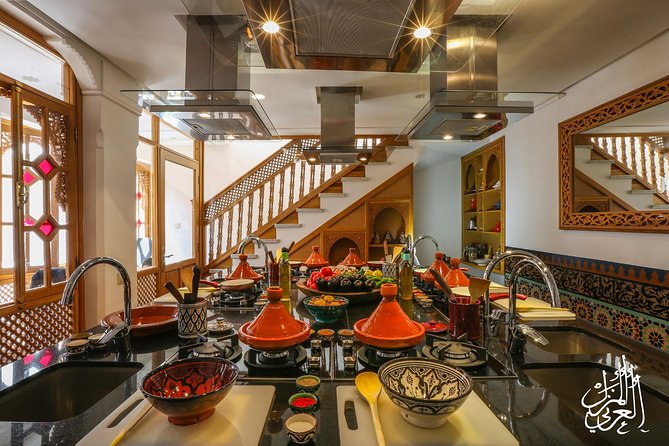
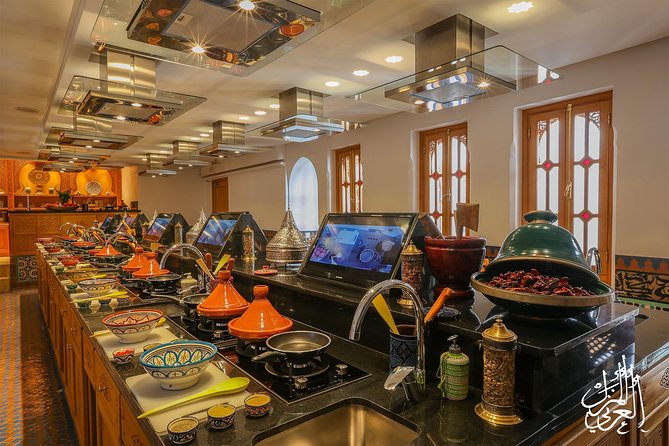
- Individual workstations: privacy and personal space while you cook
- Chef-led, with helpers: cooks and assistants like Mohammad, Hasina, and Dada Habiba show up in real classes
- Eat what you cook: a tasting follows, and Moroccan wine can be added as an option
- Plan your own transport: you’ll need to get yourself to La Maison Arabe near public transportation
Getting Oriented at La Maison Arabe in Marrakech
The meet-up point is Hotel La Maison Arabe, at 1 Derb Assehbi in Marrakech 40000. The experience ends back at the same meeting spot, so you avoid that awkward part of figuring out where your class deposit turns into your next activity.
The class runs at a smooth, scheduled pace. Even if your whole day is chaos, this one hour cooking workshop is built to be doable without burning your entire afternoon. You get a French and/or English welcome through an interpreter, and the cooking team is reported as multi-lingual, so you should not feel left out if your Arabic is limited.
Two small details make a big difference here. First, the setup includes individual workstations, so you are not squeezed into one shared station. Second, the experience includes your afternoon tea plus a lunch, which means you are not just paying to “learn,” you are also paying to eat well.
For me, that combination is the real value. A cooking class without food at the end is usually just a demo you watch. This one is structured so the meal is part of the point.
More Cooking Classes in Marrakech
- Marrakech: Moroccan Cooking Class with Pickup
★ 4.6 · 1,862 reviews - Marrakech: Traditional Moroccan Cooking Class & Market Visit
★ 4.8 · 1,861 reviews - Marrakesh: Moroccan Dishes Cooking Class with a Local Chef
★ 5.0 · 1,615 reviews
Moroccan mint tea, plus the bread demo you’ll actually remember
The timing starts with a Moroccan tea ceremony. This is not a random photo moment. Tea is treated like a ritual, and it sets the tone for the rest of the workshop: flavors, pacing, and the idea that Moroccan cooking is as much about process as it is about the final dish.
Next comes a demonstration of making Moroccan bread. You’ll watch how the dough and bread-making steps work before you get your hands in the kitchen tasks. Even if your own bread skills are basic, the demo helps you understand texture, timing, and why certain steps matter.
From what I’ve seen people praise, this is one of the parts that makes the workshop feel more like a real household lesson than a tourist production. In particular, assistants named Hasina and Hasna are mentioned as part of the instruction and interpreting support, and they seem to help the class move along without losing the cultural context.
One practical consideration: you may be stepping into a working kitchen environment. So wear something comfortable that you would not mind getting a little fragrant from spices and heat.
Cooking hands-on with the Dada, from spices to tajine technique
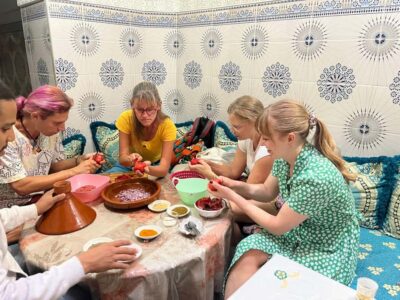
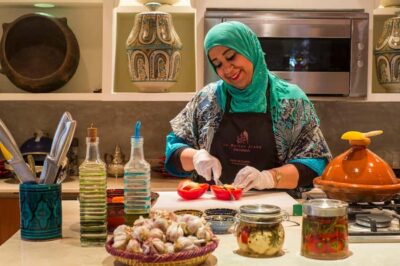
Then you get into the main event: the cooking course led by the Dada, the chef instructor. Your workstation is yours to use while you follow instructions. That matters because Moroccan cooking is not just about ingredients, it’s about technique, layering, and timing.
If you’re wondering what dishes you’ll make, the workshop experience is described as including a tajine, and many classes include multiple dishes depending on how long you book. For example, some people mention making a starter, main, and side dish, plus dessert in a longer format. If you book the 1 hour option, expect a more focused set of steps, but still hands-on.
Spices are a big deal here. People specifically highlight learning about spices used in Moroccan cuisine, with Mohammad mentioned as very knowledgeable in the kitchen and instruction. That’s a good sign for you if you’ve ever felt like Moroccan food tastes great but you cannot recreate it. The goal of the workshop is to help you understand what to use and why, not just copy a recipe by guesswork.
Here’s what I think you’ll walk away with, even in a short class:
- a clearer sense of how Moroccan spice blends are built
- a better idea of how to handle a tajine-style cook process
- confidence that you can repeat the flavors at home without needing a Morocco shopping trip
And because the class is designed with helpers moving around the kitchen, you get support if a step feels confusing. Several people mention that instructors came around and helped during tricky moments. That kind of check-in is what separates a good cooking class from a chaotic one.
How the workshop feeds you: afternoon tea, lunch, and the final tasting
This experience includes afternoon tea, lunch, and food tasting. So yes, you cook, and then you eat what you cooked. The tasting is a real “payoff” moment, not a token sample.
After you finish cooking, you sit down and taste the dishes, with the added context of Moroccan wine discovery available as an option. If you choose that add-on, you’ll get a taste pairing component, which can help you understand flavor balance in a more adult, not just sugary, way. If you skip it, you still get the main tasting portion.
What makes the tasting valuable is that it ties directly to your work. You are not eating a restaurant plate made by someone else. You are eating the version you helped create, which makes it easier to judge what worked and what you might adjust next time.
One thing I appreciate in the structure is that it becomes a social sit-down at the end. People talk about sitting together afterward and enjoying the meal. That turns your cooking class into a mini culinary evening, even if it lasts just one hour on paper.
Within striking distance:
- Marrakech: Agafay Desert Sunset, Camel Ride, and Dinner Show
★ 4.6 · 35,119 reviews - From Marrakech: Ouzoud Waterfalls Guided Hike and Boat Trip
★ 4.7 · 33,630 reviews - Marrakech: Agafay Desert Quad & Camel Rides with Dinner Show
★ 4.8 · 27,382 reviews - Marrakech: Agafay Desert Quad Biking Tour with Dinner-Show
★ 4.8 · 16,569 reviews
Group size and privacy, and how to plan your expectations
The booking info states a maximum of 2 travelers, which is excellent for privacy. That matches what you want from a hands-on class, especially if you want to ask questions without feeling like you are interrupting a bigger group rhythm.
At the same time, real-life class sizes can vary. One account describes a group of 14 during a class session. So my advice is to treat this as a “small workshop with personal attention,” not as a guarantee that you will have a one-on-one chef experience.
The good news: the core promise stays the same. Individual workstations and hands-on steps are built into how the class is described. Even in a larger group, the room is set up for cooking, not watching.
Also, there’s an important family fit rule: children under 12 are not permitted in the cooking classes for security reasons. If you are traveling with younger kids, you’ll need to find another activity in Marrakech.
Price, timing, and value for your Marrakech schedule
At $34.76 per person for about 1 hour, this is priced like a budget-friendly culinary activity. The value comes from what is included: afternoon tea, lunch, live commentary and live entertainment, and a tasting of what you prepare.
Cooking classes often charge more when they include food, language support, and a structured tasting. Here, you get a chef-led format and the meal components bundled in. You are basically paying for an instructional experience plus a full eating plan, which is a smart use of money in Marrakech if you are already planning to eat anyway.
Booking pace matters too. It’s listed as typically booked about 21 days in advance. So if you want a particular time slot, don’t wait until you land in the city to test luck.
A timing note that helps your decision: if you have limited time, the 1 hour option fits well. If you want more dishes or a longer cooking session, there are options for different class lengths. Reviews mention returning for a longer format after enjoying the shorter one, which usually means the longer classes let you do more steps in a calmer flow.
Practical tips so your class actually sticks
I’d plan your day around a relaxed arrival. Several people suggest getting there early to enjoy coffee, tea, or a cold drink at the hotel. Even if your schedule is packed, that buffer helps you settle in before the tea ceremony starts.
Then, prep yourself mentally for a spice-forward environment. You will be around ingredients, steam, and the smells of Moroccan cooking. Wear closed-toe shoes if you have them. Keep jewelry minimal. And bring an open mind about texture, since Moroccan bread and tajine cooking have a tactile side that you learn by doing.
If you care about taking the experience home, you may want to ask about recipe materials. One review mentions buying a recipe book. That’s not confirmed as included in the provided details, but it’s a practical thing to consider if you want a reference for future cooking.
Language tips, if you need them: expect French and/or English interpretation as part of the welcoming portion, and the experience can be operated by a multi-lingual guide. If you have specific dietary needs, the best move is to mention them when you confirm, because the class cooking plan can be tight.
Finally, remember drinks are not included. So if wine is not your thing, you might still want water or soft drinks, depending on how you handle heat and spices.
Should you book this Moroccan cooking workshop in Marrakech?
Book it if you want a structured, chef-led Moroccan food experience in Marrakech that does more than feed you. The standout strengths are the hands-on workstation format and the “cook, then taste” ending. You get Moroccan mint tea and Moroccan bread demonstration context, then the cooking lesson guided by the Dada and supported by interpreters and assistants such as Mohammad, Hasina, Dada Habiba, and others mentioned in real classes.
Skip it or think twice if you need transportation handled for you, since transport is not included. Also, if your group includes a child under 12, this class is not an option.
If you’re on a first Marrakech trip, this is a great way to turn one meal into a skill you can repeat later. And that is a rare kind of souvenir: edible, practical, and genuinely useful.
FAQ
How long is the Moroccan cooking workshop?
It’s listed as approximately 1 hour.
Where does the workshop take place?
You meet at Hotel La Maison Arabe, 1 Derb Assehbi, Marrakesh 40000, Morocco. The activity ends back at the meeting point.
What does the price include?
The experience includes afternoon tea, food tasting, lunch, and live commentary plus live entertainment. Drinks are not included.
Do I get to taste what I cook?
Yes. There is a tasting afterward of the dishes you prepared.
Is Moroccan wine part of the experience?
Moroccan wine discovery is offered as an option with the tasting.
What languages are available?
You can expect welcome and guidance with a French and/or English interpreter, and it may be operated by a multi-lingual guide.
Are children allowed?
Children under 12 years old are not permitted in the cooking classes for security reasons.
Is transportation included?
No. Transportation to and from attractions is not included, though the meeting point is near public transportation.
What is the cancellation policy?
You can cancel for a full refund up to 24 hours in advance. After that point, no refund is offered.
Latest additions near Marrakech
- Three valleys, Atlas Mountain, waterfalls & Agafay Desert★ 5.0 · 13 reviews
- Essaouira: Surf Trip from Marrakech★ 4.9 · 31 reviews
- Marrakech: Tailor-Made City Tour With Your Own Private Guide★ 4.9 · 236 reviews
- Surf Training and Lunch on Essaouira Day Trip from Marrakech★ 4.9 · 51 reviews
- Marrakech palm grove: Sunset camel ride★ 4.8 · 194 reviews
- Marrakech: Cycling Tour in Palm Groove with Local Breakfast★ 4.7 · 73 reviews
- Marrakech: Sunrise Desert Tour with Camel Ride and Breakfast★ 4.4 · 36 reviews
- Marrakech : Agafay Desert Sunset Camel Ride & Luxury Dinner★ 4.3 · 39 reviews
Moroccan Cooking Classes, compared.
Traditional Moroccan Cooking Class & Market Visit
Read our review →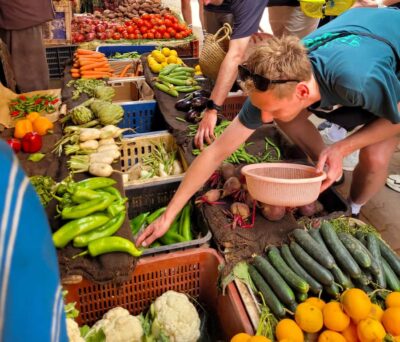
Moroccan Dishes Cooking Class with a Local Chef
Read our review →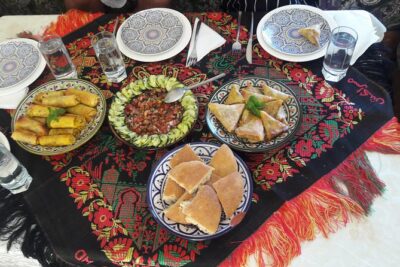
Moroccan Cooking Class & Marrakech Market Visit with Chef Khmisa
Read our review →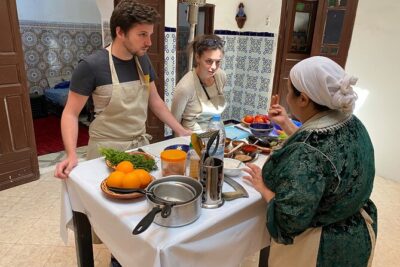
Half-Day Cooking Class with Local Chef Laila in Marrakech
Read our review →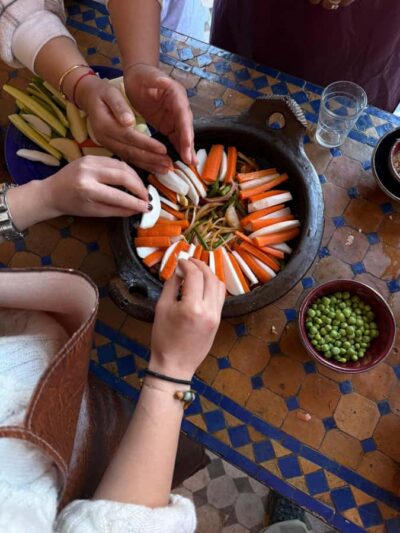
Browse the lists this tour appears in