
Reviewed · WORKSHOPS
Moroccan Plaster Sculpture Workshop
Plaster turns into art in 150 minutes. In Fes, this rare Moroccan plaster sculpture workshop teaches Gebs carving with professional sculptor Mohamed, right in a guest house in the old medina, starting with tea on the terrace. I love that you get hands-on, step-by-step instruction, not just watching. I also love that you leave with a take-home piece, plus an extra small handmade gift when time runs short. One drawback to plan for: the clock is real, so your full design may not be completely finished.
The workshop is priced at $70 per person for about 2.5 hours with a small group capped at 8. Even if your carving skills are new, the pace is beginner-friendly, and Mohamed and his team are patient, working with you as you shape your own draft into a real piece. If you want total control over every detail from start to finish, you may find the time limit a bit limiting.
Still, this is the kind of activity you remember because it connects you to how Moroccan patterns are made, and it gives you something you can actually hold in your hands later.
In This Review
- Key things to know before you carve Moroccan plaster in Fes
- Why this Gebs plaster workshop feels special in Fes
- Your arrival at Dar Sunrise Fes, tea first, tools second
- A realistic timeline: learning basics, then carving your own draft
- What you actually learn about Moroccan plaster carving (Gebs)
- The art you take home, and why it’s more than a souvenir
- Value for the price: $70 for 150 minutes that teaches real hands-on skill
- Who this workshop is best for (and who might want a different plan)
- Practical guidance for finding Dar Sunrise in the old medina
- Language and teaching: what to expect if your French or Arabic is limited
- Should you book the Moroccan plaster sculpture workshop in Fes?
- FAQ
- How long is the Moroccan plaster sculpture workshop?
- What does it cost?
- Do I need carving experience to join?
- What’s included in the price?
- Will I be able to take something home?
- How many people are in the group?
- What languages are offered?
- Is hotel pickup included?
- Where do I meet for the workshop?
Key things to know before you carve Moroccan plaster in Fes
- Small group size (max 8): you get real attention while you carve.
- Beginner-friendly Gebs carving: you can join with or without experience.
- Professional tools and materials provided: no need to hunt down supplies.
- Tea on a medina terrace: a calm start before you get messy with carving.
- You take home a piece: your own attempt plus a professional-made item/gift depending on timing.
- Languages supported: English, French, and Arabic.
Why this Gebs plaster workshop feels special in Fes
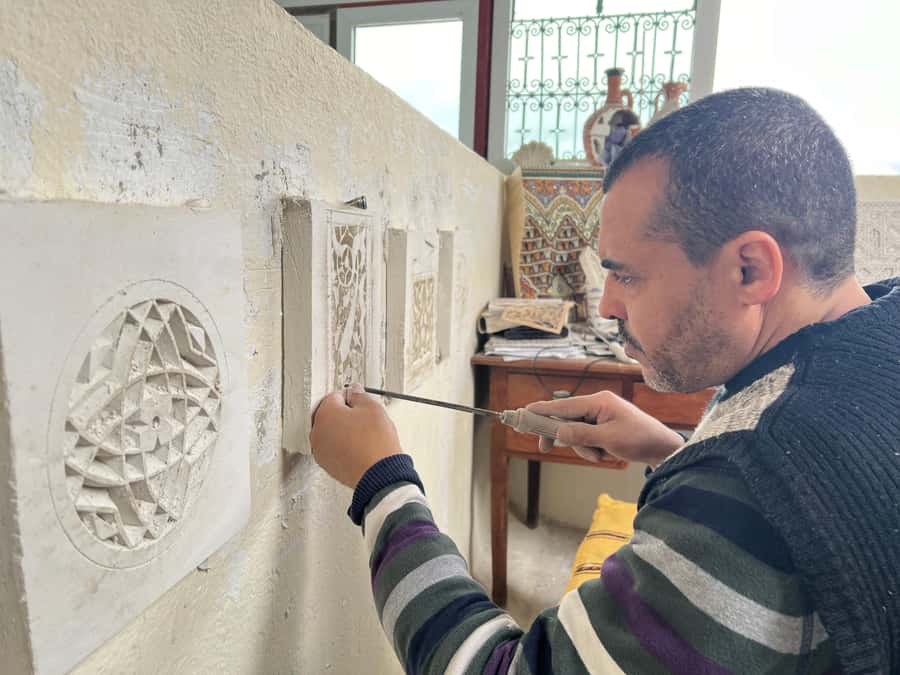
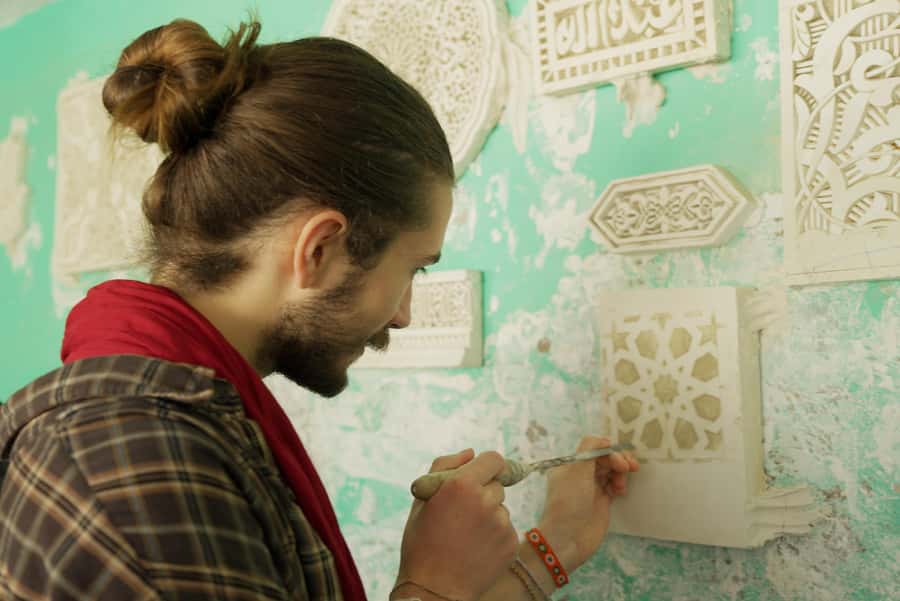
Fes is full of crafts, but plaster carving is the unusual one. This workshop focuses on Gebs, the traditional technique where plaster is carved into ornamental forms you’d normally see on carved surfaces and decorative elements. Instead of only explaining the craft, Mohamed shows you the approach, then guides you as you copy the basics with your own hands.
What makes it feel authentic is the setup. You are not in a big classroom. You are in a home in the heart of the medina at Dar Sunrise Fes, and the session starts like a visit, not like a factory tour. You sit down on the terrace first, drink mint tea or coffee, then you meet the sculptor and get a short briefing before the carving begins.
The other reason it lands well is the teaching style. The instruction is step-by-step, and you are not expected to be an artist. One key idea they emphasize is how you translate a pattern into physical depth using the right tool. If you have ever looked at carved Moroccan ornament and wondered how anyone makes those lines, this gives you the practical answer.
Other Fes days to consider
- Chefchaouen Day Trip from Fez (Shared Group Tour)
★ 4.6 · 2,394 reviews - Fes: Volubilis Roman Ruins, Mouly Idriss, & Meknes Day Trip
★ 4.6 · 2,375 reviews - Fez Medina Guided Tour
★ 4.6 · 2,079 reviews
Your arrival at Dar Sunrise Fes, tea first, tools second
You meet at Dar Sunrise Fes, inside the old medina. The workshop is scheduled for about 150 minutes, so the flow matters. The first part is about settling in and learning how the class will work.
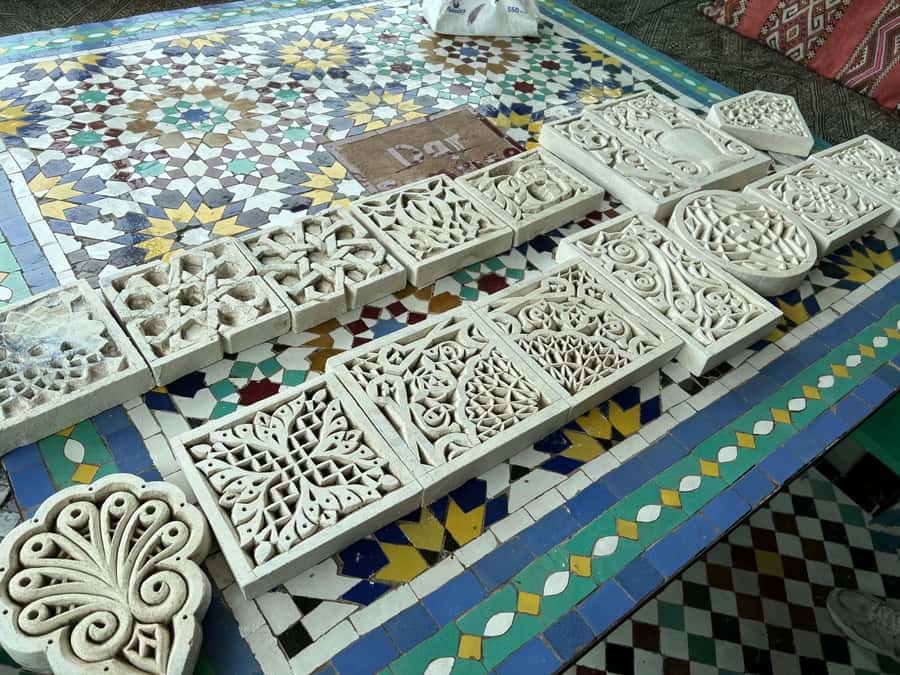
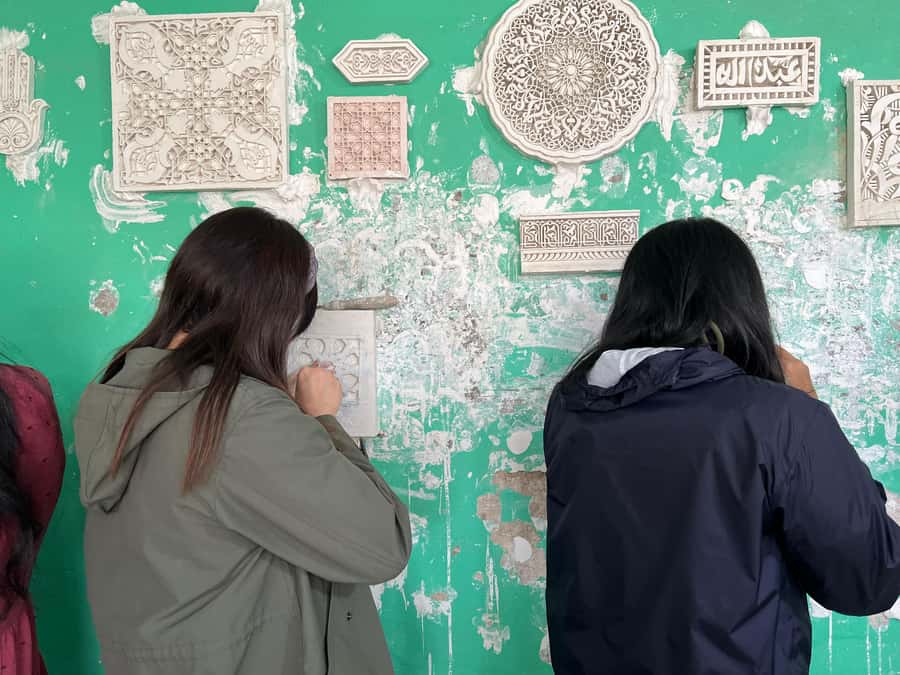
You begin on the terrace with tea or coffee, then Mohamed introduces the craft and shows examples of artworks. This demo step is more useful than it sounds. When you see what finished work looks like, carving stops being abstract. You also get context for the designs you’ll try, including simple references that work well for beginners.
Next comes tools and materials. Everything you need is provided during the class, which matters because plaster carving is not something you should try to improvise at home with random items. You get the proper setup so you can focus on technique rather than troubleshooting.
Then you get the practical part. Mohamed teaches the basic carving techniques first, and you practice those movements before you jump into your own design. That order is a big deal. You’ll progress faster when your hand learns the motion before your brain tries to invent a masterpiece.
A realistic timeline: learning basics, then carving your own draft
Most carving workshops fail you in the middle, when you are excited and time is short. This one handles that well by structuring the session so you experience the whole process without being set up for frustration.
Here is how the time usually breaks down:
1) Demonstration and short theory
You see completed examples and get a brief explanation of how patterns are created. Even if you just catch the visual logic, it helps you understand what you’re trying to produce, not only how to hold a tool.
2) Skill drills with Mohamed
You practice the basic carving techniques step by step. This is where you learn control, like how deep to cut and how to keep lines clean. If you are new, you will start small and build from there. If you already have carving experience, you still benefit because you are learning the traditional approach and likely adapting your existing hand habits to a new material.
3) Choose or reference a beginner-suitable design
Mohamed introduces basic designs and references that work for first-timers. You can use these ideas as a guide, then add your own creative touches.
4) Carve your piece with assistance
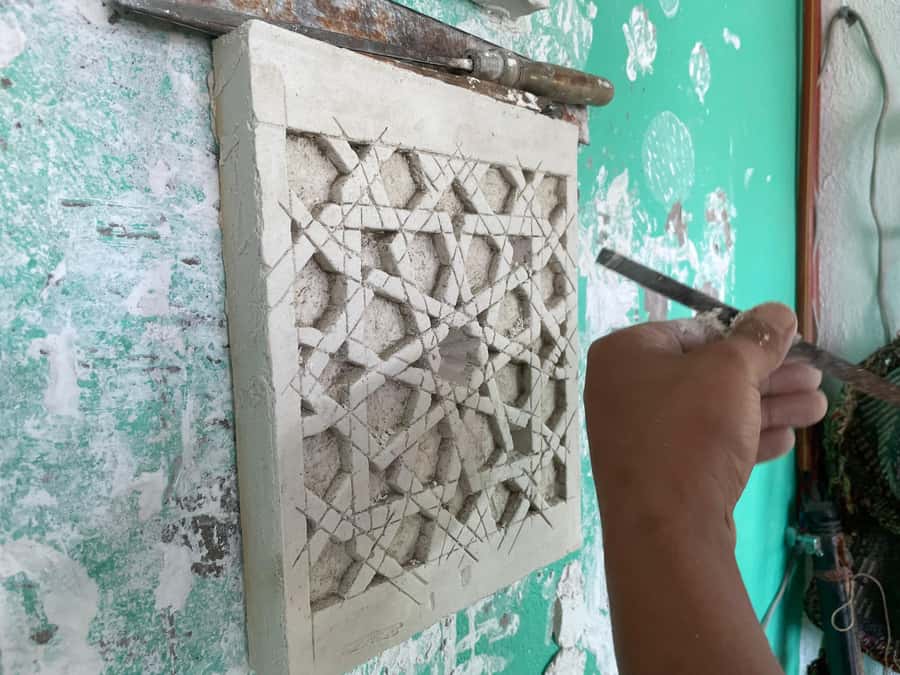
Once you have a draft, you begin sculpting. You are not left alone at this stage. Mohamed assists you as you work, which is crucial because plaster can be unforgiving if you push too hard or carve at the wrong angle.
5) Time limit reality, plus a take-home solution
Because the session is limited to about 150 minutes, you might not fully complete every detail of your own piece. The good news is you are still leaving with a handmade outcome. Everyone is given a small handmade sculpture as a gift, and participants also receive an art piece carved by the professional sculptor.
So the workshop is designed around learning and progress, not perfection. That is why it tends to work so well for mixed skill levels.
What you actually learn about Moroccan plaster carving (Gebs)
This is not just “try a tool and see what happens.” You learn technique, and technique is what lets you recreate decorative patterns.
Here are the practical skills this workshop emphasizes:
- Tool control and pressure: Plaster carving needs a light but confident touch. Mohamed teaches how to get crisp edges without overdoing it.
- Step-by-step pattern translation: Traditional ornament patterns often look complicated until you see the basic moves behind them. You practice those moves first, then apply them to your design.
- Depth and line clarity: Your carved piece is judged by how readable the shapes become. The instruction focuses on creating forms that look clean even at a small scale.
- Design planning before carving: You prepare a draft, then carve. That prevents the common beginner mistake of carving straight from an idea in your head.
One neat bonus, mentioned in the workshop info, is that these carving skills are transferable. You can adapt them on wood, plastic, or other materials if you ever want to keep carving after you leave Fes. That means the value is not only the finished souvenir. It’s the technique you can keep using.
Within striking distance:
- Blue City magic: Affordable Day Trip from Fez to Chefchaouen
★ 4.6 · 1,960 reviews - From Fez: Sahara Desert 2-Day Tour with Merzouga Camp Stay
★ 4.8 · 1,716 reviews - Fes: Museum, Al Attarine Madrasa & Tannery and Medina Tour
★ 4.6 · 1,655 reviews - From Fez: Chefchaouen Day Trip with Hotel Pickup
★ 4.6 · 1,534 reviews
The art you take home, and why it’s more than a souvenir
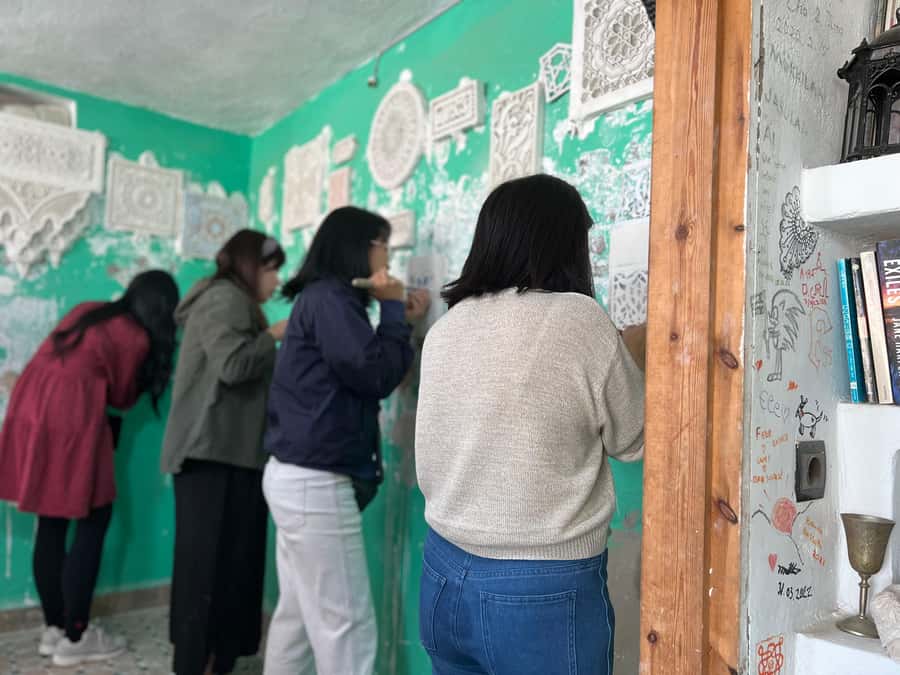
You will take home something you actually made, and that matters. A lot of craft workshops give you a finished item with your name on it. This one aims to connect you to the work process.
Because you carve your own draft during class, your piece reflects your choices. Mohamed also helps you along so it still turns out nicely even if you’re new.
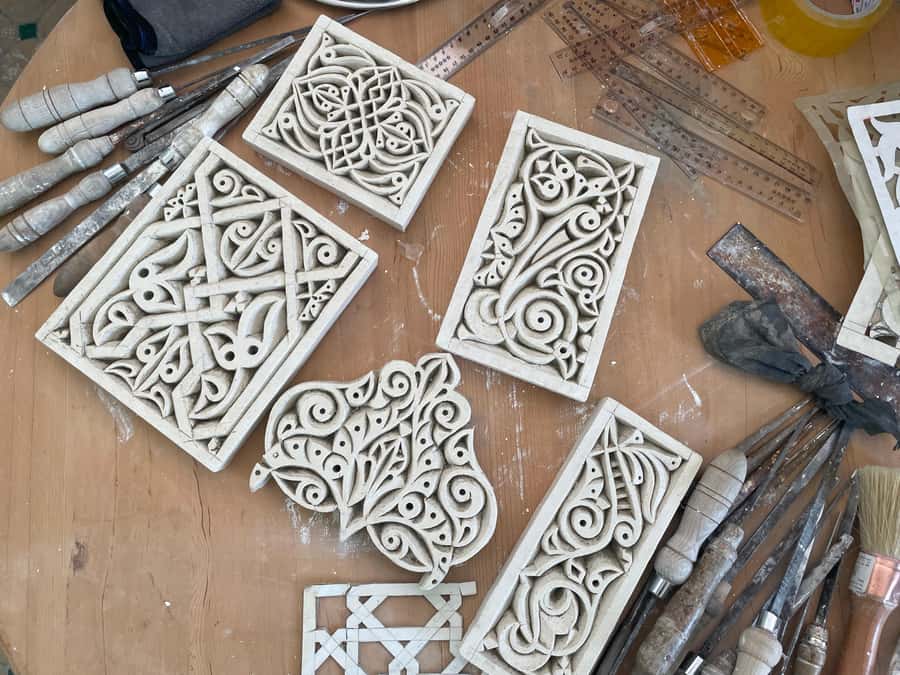
There’s also a professional element. Each participant receives an art piece carved by the professional sculptor, and when time constraints limit finishing your full piece, you still get a little handmade sculpture as a gift. In other words, you leave with a complete, displayable result, not just a half-finished experiment.
This is especially valuable if you care about gifts. A carved plaster piece with traditional pattern logic is the kind of item that feels personal and Moroccan, not generic. It’s rare to find plaster sculpture souvenirs done this way, with real teaching and finishing support behind them.
Value for the price: $70 for 150 minutes that teaches real hands-on skill
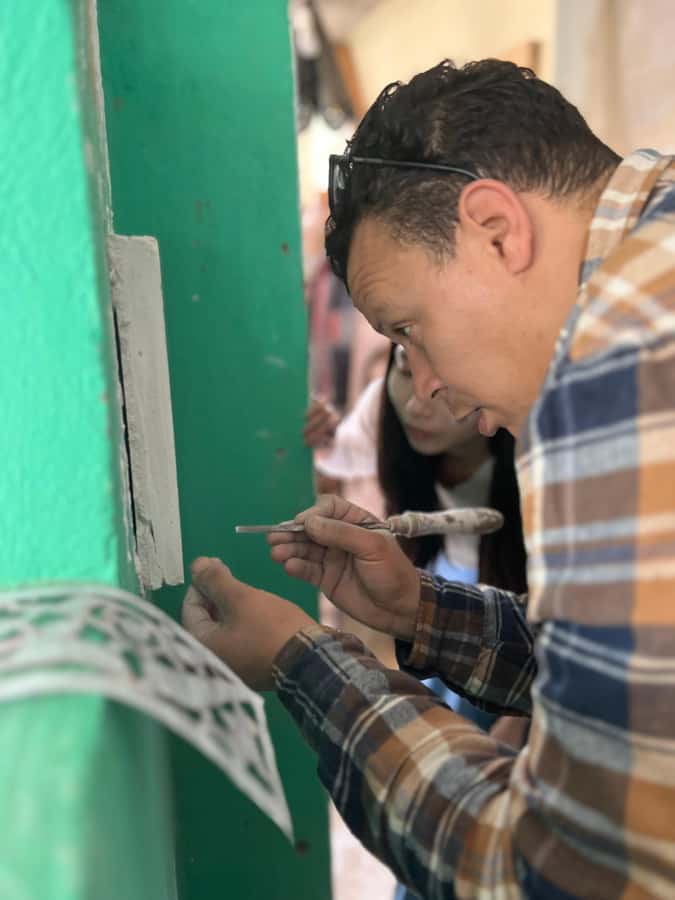
Let’s talk money in a practical way. At $70 per person for 150 minutes with a small group, you are paying for three things:
1) A professional sculptor’s time
Mohamed is actively teaching and assisting, which is the heart of the workshop.
2) Hands-on materials and tools
You get the tools and materials during the class. That saves you the hassle and expense of figuring out what to buy.
3) An art outcome you can keep
You are not just watching. You’re taking home a piece, plus a professional-made item/gift depending on timing.
Could it cost less? Sure. Many casual craft activities do. But this is not casual. It’s a skill-based workshop in a home setting, and you get more individualized instruction than you would in a larger group.
The best value move is to book with realistic expectations: you are going to learn technique and make progress, not produce a cathedral-level masterpiece in 2.5 hours. If you come thinking that way, the $70 feels fair because you get both the process and the finished keep.
Who this workshop is best for (and who might want a different plan)
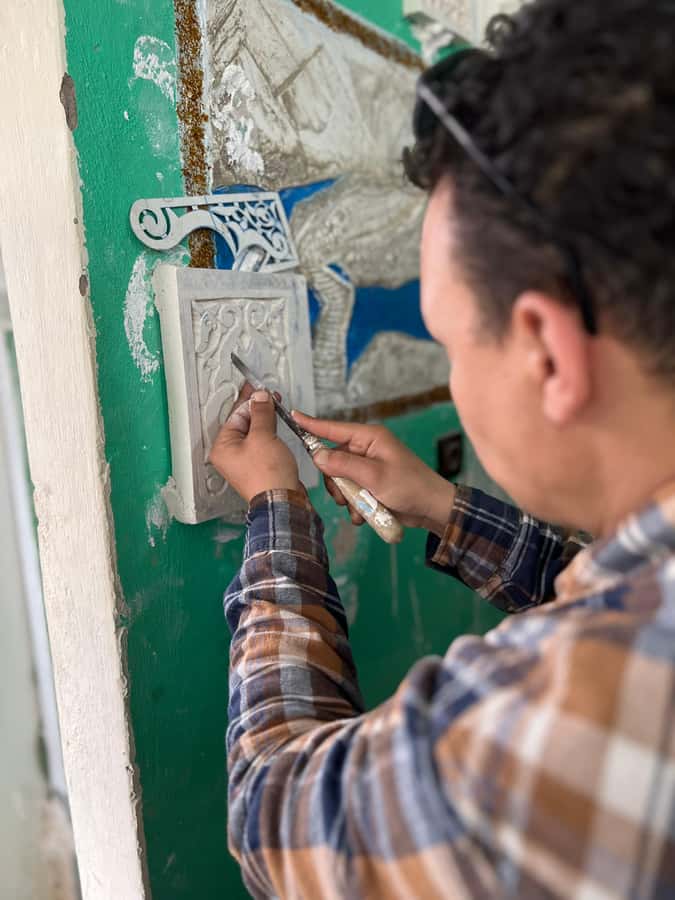
This is a strong fit if you want something cultural but practical. You’re learning a craft linked to Moroccan design, and you are actively making something while you learn.
It’s also a good match if:
- You enjoy crafts and want a skill you can repeat later.
- You like architecture and pattern design, even if you are not an artist.
- You travel with friends, and you want a shared activity that still feels personal thanks to one-on-one assistance.
You might consider skipping it if:
- You need a super long, fully unhurried session to get deep into fine detail.
- You want a purely guided sightseeing day with no hands-on work.
- You are very sensitive to the idea that the full design might not be fully completed during the class time.
That said, even for beginners, the teaching and assistance are set up to help you end with a good result.
Practical guidance for finding Dar Sunrise in the old medina
Finding the meeting point is the only “hard part,” because you’re in the medina, and streets can be confusing if you arrive late or without a plan.
You meet at Dar Sunrise Fes. Use the provided directions tied to two common starting points:
- From Bab Boujloud (blue gate): cross the gate, turn into the first street on the left into the main street Talaa Kebira. Walk downhill for about 3 minutes until you see Made in M cafe with blue paint on the right. You are in the alley next to it, house number 10.
- From Ain Zliten parking: enter Talaa Kebira and head upward for about 1 minute. You should see Made in M cafe with blue paint on the left. The location is in the alley next to it, house number 10.
If you want to keep stress low, arrive a few minutes early and plan to ask for the guest house by name once you spot the cafe landmark.
Language and teaching: what to expect if your French or Arabic is limited
This workshop supports English, French, and Arabic. In practice, that helps a lot because carving is easier when you can understand the key steps and the safety cues about tool handling and pressure.
The teaching style is also patient. Mohamed’s instruction is designed to work even when language skills are imperfect, because the demonstrations and hand guidance are doing most of the work.
If you prefer learning by watching first, you’ll like the structure: you see the artworks, then you copy the basics, then you get help while you carve.
Should you book the Moroccan plaster sculpture workshop in Fes?
Book this if you want an activity that feels truly Moroccan and ends with something tangible. The combination of Gebs plaster carving, a small group, tea on the terrace, and step-by-step teaching from Mohamed makes it a high-value use of 2.5 hours in Fes.
Skip it if you’re only shopping for a quick cultural show and you do not want to make anything yourself. The workshop is hands-on by design.
My practical rule: if you can enjoy learning a craft for a short sprint and you want a take-home piece that actually reflects your effort, this is a very good bet.
FAQ
How long is the Moroccan plaster sculpture workshop?
The workshop lasts 150 minutes, about 2.5 hours.
What does it cost?
It costs $70 per person.
Do I need carving experience to join?
No. You can join whether you have experience in carving or not. The class includes step-by-step teaching for beginners.
What’s included in the price?
You get an introduction and demonstration by the professional plaster sculptor, hands-on practice on carving skills, a tea service, and each participant receives an art piece carved by the professional sculptor.
Will I be able to take something home?
Yes. Each participant receives an art piece carved by the professional sculptor, and the class also includes a small handmade sculpture as a gift if time limits finishing your full artwork.
How many people are in the group?
The group is limited to 8 participants.
What languages are offered?
The instructor teaches in English, French, and Arabic.
Is hotel pickup included?
No. Hotel pickup and drop-off are not included. Pick up service is available with a surcharge.
Where do I meet for the workshop?
You meet at Dar Sunrise Fes in the old medina. If you are coming from Bab Boujloud, you head along Talaa Kebira to the Made in M cafe with blue paint, then find the alley next to it at house number 10. From Ain Zliten parking, you enter Talaa Kebira, look for the same Made in M cafe with blue paint, then head to the alley next to it at house number 10.
Latest additions near Fes
- From Fez : Memorable Day Trip to Chefchaouen the Blue City★ 4.1 · 147 reviews
- Day trip to meknes ,volubilis , moulay idris★ 4.5 · 83 reviews
- Hammam &Massage Dar Tahri & SPA★ 4.7 · 78 reviews
- Half day guided tour in Fes Medina★ 4.8 · 24 reviews
- Memorable Day Trip From Fez to Chefchaouen the Blue City★ 4.4 · 117 reviews
- From Rabat: Volubilis and Meknes Full-day Tour★ 3.7 · 13 reviews
- From Fez: Volubilis Moulay Idriss & Meknes Full-Day Trip★ 4.8 · 27 reviews
- From Fes: 3-Day Sahara Desert Tour to Marrakech★ 4.8 · 32 reviews
Workshops, compared.
Traditional Moroccan Cooking Class & Market Visit
Read our review →
Moroccan Dishes Cooking Class with a Local Chef
Read our review →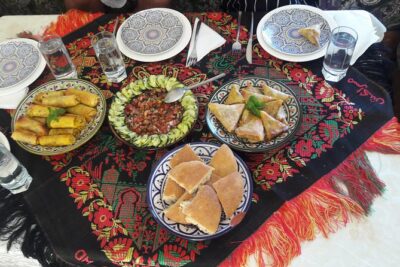
Moroccan Cooking Class & Marrakech Market Visit with Chef Khmisa
Read our review →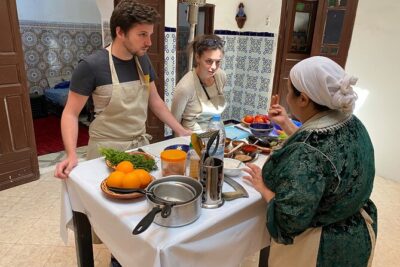
Half-Day Cooking Class with Local Chef Laila in Marrakech
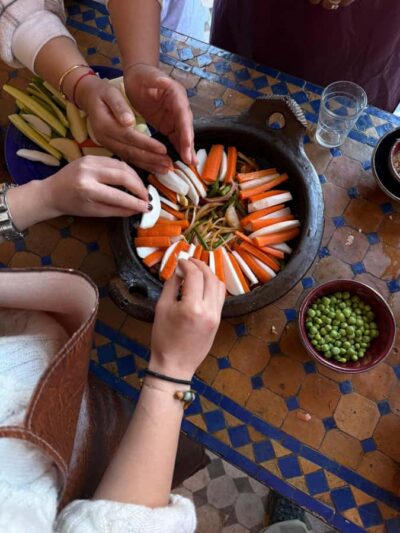
Read our review →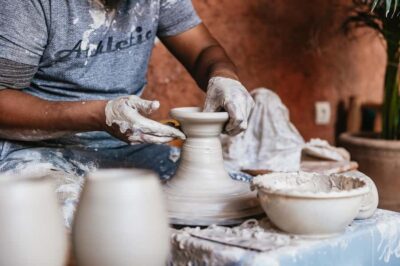
Browse the lists this tour appears in